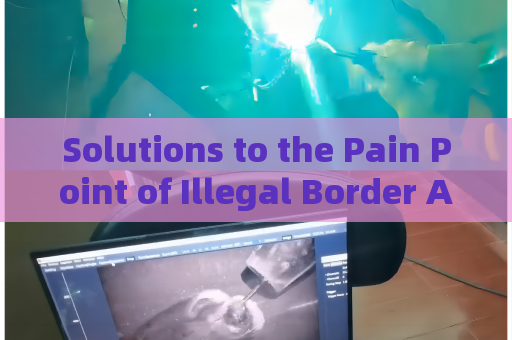
Covert detection of illegal vessel activities remains a persistent challenge for maritime law enforcement. Smugglers, illegal fishers, and drug traffickers often operate under the cover of darkness, thick fog, heavy rain, or sea spray, making conventional optical surveillance nearly useless. Even when vessels are visually spotted, their crew members frequently obscure windows with tinted films, reflective coatings, or rolled-down blinds to block line-of-sight observation. Night-vision devices and thermal imagers struggle with glare from glass surfaces, while radar cannot reveal interior details. The most critical pain point is the inability to confirm suspicious behavior—such as hidden cargo, disguised crew, or illicit transfers—through transparent barriers without alerting the suspects. A forced boarding risks escalation, while passive waiting wastes resources. The 穿透成像仪 (penetrating imager) offers a breakthrough: using laser range-gated imaging, it can see through ordinary glass, ship portholes, and even fire, fog, rain, or snow, providing clear, high-contrast images at long distances without emitting detectable beams that would compromise stealth.
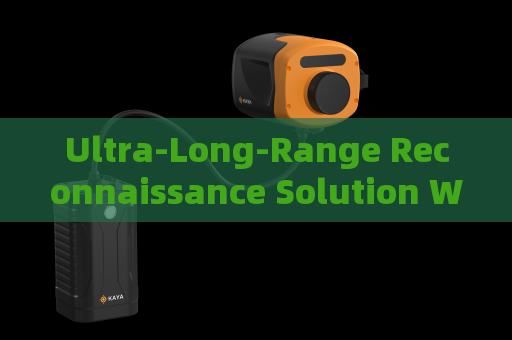
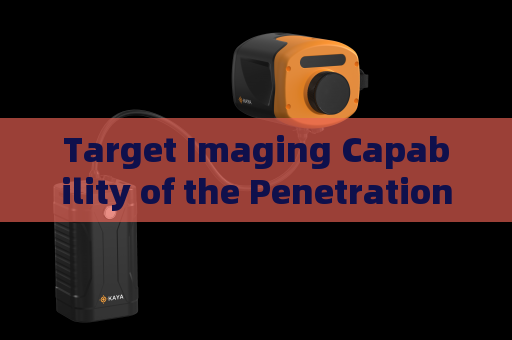
The core function that directly resolves this pain point is the 穿透成像仪’s laser range-gated gating technology. The system integrates a high-repetition-rate pulsed laser, an intensified gated camera with a microchannel plate (MCP) intensifier, high-voltage modules, timing modules, a beam expander, and an imaging lens. By synchronizing the laser pulse emission with the camera’s ultra-short exposure window, the imager rejects all backscattered light from intervening atmospheric particles—fog, rain, sea spray—and only captures reflected photons from the exact target plane. This eliminates the veil-like blur that plagues conventional cameras. More importantly, the system can optically penetrate transparent media such as automotive glass, high-speed train windows, aircraft portholes, and glass curtain walls. When aimed at a suspected vessel’s cabin window, the imager reveals every detail inside: the number of occupants, their movements, hidden compartments, or contraband stowed behind the glass. The active illumination is invisible to the naked eye and does not register on standard IR detectors, ensuring covert operation.
In practical deployment, the 穿透成像仪 is mounted on patrol cutters, helicopters, or fixed-wing drones at safe standoff distances—often two to three nautical miles. Operators simply select a target vessel, adjust the gating range to match the distance, and instantly obtain a clear, real-time video feed of the interior. The system works equally well in pitch darkness, through rain, and even through a thin layer of mist. For example, during a night interdiction, a coast guard helicopter can hover 1.5 km away and watch a fishing trawler’s wheelhouse through its salt-streaked glass: the crew’s handoff of a package, the false floor being lifted, or the activation of a hidden transponder. All these actions become visible without any onboard lights or electronic emissions that might trip the suspects’ counter-surveillance measures. Because the imager requires no physical contact and emits only short laser pulses, the observed vessel remains unaware.
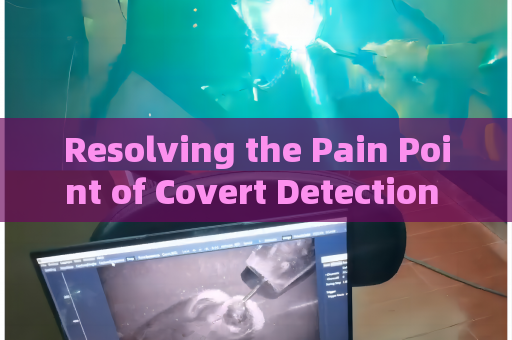
The impact on operational decision-making is transformative. Intelligence analysts can now confirm illegal activity at sea without risking a boarding or tipping off the target. The high-resolution imagery serves as legally admissible evidence, supporting warrants and prosecutions. Furthermore, the system’s ability to penetrate fire—enhancing visibility by three to five times in smoky environments—proves valuable when a vessel attempts to burn evidence or when engine-room fires erupt during pursuit. However, the 穿透成像仪 cannot see through dense smoke or solid hulls; its capability is strictly limited to optical media like glass and fog. This clear functional boundary ensures reliable performance in the specific, high-stakes scenario of covert vessel interior observation, where glass windows remain the most common—and previously most frustrating—obstacle. By resolving this pain point, the technology elevates maritime law enforcement from reactive boarding tactics to proactive, evidence-driven surveillance.