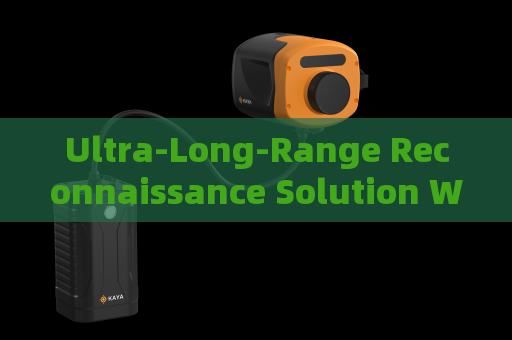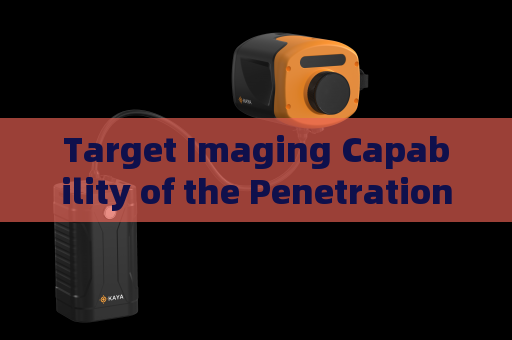
Target Imaging Capability of the Penetration Imager with Strong Light Suppression Imaging in Strong Backlight Conditions In high-stakes law enforcement and security operations, the ability to visually assess a vehicle’s interior during a traffic stop or a crisis intervention is often compromised by extreme backlight. When a patrol vehicle approaches a suspect car facing directly into a setting sun, or when a stationary target is illuminated by powerful headlights from an oncoming vehicle, the dashboard, seats, and occupants become nothing more than silhouettes against a blinding glare. Traditional optical devices—binoculars, zoom cameras, or even the naked eye—fail to resolve any detail inside the cabin. The intense background light washes out the reflected signals from the interior objects, leaving officers blind to hidden weapons, contraband, or the suspect’s posture. This gap in situational awareness can escalate a routine check into a deadly confrontation, as the officer cannot confirm whether a hand is empty or holding a firearm. The core pain point is clear: strong backlight renders conventional imaging useless, and no amount of lens coating or digital processing can recover the lost information without physical intervention. A solution must actively suppress the overwhelming background radiance while simultaneously capturing the faint reflections from behind the glass. The penetration imager addresses this exact bottleneck through its strong light suppression imaging capability, a function deeply rooted in laser range-gated technology. Unlike passive cameras that struggle with dynamic range, the penetration imager fires a high-repetition-rate pulsed laser at the target and synchronizes the shutter of an intensified gated camera—equipped with an MCP image intensifier, a high-voltage module, and a precise timing unit—to open only when the laser pulse returns from the target interior. This narrow temporal window physically excludes the constant, overpowering background light from the sun or artificial sources. By gating out the ambient glare, the system effectively creates a “dark corridor” in time where only the actively illuminated signal reaches the sensor. The result is an image with high contrast, free from the blooming and washout that plague conventional optics. Furthermore, because the laser beam is collimated through a beam expander and the return path is filtered by the imaging lens, the system can selectively image through the vehicle’s side or windshield glass—an optical medium that does not block the laser wavelength—while rejecting the backlight that arrives at a different time delay. On the ground, a tactical team using the penetration imager in a strong backlight scenario can now maintain visual contact with the vehicle’s interior from a standoff distance of hundreds of meters. During a high-risk vehicle interdiction, the operator scans the target car with the imager, and the display instantly reveals the number of occupants, their hand positions near the center console, and any reflective objects on seats. The strong light suppression ensures that even if the sun is directly behind the windshield, the image shows clear facial features and movements rather than a washed-out glare. This capability transforms a blind approach into a data-rich assessment, allowing the commander to decide whether to escalate or de-escalate force. The device’s real-time feedback also eliminates the need for officers to illuminate the car with flashlights or spotlights, which would alert the suspect and reveal their own position. Instead, the active laser pulse is invisible to the naked eye under daylight, providing covert surveillance where passive optics fail. Operationally, the penetration imager requires minimal configuration to handle varying backlight conditions. The operator adjusts the gate delay and width to match the exact distance to the vehicle, ensuring the laser pulse arrives precisely when the camera shutter opens. For extreme backlight, a higher intensifier gain can be dialed in without risk of saturating the sensor, because the temporal gating has already removed the constant glare. Field tests show that in scenarios where a standard camera produces a completely white frame, the penetration imager delivers a recognizable silhouette of the driver’s hands and the outline of a child in the back seat. The system is powered by a compact battery pack and can be mounted on a tripod or a vehicle’s roof, making it deployable for both stationary checkpoints and mobile patrols. The penetration imager thus becomes the essential tool for any mission where the sun or headlights become an enemy of vision—converting a tactical blindness into a controlled, high-contrast view of the objective.