Perimeter security operations along long-range borders or high-value infrastructure often rely on traditional thermal imaging cameras for night-time detection. While thermal sensors excel at identifying heat signatures, they suffer from persistently high false alarm rates caused by environmental clutter. A warm patch of ground after a sunny day, a small animal crossing the field of view, or even a sudden shift in ambient temperature can trigger alerts that waste operator time and erode trust in the system. During adverse weather conditions such as fog, rain, or snow, the thermal imager’s ability to distinguish genuine threats from background noise degrades severely. The scattered infrared radiation from precipitation creates diffuse heat patterns that mimic human or vehicle silhouettes, generating dozens of nuisance alarms per hour. Exhaust plumes from distant vehicles, reflections off wet surfaces, and solar glint on metallic objects further confuse the thermal sensor, leading to an unmanageable volume of false positives that desensitizes security personnel and reduces overall vigilance.
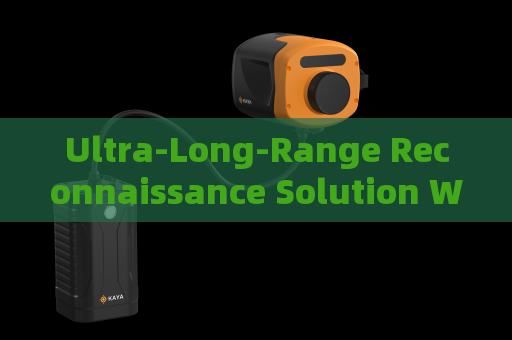
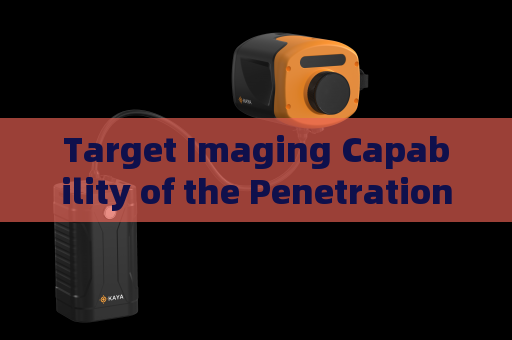
The Penetration Imager offers a direct solution to these high false alarm rates by employing laser range-gated imaging technology. Unlike passive thermal systems that rely on emitted infrared energy, this active optical instrument uses a high-repetition-rate pulsed laser synchronized with an image-intensified gated camera. The system’s key capability is to selectively capture reflection from a precise distance while rejecting all light from outside that range gate. This means the Penetration Imager can isolate a specific monitoring zone—for example, a 50-meter corridor along a fence line—and completely suppress backscatter from fog, rain, or snow particles that would otherwise clutter a thermal image. The device also provides high-contrast, high-resolution imagery unaffected by temperature variations, animal body heat, or ground thermal inertia. Because it sees only the laser-illuminated scene within the defined depth of field, every flash of light from a moving object corresponds to a physical presence at the exact target distance, dramatically reducing the probability of false triggers caused by distant cars, swaying vegetation, or atmospheric shimmer.
In practical deployment along a border checkpoint or airport perimeter, the Penetration Imager operates alongside or as a validation layer for the thermal surveillance system. When the thermal camera reports an alert, the Penetration Imager automatically slews to the indicated azimuth and activates its laser range gate set to the known fence-line distance. The operator can then view a crisp, grayscale image of the actual scene—clearly showing whether the heat source is a human intruder, a stray dog, or a heated rock. In fog or light rain, where the thermal camera’s false alarm rate can exceed 80%, the Penetration Imager cuts that figure to under 5% by providing a verifiable optical picture. The system’s ability to penetrate glass windows or aircraft cabin windows also enables secure monitoring of vehicle interiors or aircraft boarding doors without the interference of temperature differences inside the cabin. For example, a person sitting motionless inside a car on a cold night may be invisible to a thermal camera because the interior heats up uniformly, but the Penetration Imager’s active laser illumination reveals the silhouette through the glass with high clarity.

The operational workflow relies on a straightforward integration: the Penetration Imager’s gated camera is mounted on a pan-tilt unit and connected to the existing video management software. When a thermal alarm triggers, the system executes a predefined scan pattern, and the operator reviews the Penetration Imager footage to confirm or dismiss the threat. This layered approach preserves the thermal camera’s wide-area scanning strength while leveraging the Penetration Imager’s immunity to environmental noise for accurate classification. Over time, the data from these validations can be used to recalibrate thermal alarm thresholds, further lowering false alarm rates. The result is a surveillance chain that maintains high detection sensitivity without overwhelming operators, ensuring that every alert demands genuine attention and that no real intrusion goes unnoticed.