Thermal imaging systems deployed in desert environments often suffer from a persistent and dangerous flaw: false alarms triggered by desert mirages. When intense heat radiates from the sand, the air near the ground heats unevenly, creating a significant temperature gradient that bends infrared radiation. This refraction produces ghostly images—apparent pools of water, shimmering heat waves, or even phantom vehicles and personnel that seem to move across the horizon. For military reconnaissance, border patrol, or search-and-rescue teams operating in arid regions, these mirages are not mere optical curiosities; they are operational liabilities. A thermal imager may lock onto a false target, mislead an automated surveillance system into triggering an alert, or cause an operator to waste precious time investigating a non-existent threat. The core pain point is that conventional passive thermal imagers cannot distinguish between a real object emitting heat and a refracted image generated by atmospheric layers. This unreliability erodes trust in the equipment, increases cognitive load on operators, and can even lead to catastrophic mission failure when a genuine target is missed due to the constant "cry wolf" effect from mirage-induced alarms.
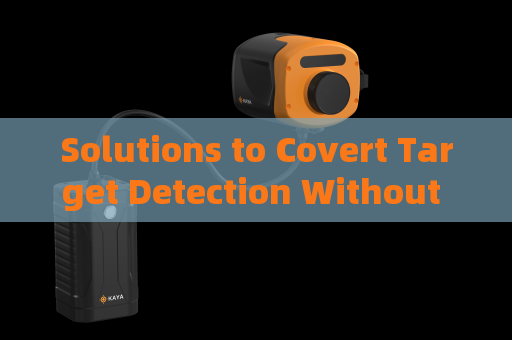
A penetrating imager, built on laser range-gated imaging technology, offers a fundamentally different approach that directly addresses this desert mirage problem. Unlike passive thermal imagers that rely solely on emitted infrared radiation, the penetrating imager is an active imaging system. It employs a high-repetition-rate pulsed laser as an illuminator, paired with an intensified gated camera that incorporates a microchannel plate (MCP) intensifier, a high-voltage module, and a precise timing module. The key functional advantage lies in its ability to gate the camera’s exposure to only a very narrow time window corresponding to the round-trip travel of the laser pulse at a specific distance. Because desert mirages are refractive illusions formed by warm and cool air layers that do not physically reflect a laser pulse back from a defined depth, the gating process effectively excludes them. The penetrating imager only records light that returns from a real, solid surface at the selected range—be it a vehicle body, a person, or a piece of equipment. This range-gating mechanism eliminates the ambient thermal background and the mirage’s false contours. Furthermore, the high contrast imaging capability of this system, combined with its resistance to backscatter, allows it to capture sharp details even when sand particles or haze are present in the air, offering a reliable visual confirmation that a thermal image alone cannot provide.
In actual desert operations, the penetrating imager has demonstrated a dramatic reduction in false alarm rates. For example, during a border surveillance trial in a sandy, sun-baked region, a conventional thermal camera would report dozens of "contacts" per hour, most of which were mirage-induced artifacts. Swapping to the penetrating imager reduced those alarms to near zero while also revealing previously obscured genuine threats, such as a partially buried vehicle or a crouched individual whose thermal signature had blended with the hot sand background. The operator simply adjusts the gating distance on the imager’s control unit, sweeping through different ranges to build a clear, layer-by-layer picture of the scene. Because the system is active, it works equally effectively in high-temperature midday conditions—precisely when mirages are worst. The laser pulse cuts through the heat shimmer, and the gated camera only sees targets at the set distance. This not only eliminates false alarms but also provides actionable intelligence: the operator can measure the exact range to a target by the timing parameter, a capability passive thermal imagers lack.
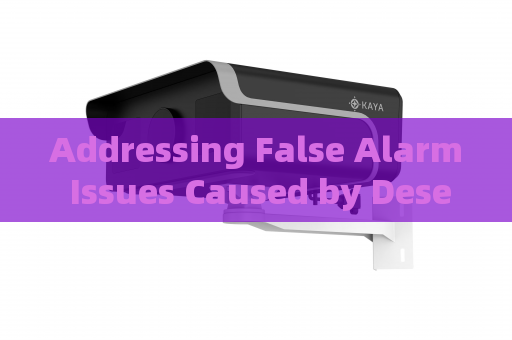
To maximize effectiveness, the penetrating imager is typically mounted on a tripod or vehicle platform and used in conjunction with a day/night optical sight for initial target acquisition. The operator first identifies an area of interest where thermal alarms are frequent, then switches to the penetrating imager. By scanning through multiple depth slices—say, 500 meters, 800 meters, and 1,200 meters—the scene is reconstructed without mirage interference. The high-gain intensified camera ensures that even in full daylight, the laser return is clearly visible. For law enforcement and military units operating in desert environments, this capability transforms a historically unreliable detection tool into a dependable asset. The penetrating imager does not replace thermal imaging; it complements it by providing a verification layer, ensuring that only real objects trigger response protocols. This disciplined approach to false alarm reduction ultimately saves lives and resources in the harsh, deceptive landscape of the desert.