Covert detection of illegal vessel activities presents a persistent challenge for maritime law enforcement. These operations often occur under cover of darkness, fog, or rain, with perpetrators deliberately concealing their actions behind glass windows, tinted cabin panels, or reflective surfaces. Conventional optical systems—whether binoculars, night-vision devices, or thermal imaging cameras—struggle to penetrate such optical barriers. Thermal imagers detect heat but cannot see through glass; night-vision amplifies ambient light but fails against glare or dense weather. Law enforcement personnel are forced to close distance, risking exposure and compromising the covert nature of the mission. The inability to observe interior spaces, verify crew numbers, or identify contraband through sealed windows remains a critical operational gap. The Penetrating Imager offers a direct solution to this pain point, transforming how authorities gather intelligence without alerting suspects.
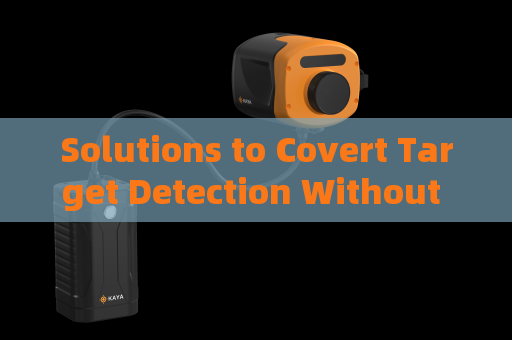
The Penetrating Imager resolves these limitations through laser range‑gated imaging technology. This advanced optical instrument combines a high‑repetition‑rate pulsed laser with an image‑intensified gated camera. By emitting ultrashort laser pulses and synchronizing the camera’s shutter to receive only the light reflected from a precise distance, the system effectively eliminates backscatter caused by fog, rain, snow, or atmospheric haze. Importantly, it can penetrate common optical media such as vessel windows, windshields, cabin glass, and even welded glass partitions. The result is high‑contrast, high‑resolution imagery of the target interior—whether the subject is behind tinted glass or obscured by a light mist. The Penetrating Imager is an active imaging system, meaning it provides its own illumination, enabling operation in total darkness without requiring ambient light. Its long‑range capability allows operators to maintain a safe standoff distance, preserving covert positioning.
In practical deployment, a single operator can set up a Penetrating Imager on a tripod aboard a patrol boat or a fixed coastal observation point. The device is aimed at the suspected vessel’s cabin, wheelhouse, or cargo hold windows. Using the gated control interface, the operator adjusts the delay time to match the distance to the target glass surface. Within seconds, a crystal‑clear image appears on the display, showing individuals inside, the layout of the compartment, or the presence of illicit cargo. The system’s ability to reject backscatter ensures that even in moderate rain or sea spray, the view remains sharp. Because the laser pulse is extremely brief and the camera gate is tightly controlled, there is no detectable flash or signature that would betray the observation post. This operational stealth is critical for successful interdiction operations.

Further refinement of the same scenario involves adapting to varying target distances and environmental conditions. The Penetrating Imager features a built‑in telephoto lens and expander beam that can focus on specific windows from 50 meters up to several kilometers. During nighttime hours, the pulsed laser illuminates the target with near‑infrared light invisible to the human eye, eliminating any glow that might alert lookouts. In heavy fog, the range‑gating mechanism slices through the first scattering layer, isolating the vessel’s glass surface and the interior beyond it. Law enforcement imagery analysts can then record and transmit evidence in real time, building a case without ever stepping onto the suspect vessel. This capability directly addresses the covert reconnaissance requirement for illegal fishing, smuggling, or human trafficking operations, where glass barriers and weather conditions have historically frustrated surveillance. The Penetrating Imager thus becomes the primary tool for resolving the pain point of covert detection for illegal vessel activities, delivering actionable intelligence while keeping the observation team out of harm’s way.