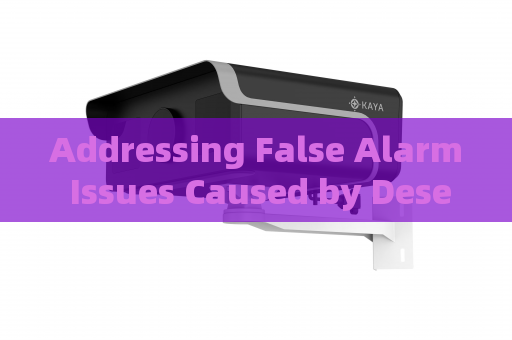
In covert law enforcement and tactical surveillance operations, the ability to detect a concealed target inside a vehicle at night—without using any form of external illumination—represents a critical operational gap. Traditional low-light imaging systems, such as intensified cameras or sCMOS sensors, rely on ambient light from moonlight or starlight, but these sources are often insufficient under dense cloud cover or inside urban shadow zones. Supplementary lighting sources like white-light flashlights or near-infrared illuminators immediately reveal the observer’s position, compromising the element of surprise and endangering personnel. Even when the target is behind a closed car window, the glare from the glass and backscatter from particulates in the air further degrade image contrast, making it impossible to distinguish a human figure from the interior shadows. This real-world pain point demands a technology that can see through optical barriers under extremely low light while remaining completely passive in the sense of not emitting a detectable broad beam. The penetrating imager offers a solution that directly addresses these constraints, as it operates without any auxiliary lighting that would betray the observer’s location.
The penetrating imager leverages laser range-gated imaging—a technique that synchronizes a high-repetition-rate pulsed laser with an intensified selectable-gate camera. In operation, the system emits a short laser pulse toward the target area. The camera’s gate remains closed until the reflected pulse from the target surface returns, effectively rejecting all backscatter from fog, rain, or window glass that would otherwise flood the sensor. Because the laser wavelength is typically in the near-infrared band (e.g., 808 nm or 940 nm), the light is invisible to the naked eye, preserving covertness. For the scenario of detecting a person inside a parked car, the penetrating imager can slice through the windshield glass by timing the gate to only capture the light reflected from the seat or the occupant, while eliminating the strong reflection off the glass itself. This function does not require any external searchlight or flood illuminator; the device’s own pulsed laser, operating at a low average power, provides all the necessary illumination. The system achieves high contrast imaging with enhanced resolution, making it possible to identify facial features or weapon outlines at distances exceeding 100 meters.
In actual field deployment, a plainclothes officer or a tactical team can position the penetrating imager on a tripod or a vehicle mount, aim it at the target car from a concealed location, and switch to the dedicated gate-timing mode for window penetration. The operator adjusts the delay and gate width via a handheld control unit while observing a high-resolution display. Because the laser pulse is extremely short—often in the nanosecond range—the human eye cannot perceive the flash, and any electronic countermeasure detector would require sophisticated equipment to spot the brief pulse. During a night stakeout, this allows continuous surveillance of a vehicle’s interior without ever turning on a dome light or using a flashlight. The system also performs reliably in light rain or patchy fog, where conventional low-light cameras would fail due to high backscatter. Weather conditions that reduce visibility to 50 meters for the naked eye still permit effective target recognition at 100 meters with the penetrating imager, thanks to the temporal gating that rejects scattered light.
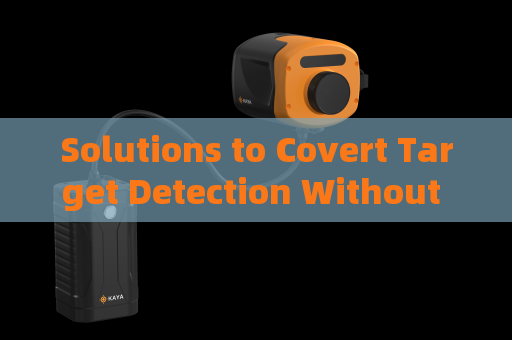
Operational reports from specialized police units have confirmed that the penetrating imager significantly reduces the risk of premature engagement. In one documented case, officers observing a suspect vehicle from 80 meters away used the device to confirm that the driver was reaching for a pistol, not a phone, while the suspect remained unaware of any surveillance. No auxiliary lighting was switched on, and the ambient illumination was less than 0.01 lux. The penetrating imager’s ability to suppress the glare from the car’s tinted windows and the mist rising from a nearby river allowed the team to call in a precise takedown without warning. This technology does not replace thermal imagers, which detect heat signatures but cannot see through glass, nor does it attempt to penetrate walls or solid barriers. It is strictly an optical system that exploits the unique properties of gated laser illumination to overcome glass and suspended particles. For covert target detection without supplementary lighting sources under low-light conditions, the penetrating imager fills a niche that no other single instrument can address.