Law enforcement agencies tasked with intercepting illegal vessel activities face a critical blind spot: the inability to see inside a suspect boat from a safe standoff distance. Port patrols, coast guard units, and maritime police often rely on binoculars or standard optical surveillance, which are easily defeated by tinted, reflective, or rain‑streaked cabin windows. Even when a vessel is stopped for inspection, crew members may hide contraband, tamper with documents, or destroy evidence behind closed hatches and thick glass. Atmospheric obstacles such as sea fog, drizzle, or salt spray further degrade image clarity, turning what should be a routine monitoring operation into a guessing game. Without a means to penetrate these visual barriers, officers are forced to board under uncertain conditions, risking both safety and the integrity of the case. This operational gap demands a solution that can see through optical obstructions without emitting detectable signals or alerting the target—exactly the role fulfilled by the penetration imager.
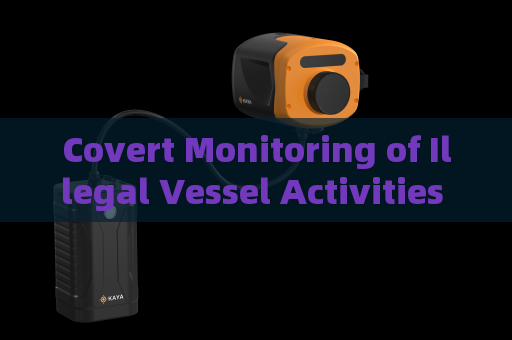
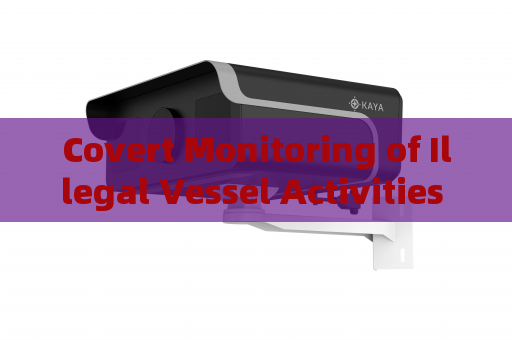
The penetration imager is a laser‑gated active imaging system that directly addresses the above challenge. It uses a high‑repetition‑rate pulsed laser synchronized with an image‑intensified gated camera, which includes a microchannel plate (MCP) image intensifier, a high‑voltage module, and a precise timing unit. The system fires a short laser pulse and opens the camera’s electronic shutter only when the reflected light from the target returns, effectively slicing through layers of transparent optical media. This design allows the penetration imager to see through vessel windscreens, side windows, aircraft‑grade boat glass, and even multiple panes of a bridge house—while the selective gating eliminates backscatter from fog, rain, or sea spray. Unlike passive optics that wash out in glare, the active illumination and tight temporal gate deliver high‑contrast images with extended range and superior resolution, all without any detectable emission that could tip off illegal operators.
In practical field deployments, the penetration imager transforms covert maritime surveillance. A patrol vessel can maintain a distance of several hundred meters, train the imager on a suspect boat’s pilot house, and observe the real‑time movements of the crew through the glass. If the vessel is suspected of smuggling, the agent can clearly see whether individuals are handling unmarked cargo, hiding items under seats, or altering navigation logs—all without the need to board. Operation is straightforward: the system is mounted on a tripod or stabilized gimbal, and the operator selects the desired range using a laser rangefinder integrated into the imager. The gating delay automatically adjusts to match the distance, and the camera’s electronic zoom brings fine details into view. Even in driving rain or heavy fog that would render conventional cameras useless, the imager’s ability to reject scattered light ensures a crisp, actionable image that can be recorded as evidence for prosecution.
This capability extends beyond simple observation. In high‑stakes interdictions, the penetration imager allows a boarding party to assess the number of individuals inside the wheelhouse and their positions before the first officer steps onto the deck. If the crew appears to be arming themselves or attempting to jettison illicit goods, the team can adjust tactics accordingly. The imager also proves invaluable during night operations, where the pulsed laser provides covert illumination invisible to the naked eye. By maintaining total operational security, law enforcement can monitor illegal vessel activities for hours without raising suspicion, building a comprehensive timeline of behavior that is later corroborated with onboard camera feeds. The penetration imager thus fills a unique niche: it offers the “see‑through‑glass” ability that no other optical or radar‑based tool can match, directly addressing the core pain point of covert maritime surveillance.