In covert reconnaissance and tactical operations conducted in total darkness, the fundamental challenge lies in detecting targets without exposing the observer’s position. Traditional active illumination systems, such as flashlights or infrared illuminators, emit light that can be instantly detected by adversaries equipped with night vision devices or even naked eyes adapted to darkness. Passive technologies like low-light sensors struggle in zero-light conditions—where no ambient photons exist—resulting in unusable imagery. The requirement for zero-light imaging is further complicated by the need to see through common optical barriers like vehicle windows, aircraft canopies, or glass facades while maintaining complete stealth. A law enforcement team staking out a suspected hostage situation in a dark parking lot, for example, cannot risk activating any light source that would alert the perpetrator inside a vehicle. This operational pain point demands a solution that delivers clear target detection without any emission of light photons into the environment, effectively achieving “invisible” surveillance.
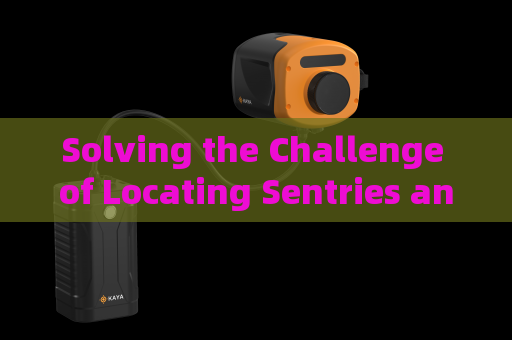
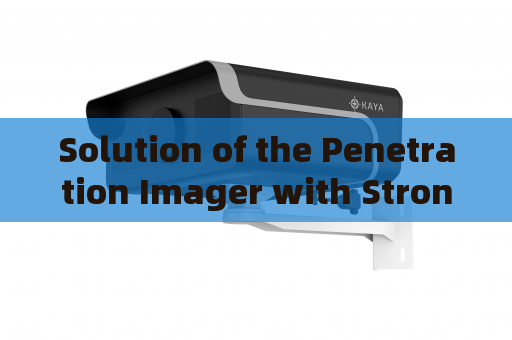
The penetrating imager (穿透成像仪) addresses this exact scenario through its core technology: laser range-gated imaging, also known as gated imaging. The device integrates a high-repetition-rate pulsed laser, an intensified gated camera (incorporating a microchannel plate intensifier, high-voltage module, timing module), a beam expander, and an imaging lens. Unlike conventional active imagers that emit continuous beams, the penetrating imager emits extremely short laser pulses—each lasting only nanoseconds—and synchronizes the camera’s shutter to open precisely when the reflected light returns from the target. This temporal gating mechanism ensures that light is only present during the infinitesimal pulse moment: the ambient environment receives no detectable illumination because the pulses are too brief and low in energy to be perceptible. Furthermore, the system operates at a wavelength invisible to the human eye, and the emitted pulses are designed to be indistinguishable from background noise for most night vision devices. Critically, this technology can overcome strong backscattering effects from fog, rain, snow, or even fire smoke (though not dense smoke), achieving high-contrast imaging through optical media such as car glass, train windows, aircraft portholes, and glass curtain walls—all while maintaining total darkness on the target side.
In practical operations, the penetrating imager enables a tactical team to scan a vehicle parked in complete darkness from a distance of several hundred meters without any light leakage. The operator simply aims the device through a standard vehicle window—the glass does not scatter the pulsed beam in a way that reveals the observation. The gated camera captures high-resolution images of occupants, their movements, and even objects held in hands. Because the device relies on the laser return, it works even when the interior of the vehicle is a vacuum of ambient light. The range-gated timing also automatically filters out light reflected from the window surface itself, preventing the glare that plagues conventional imagers. For instance, during a nighttime counterterrorism raid, operators can identify whether a suspect inside a dark sedan is holding a weapon or a mobile phone, and monitor the suspect’s postural changes—all without any flash or glow emanating from the observation position.
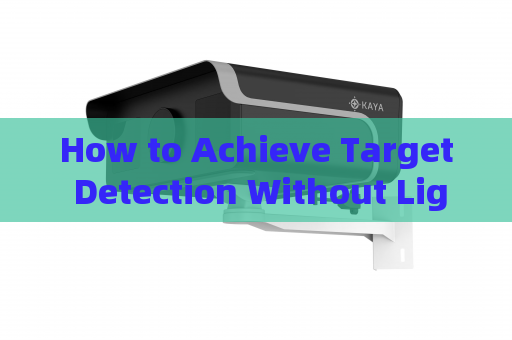
Further operational details enhance the device’s real-world suitability. The penetrating imager is designed with a tripod mount and remote control capability, allowing an operator to position the unit behind cover—such as a wall or a vehicle—while viewing the imagery on a portable tablet. The system’s active emission is so precisely gated that even if a suspect looks directly toward the source, the human eye cannot detect the nanosecond pulses; similarly, most commercial night vision goggles will not register the short bursts as a continuous light source. This zero-light imaging approach transforms total darkness into an advantage: the observer sees clearly while the observed sees nothing. The device also features a variable range adjustment, enabling the operator to switch between imaging through a windscreen at 50 meters and through an aircraft window at 200 meters, simply by changing the gating delay. For scenario where fire is present—for example, a vehicle crash in a tunnel with flames—the imaging system improves visibility by a factor of three to five relative to the naked eye, allowing rescuers to locate victims through burning debris while still maintaining zero detectable light emission. The penetrating imager thus provides a decisive tactical edge in the most demanding blackout conditions.