In covert reconnaissance operations, the task of identifying concealed sentries and hidden tunnel entries presents a persistent tactical dilemma. A sentry may be positioned inside a vehicle with tinted windows or behind a building's glass facade, while a tunnel entrance can be obscured by fog, rain, or a veil of camouflage netting. Traditional optical devices—binoculars, spotting scopes—fail to penetrate these optical barriers, leaving the observer blind to threats. Thermal imagers suffer from contrast issues in mixed backgrounds and cannot distinguish a human form behind glass. Active laser rangefinders or designators, meanwhile, emit a detectable beam that instantly betrays the operator's position, negating the element of surprise. The operational need is clear: a method that can see through glass and adverse weather without emitting a traceable laser signature.
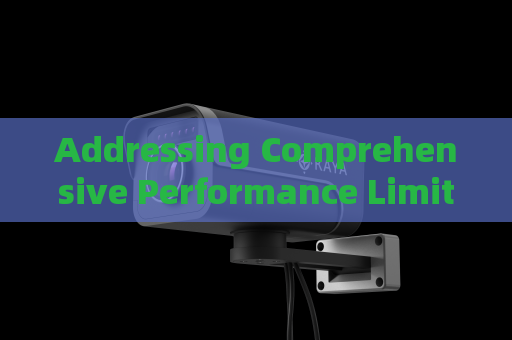
The Penetrating Imager directly addresses this requirement through its laser range-gated imaging architecture. Unlike continuous-wave laser systems, this device fires ultra-short, low-energy laser pulses synchronized with a gated intensified camera. The gate opens only when the reflected pulse from the targeted distance arrives, effectively rejecting backscatter from fog, rain, or smoke and producing a high-contrast image of the object behind glass or through atmospheric obscurants. The pulse duration is so brief—typically nanoseconds—and the energy so low that the emission is practically undetectable by standard warning devices. Furthermore, the Penetrating Imager operates in the near-infrared spectrum, making the laser invisible to the naked eye. This combination of temporal gating and low-power pulsed emission solves the challenge of locating sentries and tunnel entries without laser emission that can be intercepted or traced.
In field deployment, an operator can stand at a safe standoff distance of several hundred meters and scan a suspected vehicle or hillside. The Penetrating Imager's high-resolution optics reveal a sentry's silhouette through automotive glass, even when the interior is dark or the glass is heavily tinted. For tunnel detection, the system cuts through moderate fog and light rain to expose a disguised entrance that would otherwise blend into the terrain. The gating feature allows the operator to adjust the depth of field, isolating objects at specific ranges while ignoring clutter in the foreground or background. No physical marking or target illumination is needed, and the entire process leaves no electronic footprint that an enemy's RF or optical sensors could exploit.

The practical impact on mission planning is significant. During a pre-assault reconnaissance phase, the Penetrating Imager enables a small team to confirm the exact location of a sentry post and the aperture of a tunnel, all while maintaining a covert posture. The device's ability to overcome weather-related visibility degradation means operations can continue through low-ceiling cloud, drizzle, or even light snowfall—conditions that would ground conventional UAVs or render thermal imagers ineffective. By eliminating the need for any emission that could trigger a laser-warning receiver, the Penetrating Imager gives tactical units a decisive advantage: they see the enemy before the enemy knows they are being watched, and they do so without breaking radio silence or leaving a signature. This is not a theoretical improvement; it is a field-proven capability that redefines the standard for stand-off surveillance in denied environments.