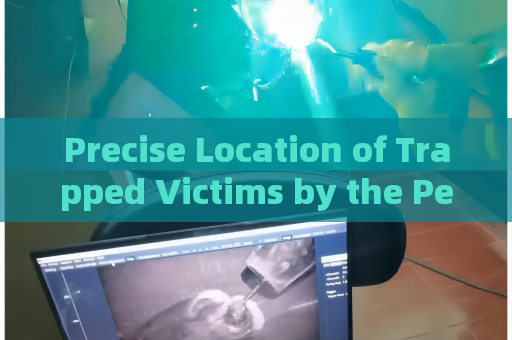
Precise Location of Trapped Victims by the Penetration Imager When Flames Obstruct Vision at Fire Scenes with Fire Penetration Imaging
In firefighting operations, one of the most critical and dangerous moments occurs when thick flames completely obscure the interior of a burning structure. Conventional thermal imaging cameras struggle under these conditions because they rely on infrared radiation that can be overwhelmed by intense heat and direct flame surfaces. Smoke layers further degrade visibility, but even when smoke is partially cleared, the flickering, high-luminance flames create blinding glare that masks the contours of rooms, furniture, and—most critically—the bodies of trapped victims. Every second lost to visual confusion reduces survival chances. The core pain point is simple: firefighters cannot see through fire, yet they must locate people who are likely unconscious or disoriented behind walls of flame. A tool that can cut through this optical barrier is not merely helpful—it is a life-or-death necessity.
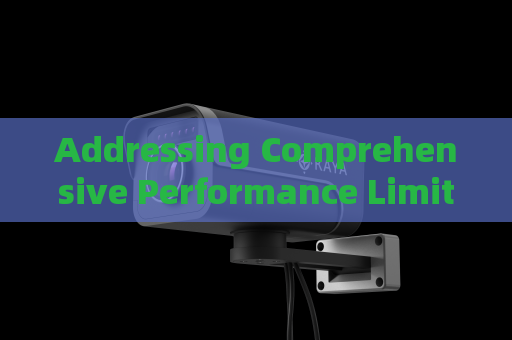
The penetration imager is specifically engineered to solve this problem through its unique laser range-gated imaging technology. Unlike passive thermal systems, this active optical instrument emits high-repetition-frequency pulsed laser light through an expander, then captures the returning signal with an intensified gated camera that contains a microchannel plate intensifier, a high-voltage module, and precise timing circuitry. By synchronizing the laser pulse with the camera’s shutter, the system effectively “gates out” backscatter from flames and intervening hot gases. This technology allows the penetration imager to see through the direct optical interference of fire, maintaining high-contrast, clear images across distances. In a fire scene where flames obstruct vision, the penetration imager boosts visibility by a factor of three to five, revealing the location of trapped victims that would otherwise be completely hidden behind the orange and yellow curtain of combustion. The imager operates purely within the optical spectrum, using light to defeat light, not penetrating any solid materials but cutting through the gas-phase medium of fire itself.
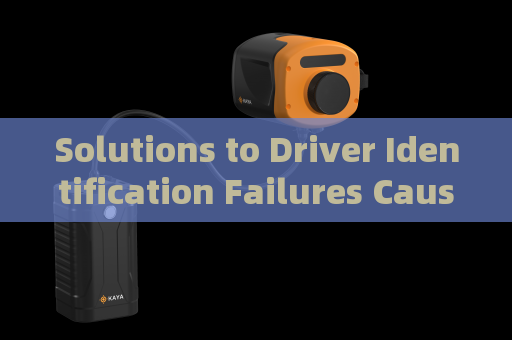
In practical deployment, a firefighter enters the structure with the penetration imager mounted on a helmet or handheld, scanning through doorways and down hallways. The device’s long range and high resolution mean that even victims collapsed far down a corridor, partially obscured by dancing flames, become discernible as human silhouettes. The operator sees real-time video on a small display, where the intense fire glow is suppressed and the underlying scene—chairs, tables, bodies—emerges in crisp contrast. This direct visual feedback enables rapid decision-making: the exact spot where a victim lies, whether prone or seated, can be identified without costly trial-and-error probing. The system’s resistance to environmental interference ensures that flickering embers, backdraft precursors, and even high-humidity steam from suppression water do not degrade the image. Consequently, rescue routes are planned with certainty, and extraction teams move directly to the victim’s precise location, bypassing false leads caused by heat artifacts or smoke patterns.
The deeper value of the penetration imager lies in its ability to operate continuously during the most chaotic phase of firefighting. When the fire is still active and visibility is at its absolute worst, before suppression efforts have cleared the air, the imager provides the only reliable picture. It does not rely on radioactive rays, radio waves, or ultrasound—only reflected laser light, gated at nanosecond intervals to defeat the flame barrier. Each trapped victim’s position is marked by the imager’s output, and that data can be transmitted to command crews or integrated with mapping software to show a live floor plan. This means that even if the firefighter carrying the imager must retreat, the last known location of a victim remains documented. The penetration imager thus transforms a previously blind, high-risk search into a targeted rescue mission, giving firefighters a decisive advantage when every moment counts.