Nighttime covert vehicle surveillance presents a critical operational challenge: the risk of exposure. When operatives attempt to observe a target vehicle from a concealed position, any reflected light—whether from the moon, streetlamps, or the surveillance equipment itself—can betray their location. Traditional night vision devices, such as image intensifiers or thermal imagers, struggle to see through vehicle windows without producing telltale glints or requiring active illumination that can be detected by the target. Even passive systems can be compromised by dashboard lights or interior reflections that wash out details. The real pain point is that the very act of looking through glass creates a vulnerability: the glass acts as a mirror under certain angles, and any light source in the surveillance vehicle or on the observer’s body can cause a visible flash. This exposure risk is not just about being seen; it can also alert a trained subject to an ongoing operation, leading to lost evidence, compromised informants, or even ambush scenarios. The need for a solution that eliminates all visible and near-infrared signatures while maintaining clear imagery through automotive glass is paramount.
The 穿透成像仪 directly addresses this exposure dilemma. This advanced optical instrument employs laser range-gated imaging technology—also known as gated imaging—which uses a high-repetition-rate pulsed laser, an intensified gated camera with an MCP image intensifier, a high-voltage module, timing circuitry, a beam expander, and an imaging lens. Unlike continuous-wave illumination sources, the 穿透成像仪 emits ultra-short laser pulses that are precisely synchronized with the camera’s shutter opening. This gating process means the system only captures light reflected from the target at a specific distance, while rejecting backscatter from fog, rain, snow, or the glass itself. Critically, the laser pulse is so brief (nanoseconds) and tightly focused that it produces no persistent glow or detectable beam. The 穿透成像仪 can only penetrate optical media such as vehicle windows, aircraft portholes, and glass facades; it cannot see through walls or opaque materials. Its active imaging capability delivers high-contrast, long-range resolution even in complete darkness, and it is immune to interference from headlights, streetlights, or other ambient light sources that would flood conventional sensors. By using the 穿透成像仪, operatives eliminate the primary source of exposure: the telltale glow of an active infrared illuminator or the lens flare from a standard camera.
In practice, the 穿透成像仪 transforms nighttime vehicle surveillance operations. An observer positioned inside a stationary surveillance vehicle, for instance, can aim the device through the side window at a target car parked 50 meters away. The gated laser pulse passes cleanly through both layers of glass—the surveillance vehicle’s window and the target’s window—without creating any reflection visible to the subject. The intensified camera captures a sharp, high-contrast image of the target’s interior, including occupants, objects on seats, or activity in the back compartment. Because the system rejects backscatter, rain or mist on the glass does not degrade the image. The operator can work in full darkness inside the surveillance vehicle, with no cockpit lighting or display glow reaching the outside. The 穿透成像仪 can also be used from a building overlooking a parking lot, or from a drone-mounted pod in a quiet hover. Its ability to operate without any electromagnetic signature (unlike radar or radio-frequency devices) ensures that no counter-surveillance equipment can detect its emissions. This gives tactical teams the confidence to maintain prolonged observation without shifting positions or risking compromise.
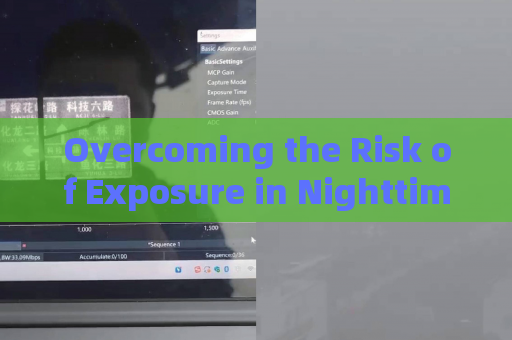
The operational details further reinforce the risk mitigation. The 穿透成像仪 is typically mounted on a gimbal or tripod inside the surveillance vehicle, with the operator viewing the image on a low-light LCD screen or through a head-mounted display. The system’s timing module allows precise distance gating, so the operator can select a range window that excludes foreground objects like rain droplets or dust on the glass. In extreme fog, the 穿透成像仪 improves visibility by three to five times compared to the naked eye, though it remains ineffective against thick smoke. For covert vehicle surveillance, this means an operative can capture photographic evidence of suspicious behavior—such as a handoff of contraband or a face illuminated by a phone screen—without ever creating a light source that draws attention. The 穿透成像仪 thus eliminates the central vulnerability of nighttime observation: the risk of exposure. By converting the glass obstacle into a transparent portal, it allows intelligence to be gathered with no penalty to stealth. Every patrol team, counter-narcotics unit, or surveillance detail conducting nighttime vehicle monitoring should consider this technology as the standard tool for overcoming the risk of exposure.