In the realm of tactical law enforcement and counter-terrorism operations, one of the most persistent challenges is conducting covert surveillance or interdiction in absolute darkness. Officers often need to detect and assess threats inside a stationary vehicle—such as a suspect armed with a weapon or a hostage situation—without emitting any visible light that could alert the target or compromise the mission. Traditional night vision devices rely on ambient light or active infrared illuminators, both of which produce detectable glow or cast shadows that can be spotted by a trained observer. Even low-light cameras struggle in pitch-black environments and require auxiliary illumination, which violates the critical requirement of zero-light emission. This creates a genuine operational gap: how can a tactical team confirm the presence and posture of a subject inside a car window at night, while remaining completely invisible and silent? The solution lies in a specialized optical instrument that performs target detection without any visible light emission—the penetrating imager.
The penetrating imager is an advanced active imaging system that leverages laser range-gated imaging technology. It consists of a high-repetition-rate pulsed laser, an intensified gated camera (incorporating a microchannel plate intensifier, high-voltage module, and timing circuitry), a beam expander, and an imaging lens. Unlike conventional active devices that flood the scene with continuous light, this instrument emits ultra-short pulses of invisible near-infrared laser energy—no human-visible glow, no detectable signature. The key is the gating mechanism: the camera’s intensifier opens only for a nanosecond window timed precisely to the return of light from the target distance, while blocking backscatter from fog, rain, or the vehicle’s glass surface. This enables the penetrating imager to cut through optical media such as automotive windows, armored vehicle glass, aircraft portholes, or glass curtain walls, delivering a clear, high-contrast image of the interior even in total darkness. Because the laser pulses are both brief and spectrally narrow, there is no light emission that an adversary could see or detect with consumer-grade visual aids, fulfilling the “zero-light imaging” requirement for covert operations.
In real-world deployments, this capability transforms how tactical units approach vehicle interdictions. An officer positioned 100 meters away can aim the penetrating imager at a suspect vehicle during a night-time stakeout. The device’s pulsed laser illuminates the interior through the closed window without reflecting noticeably off the glass—thanks to the range gating that rejects the bright surface return. The intensified camera captures a crisp, high-resolution image of the occupants, their hand positions, and any visible weapons or objects. The entire process requires no ambient light and emits no detectable visible flash, radio frequency radiation, or sound. Operators can adjust the gate delay and width to focus on specific depths within the vehicle, compensating for different glass compositions or tints. The unit is compact enough for handheld use or mountable on a tactical tripod, and its image output can be displayed on a helmet-mounted monocular or a remote monitor. This allows team leaders to make informed decisions—whether to hold fire, negotiate, or breach—based on real-time intelligence gathered silently and invisibly.
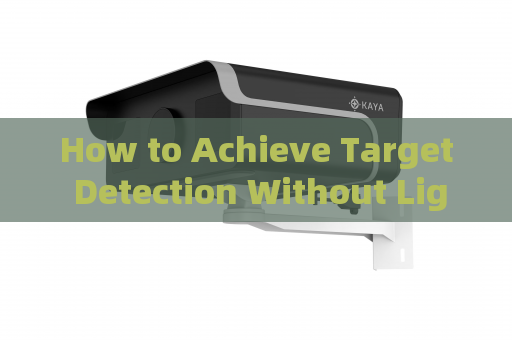
Further tactical refinements enhance the penetrating imager’s utility in confined darkness scenarios. For instance, when a vehicle is parked inside a dark garage or under a bridge with zero ambient light, the device still performs reliably because it generates its own illumination source in the form of laser pulses that are invisible to the naked eye. The system’s high-contrast imaging capability is especially valuable when the subject is wearing dark clothing or sitting against a dark interior background—the gated imaging amplifies the difference between the target and the surroundings. Importantly, while the penetrating imager excels at seeing through glass and can improve visibility in fire-lit environments by a factor of three to five times, it does not penetrate opaque barriers like walls, concrete, or metal; its domain is strictly optical media. This discipline ensures that the technology is used appropriately for its intended role: covert target detection through vehicle windows in total darkness, without emitting any light that could betray the operator’s position. The result is a decisive advantage for law enforcement and counter-terrorism units operating in the world’s most demanding low-light environments.