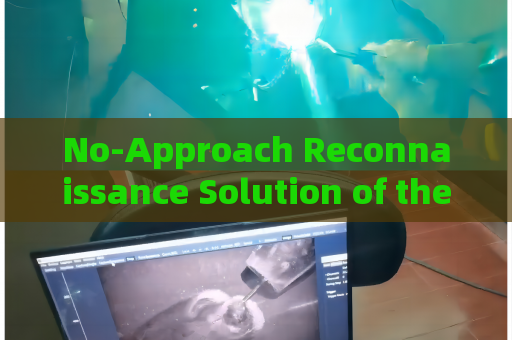
No-Approach Reconnaissance Solution of the Penetration Imager with Through-Window Imaging for Tinted Vehicles Hiding People and Cargo The ability to determine the contents of a tinted vehicle without physical approach has long been a critical gap in law enforcement and counterterrorism operations. When a suspect vehicle is stopped or parked with darkly tinted windows, officers have no reliable way to see whether occupants are armed, whether hostages are inside, or whether illegal cargo is being transported. Approaching the vehicle for a closer look places personnel at extreme risk of ambush, while conventional flashlights or spotlights only intensify reflections off the glass, making the interior even more obscure. Thermal imaging cameras can detect heat signatures but cannot distinguish shapes through double-pane or metal-coated automotive glass, and they fail to identify non-thermal objects such as packages or weapons. This reconnaissance blind spot forces officers into dangerous close-proximity checks or prolonged standoffs, delaying critical decisions. A no-approach reconnaissance solution is urgently needed—one that can see through tinted windows from a safe distance and provide actionable intelligence about hidden people and cargo. The Penetration Imager directly addresses this challenge through its laser range-gated imaging technology. Unlike passive optical devices, this active imaging system emits high-repetition-rate pulsed laser light and synchronizes an intensified gated camera to capture only the light reflected from a specific distance. By precisely controlling the timing gate, the imager eliminates backscatter and reflections from the window surface itself, while the intensified camera—equipped with a microchannel plate (MCP) image intensifier and high-voltage module—amplifies the faint signal returning from objects behind the glass. The result is a clear, high-contrast image of the vehicle’s interior, regardless of the window tint density, curvature, or lamination. The Penetration Imager is strictly an optical system; it operates solely within the light spectrum and cannot penetrate non-transparent barriers. Its design is purpose-built for through-window imaging of tinted vehicles, allowing operators to see people sitting in seats, lying on floors, or cargo stacked in the cargo area without ever needing to approach the vehicle. In real-world operations, this capability transforms how law enforcement handles high-risk vehicle stops. An officer can deploy the Penetration Imager from a patrol car or a fixed observation point 50 to 200 meters away, aim the device at the suspect vehicle’s side or rear windows, and instantly obtain a live video feed of the interior. The image reveals the number of occupants, their posture and hand positions, the presence of weapons or contraband, and even the type of cargo—such as bundled packages, containers, or smuggled goods. Because the system operates in real time with high resolution, tactical commanders can assess threat levels and decide whether to initiate a controlled approach, call for backup, or deploy less-lethal options. The no-approach nature of the reconnaissance eliminates the element of surprise against officers while preserving it for the crew inside the vehicle. Furthermore, the Penetration Imager performs equally well under bright daylight, low-light conditions, rain, fog, or haze—all common scenarios in field operations—as the gating technique suppresses atmospheric scattering and window glare. A deeper layer of operational advantage lies in the system’s ability to distinguish between inert cargo and human presence through layered imaging. When the vehicle’s interior is cluttered with blankets, tarps, or stacked boxes, conventional optics cannot differentiate a concealed person from inanimate objects. The Penetration Imager, however, uses multiple range gates to scan different depth slices inside the vehicle. By shifting the optical gate incrementally, the operator can isolate the seat level, the footwell area, and the cargo bay, each as separate clear images. This depth-resolved capability reveals whether a person is crouched behind a seat or hidden under a pile of goods—critical intelligence that determines the response protocol. The device’s output can be recorded and used as legal evidence, showing the exact condition of the vehicle interior before any physical contact. Law enforcement agencies in Europe and North America have already adopted this solution for border inspections, anti-smuggling patrols, and dignitary protection routes, where Penetration Imager units provide standoff reconnaissance that saves lives and prevents escalation. The technology remains confined to optical media—it will not penetrate walls or solid barriers—but for the specific threat of tinted vehicles hiding people and cargo, it offers a decisive, non-contact tactical edge.