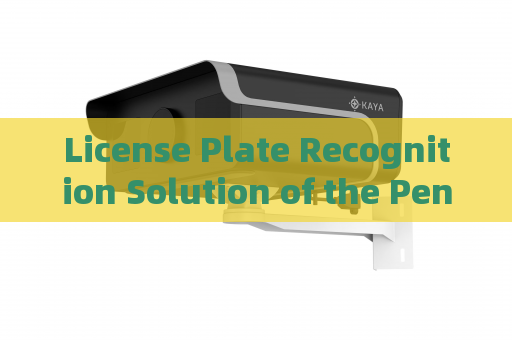
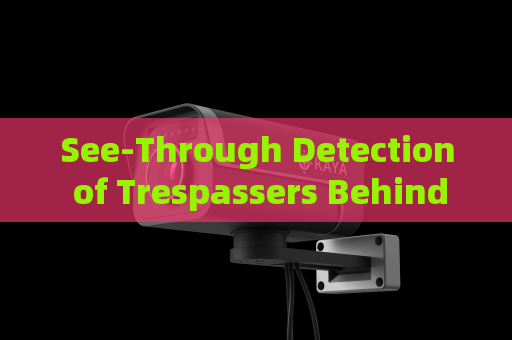
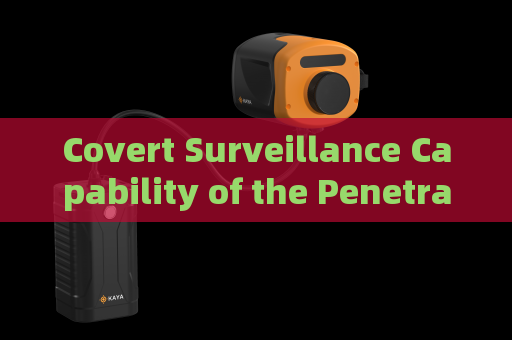
In high-risk law enforcement and emergency response scenarios, operators often face the dilemma of needing to assess threats inside a vehicle or behind a glass barrier while maintaining a secure operational distance. A sniper or tactical observer positioned at a standoff range must identify whether a suspect inside a car is holding a weapon or a hostage, but conventional optical systems—binoculars, scopes, or cameras—struggle with reflections, glare, and backscatter from the windshield or side windows. These optical artifacts distort the view, making it impossible to confirm critical details without moving closer, which exposes the operator to immediate danger. The real pain point lies in the trade-off between safety and situational awareness: staying far enough to avoid being targeted means losing visual clarity through glass, while approaching to get a better look risks fatal engagement. This is where the penetration imager becomes indispensable. The penetration imager is an advanced optical instrument employing laser range-gated imaging technology (gated imaging). It consists of a high-repetition-rate pulsed laser, an intensified gated camera (with an MCP image intensifier, high-voltage module, timing module, etc.), a beam expander, and an imaging lens. As an active imaging system, it delivers high-contrast images with long range, high resolution, strong anti-interference capability, and effective suppression of backscatter.
The key function that directly addresses this problem is the penetration imager’s ability to selectively receive reflected light from a specific distance while rejecting unwanted backscatter from nearer surfaces like glass. By precisely timing the laser pulse and the camera’s electronic shutter—a process called range gating—the system can "see through" windshield glass, train windows, aircraft portholes, or glass curtain walls without being blinded by reflections or glare. Unlike passive optics that capture all light indiscriminately, the penetration imager actively illuminates the target with a short-pulse laser and only opens the camera sensor when the light returning from the target distance arrives. This eliminates the bright glare from the glass surface itself, as well as the fog of backscatter caused by rain, snow, mist, or haze. For fireground operations, the penetration imager improves visibility by a factor of three to five, though it is ineffective against dense smoke. The technology does not rely on any non-optical methods such as X-rays, ultrasound, or radio waves; it strictly operates within the domain of light, using only pulsed laser and intensified imaging.
In practice, an operator can maintain a secure operational distance—for instance, 100 to 300 meters from a suspect vehicle—and still obtain a crystal-clear image of the interior through the windshield. The penetration imager is mounted on a tripod or a rifle scope, and the user sets the range gate to match the distance to the vehicle. Once locked, the system continuously displays a live video feed that cuts through glass reflections and atmospheric interference. This allows the operator to confirm whether the subject is holding a weapon, whether there are additional occupants, or if the vehicle contains suspicious objects—all without moving closer and exposing themselves to hostile fire. The high frame rate and resolution enable rapid decision-making during dynamic incidents such as barricaded suspects or active shooter situations. By eliminating the need for closer reconnaissance, the penetration imager directly enhances operator safety, reducing the likelihood of ambushes or surprise attacks.

Further practical details involve calibration and environmental adaptation. Before deployment, the operator enters the target distance into the control unit, often derived from a laser rangefinder. The system automatically synchronizes the laser pulse and camera gate. In low-light conditions, the intensified camera amplifies the returned signal, ensuring clear imagery even at night. For vehicles with tinted glass, the penetration imager’s pulsed laser can still penetrate because the glass remains an optical medium; however, it does not penetrate non-transparent solids like walls, concrete, or metal. This strict boundary ensures the technology is used appropriately in law enforcement and emergency contexts. The result is that operators can confidently assess threats from a safe standoff, execute precision interventions, and reduce the risk of casualties among both officers and civilians. The penetration imager thus transforms a previously dangerous compromise into a secure operational capability.