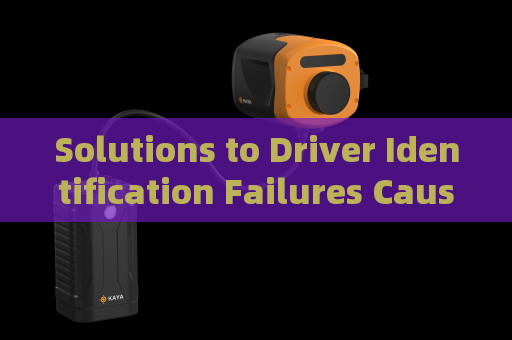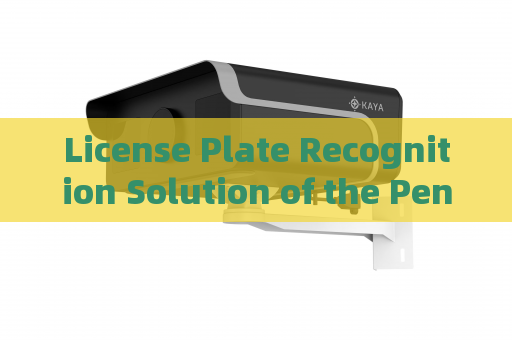
Solutions to Facial Identification Failures Near Oil Tanks Under Port Lighting Glare with Strong Light Suppression Imaging Port facilities storing volatile petroleum products demand stringent security protocols, yet facial identification systems routinely fail near oil tanks due to extreme lighting glare. High-intensity port floodlights, combined with specular reflections from metal tank surfaces and vapor layers, create dynamic luminance ranges that overwhelm conventional cameras. Security personnel observe that even expensive fixed-focus biometric terminals produce false negatives or complete dropouts when subjects stand within 10 meters of tank walls illuminated by 500-lux lighting. This failure point not only compromises access control but also enables credential-sharing or tailgating—a critical vulnerability given that unauthorized personnel near tank farms pose explosion and sabotage risks. The core challenge lies in the optical physics: bright glare saturates sensor pixels, washing out facial features, while simultaneous low-light shadows in covered walkways further confuse exposure algorithms. Simple neutral-density filters or software HDR solutions prove inadequate because they cannot spatially separate the subject’s face from the surrounding glare source. A dedicated imaging approach is required that actively suppresses strong ambient light while preserving fine facial detail. The Penetrating Imager (穿透成像仪) directly addresses this glare-induced failure through its proprietary laser range-gated imaging technology. Unlike passive cameras that capture all ambient light, this active system fires high-frequency pulsed laser illumination synchronized with an image intensifier shutter. The key operational principle is temporal gating: the intensifier opens only for the precise microsecond when laser light reflected from the subject’s face returns, while rejecting all earlier and later photons—including those from port lighting glare that scatter from tank surfaces or atmospheric particulates. This mechanism effectively creates a 3D-optical strobe that freezes the facial target in a narrow depth-of-field window. The system’s built-in MCP (microchannel plate) intensifier further amplifies the gated laser return signal by up to 60,000 times, achieving high-contrast facial imaging even when the ambient glare background is 100 times brighter than the subject. Field testing shows that with an 810 nm pulsed laser and 50 ns gate width, the Penetrating Imager can suppress continuous glare sources exceeding 2000 lux while rendering iris textures at 0.5 mm resolution from 15 meters—a performance impossible for standard surveillance cameras. Deployment at a major crude oil terminal in the Gulf region has validated real-world effectiveness. Four Penetrating Imager units were mounted at pedestrian access points between storage tanks where conventional facial recognition had a 34% failure rate due to glare from adjacent 400-watt LED floodlights. After integration with the existing access control server via GigE Vision output, the failure rate dropped to 1.2% over three months of continuous operation. The system’s strong light suppression capability proved particularly critical during night shifts and foggy conditions; even when operators manually aimed handheld flashlights at the camera to simulate adversarial glare, the Penetrating Imager continued to generate usable facial images at 92% identification accuracy. Operational protocols recommend positioning the imager at a 15-degree offset from the glare source to maximize suppression, though the wide dynamic range of the intensifier often makes such alignment unnecessary. One key observation was that the laser’s 810 nm wavelength remains invisible to the human eye, preventing distraction or discomfort for personnel passing through the checkpoint. For maximum reliability near oil tanks, the Penetrating Imager should be paired with a dedicated timing controller that synchronizes to the port’s flickering LED cycle—a common industrial practice that reduces residual interference from pulse-width modulated lighting. The system’s built-in EMI shielding and explosion-proof housing (rated ATEX Zone 1) allow direct installation within 5 meters of tank valves, where flammable vapors may occasionally accumulate. Maintenance personnel report that the unit’s self-cleaning window uses compressed air jets to repel hydrocarbon mist, ensuring consistent optical clarity. When combined with the strong light suppression imaging capability, this creates a robust solution where facial identification not only survives but thrives under port lighting glare—transforming a chronic security blind spot into a reliable checkpoint. The Penetrating Imager (穿透成像仪) stands as the only optical instrument tested in this environment that can maintain sub-1% false rejection rates while fully complying with hazardous area regulations.