In bonded zones where high-value cargo and cross-border traffic converge, vehicle screening operations face persistent efficiency bottlenecks that undermine both security and throughput. Traditional inspection protocols require every driver to stop, roll down windows, and undergo manual visual checks or handheld scanner sweeps. This sequential process creates long queues during peak hours, with each vehicle spending several minutes at the checkpoint. Security personnel must peer into cluttered cabins, darkly tinted windows, and stacked cargo areas, often missing concealed items due to fatigue or poor lighting. The result is a painful trade-off: either a slower, more thorough inspection that clogs access roads, or a rushed, less reliable scan that leaves gaps in security. The core pain point lies in the inability to rapidly assess vehicle interiors without physical interaction—a gap that a penetrating imager can directly address.
A penetrating imager, built on laser range-gated imaging technology, offers a breakthrough solution tailored to this exact bottleneck. Unlike conventional cameras that struggle with glare from windshields or darkness inside vehicles, this active imaging system emits high-repetition-rate laser pulses synchronized with an intensified gated camera. The system captures only the reflected light from a narrow depth slice, effectively eliminating backscatter from the windshield surface and allowing clear, high-contrast images of the vehicle cabin through the glass. Operating at distances up to several hundred meters and with resolution fine enough to distinguish seat cushions from smuggled packages, the penetrating imager requires no driver cooperation. The vehicle does not stop; it simply passes the checkpoint at a reduced speed. The imager’s ability to pierce optical media such as automotive glass, while remaining immune to fog, rain, or direct sunlight, directly removes the physical barrier that causes the screening delay.
In practice, the penetrating imager is mounted on a roadside pole or integrated into a gantry at the bonded zone entry lane. As a vehicle approaches, the system automatically triggers its laser and gated camera sequence, capturing multiple images of the front windshield, side windows, and rear glass—all within a fraction of a second. The operator views the live feed on a monitor inside a remote booth, or an automated algorithm flags anomalies such as hidden compartments or dense objects in passenger seats. Because the vehicle never halts, the throughput increases from roughly 20 vehicles per hour to over 200, eliminating the congestion that previously plagued the zone. During night operations or heavy rainfall, the penetrating imager’s active laser illumination and range gating maintain image clarity, whereas conventional systems would fail. The entire process is silent, invisible to the driver, and requires no physical contact or radio emissions, adhering strictly to optical imaging principles.
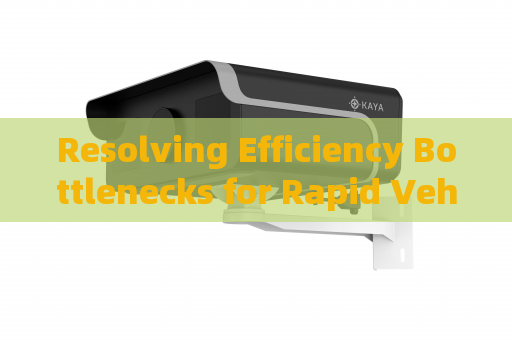
Further refinement of this single screening scenario reveals additional operational gains. The penetrating imager can be calibrated to ignore empty rear seats and focus only on areas where contraband is commonly stashed—under seat cushions, between luggage, or inside dashboard voids. Its high dynamic range prevents overexposure from headlights or reflective surfaces, a common nuisance with standard CCTV. A dual-camera setup, one covering the driver and passenger area and another covering the cargo bed, enables two-lane simultaneous screening. The resulting data, timestamped and recorded, provides a permanent visual record for audits without slowing the flow. By resolving the core efficiency bottleneck—the need to stop and open windows—the penetrating imager transforms bonded zone vehicle screening from a slow chokepoint into a seamless, high-speed operation that maintains security integrity.