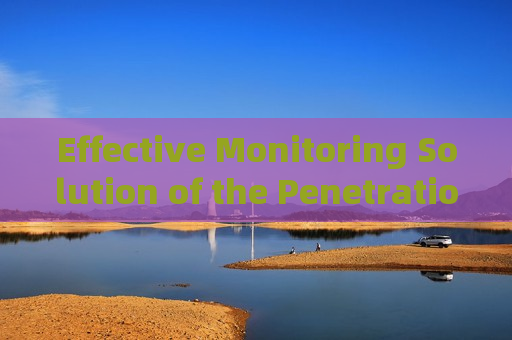
Effective Monitoring Solution of the Penetration Imager with Strong Light Suppression Imaging in High-Glare Coastal Environments Coastal environments present unique challenges for visual surveillance and reconnaissance operations. Strong sunlight reflecting off the ocean surface, wet sand, and metallic structures creates extreme glare that overwhelms conventional optical systems. Law enforcement and maritime security personnel frequently struggle to identify small vessels, floating debris, or persons in distress near the shoreline during midday hours. The intense backscatter from water droplets and sea spray further degrades image quality, reducing effective monitoring range to mere meters. Standard cameras automatically adjust exposure to the brightest areas, rendering shadows and distant objects completely invisible. This glare-induced blindness compromises situational awareness at critical moments, such as during search and rescue missions or coastal border patrols. The penetration imager addresses this operational vulnerability through an active imaging approach that bypasses the limitations of passive optics. The penetration imager employs laser distance-gated imaging technology, also known as gated imaging, to selectively capture light reflected from a specific distance while rejecting all other ambient illumination. A high-repetition-rate pulsed laser emits short bursts, synchronized with an intensified gated camera that opens its shutter only when the laser pulse returns from the target range. This time-gating process effectively suppresses the overwhelming glare from sunlit backgrounds and surface reflections. The strong light suppression imaging capability of the penetration imager is critical in high-glare coastal environments. By eliminating nearly all unwanted ambient light, the system produces high-contrast images even when direct sunlight or glint from wave crests directly enters the optical path. The system’s built-in microchannel plate image intensifier, together with the timing module, ensures that only photons reflected from the intended observation area reach the sensor. This allows operators to see through the blinding curtain of coastal glare that defeats conventional cameras. In practical deployment along a coastline, the penetration imager enables operators to maintain clear identification of targets at distances exceeding one kilometer under full sun. A patrol vessel can scan the horizon for small skiffs or swimmers without being blinded by the sun’s reflection off the water. The laser range-gating function can be adjusted to focus on different depth planes—for example, isolating a person standing on the beach from the blinding sand glare behind them. The system’s ability to operate through maritime haze, light fog, or rain adds resilience in variable coastal weather. Operators simply set the gating distance based on the target range, and the penetration imager automatically rejects all light outside that narrow window. This selective imaging eliminates the need for neutral density filters or polarizers that would reduce overall brightness. The result is a real-time video feed that reveals details—such as boat registration numbers or lifejacket colors—that are completely lost in standard cameras under identical conditions. The penetration imager’s performance in high-glare coastal environments is further enhanced by its design for high contrast imaging. The strong light suppression not only eliminates glare but also improves signal-to-noise ratio, allowing detection of low-reflectivity objects like dark clothing against bright water. During a coastal security operation, the system can distinguish between a floating piece of driftwood and a swimmer’s head by the subtle difference in distance-gated reflectance. The imager’s operational flexibility includes manual and automatic timing adjustments, enabling operators to track moving targets across varying glare intensities. With its demonstrated effectiveness in suppressing shine from windows, glass facades, and reflective surfaces, the penetration imager stands as a dedicated tool for mitigating the harsh lighting conditions that plague coastal monitoring. This capability directly translates to faster threat assessment, higher rescue success rates, and more reliable evidence collection in environments where glare once rendered visual surveillance nearly useless.