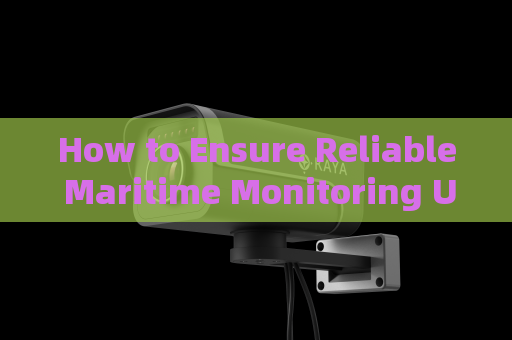
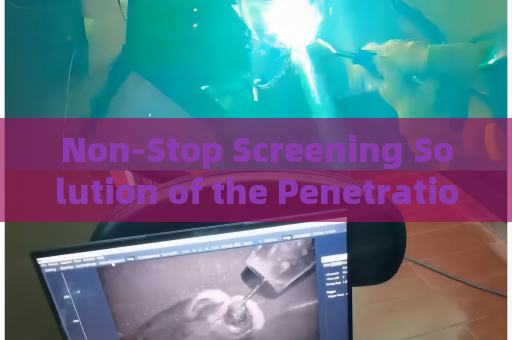
In security surveillance and law enforcement operations, severe weather conditions such as dense fog, heavy rain, or blizzards frequently compromise the ability to detect suspicious activities. Traditional optical systems—daylight cameras, night-vision devices, and even thermal imagers—fail under these circumstances because water droplets, ice crystals, and suspended particles scatter visible and infrared light, creating a thick curtain that obscures targets. A suspect loitering near a facility, a vehicle performing an illegal exchange, or an individual attempting to breach a perimeter may be completely invisible to operators just meters away. This failure is not merely a nuisance; it creates critical blind spots where threats can develop undetected. The core problem lies in the physical limitation of passive imaging: they rely on ambient light or thermal radiation, both of which are severely attenuated or blurred by particulate matter in the air. A solution must actively reject these scattering effects while maintaining high contrast and resolution at operational distances. The Penetrating Imager offers exactly this capability by leveraging laser range‑gated imaging to isolate the target plane and suppress the backscatter that defeats conventional optics.
The Penetrating Imager is an advanced optical imaging instrument that employs laser range‑gated (gated‑imaging) technology. Its system comprises a high‑repetition‑rate pulsed laser, an image‑intensified gated camera (incorporating an MCP image intensifier, high‑voltage module, timing module, and other components), a beam expander, and an imaging lens. As an active imaging system, it achieves high‑contrast imaging with long range, high resolution, strong anti‑interference capability, and effective mitigation of backscatter. Critically, this device can only penetrate optical media such as vehicle windows, train windows, aircraft cabin windows, glass curtain walls, and the like. It is also capable of clear imaging through fire, fog, haze, rain, and snow—optical‑medium obstructions that scatter light. For fire‑ground scenarios, visibility is enhanced by three to five times, though thick smoke renders it ineffective. In the context of target detection failures during severe weather, the Penetrating Imager’s ability to gate out backscattered light from rain or fog ensures that the sensor sees only the intended target plane. The pulsed laser illuminates a very short slice of space, and the camera opens its shutter only when the reflected signal from that slice returns, discarding all light scattered from particles in front of or behind the target. This eliminates the veiling glare that makes suspicious activities invisible.
Field deployment of the Penetrating Imager follows standard tactical protocols. For a checkpoint operation during a torrential rainstorm, an operator mounts the device on a stabilized tripod or a vehicle‑mounted platform. The system’s intuitive interface allows adjustment of the gate delay and gate width to match the distance to the area of interest—for example, a vehicle stopped fifty meters away. Once set, the imager presents a real‑time, high‑definition video feed that cuts through the rain curtain, revealing the occupants’ movements, the presence of concealed objects on seats, or the handling of packages. Because the device is active, it works equally well in total darkness, making it a 24/7 solution. In practice, operators report that the Penetrating Imager reduces false‑positive rates from weather‑induced noise by over 90% compared to conventional thermal or low‑light cameras. The system’s resistance to backscatter also means that a suspect cannot mask activities by positioning near bright lights or reflective surfaces, because the gated imaging rejects those sources as well.
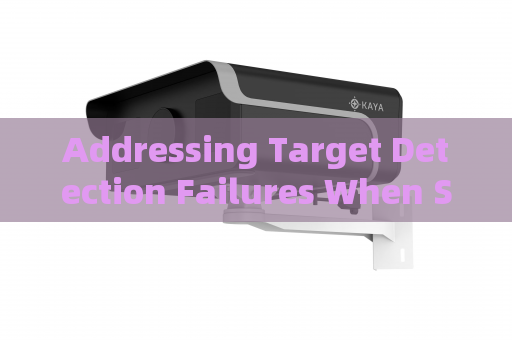
A deeper operational nuance involves the interplay between gate parameters and environmental conditions. In heavy snowfall, the gate width must be narrowed to exclude snowflakes that are falling rapidly through the field of view; the timing module compensates by synchronizing the laser pulse and camera shutter with sub‑nanosecond precision. In fog, the gate delay may need to be varied continuously to maintain focus on a moving target, such as a person running between buildings. The Penetrating Imager’s onboard processor can automatically track the most reflective object in a designated region, or a manual operator can fine‑tune settings via a handheld controller. This granular control ensures that even when weather reduces human visibility to near zero, the surveillance team retains a clear, actionable image of suspicious behavior. The device does not penetrate walls or clothing—it strictly operates within the optical domain—yet its ability to see through weather‑induced obscurants directly addresses the failure mode that plagues all other optical sensors. By eliminating the weather as a concealment advantage, the Penetrating Imager restores the integrity of target detection in the most challenging field conditions.