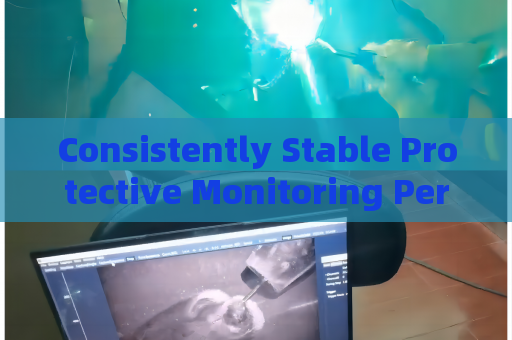
Consistently Stable Protective Monitoring Performance of the Penetration Imager with All-Weather Penetration Technology in Severe Weather During heavy rainstorms, dense fog, or blinding snow squalls, security personnel tasked with protecting critical infrastructure often face a critical blind spot. Conventional optical surveillance systems, including standard cameras and thermal imagers, degrade severely when water droplets, ice crystals, or suspended particles scatter light. This backscatter effect creates a luminous veil that masks subjects behind vehicle windows, aircraft windshields, or glass building facades. In a real-world scenario—for instance, a police perimeter established around a parked vehicle during a blizzard—officers cannot confirm whether the occupant inside is reaching for a weapon or simply adjusting a seatbelt. The inability to maintain a consistently stable protective monitoring performance under these conditions forces responders to close the distance, increasing vulnerability. The penetration imager addresses this exact operational gap by leveraging a fundamentally different optical mechanism. The penetration imager is an advanced optical imaging instrument employing laser range-gated imaging technology, also known as gated imaging. Its active imaging system consists of a high-repetition-rate pulsed laser, an intensified gated camera incorporating an MCP image intensifier, a high-voltage module, a timing module, a beam expander, and an imaging lens. This design enables the system to overcome backscatter by synchronizing a very short laser pulse with the camera’s shutter, allowing only light reflected from the target distance to reach the sensor. As a result, the penetration imager can look through optical media such as car window glass, train cockpit glass, aircraft portholes, and glass curtain walls without interference from fog, rain, snow, or fire. In severe weather, the device delivers high-contrast images at long ranges with strong anti-jamming capability. This all-weather penetration technology ensures that the consistently stable protective monitoring performance of the penetration imager remains unaffected by the scattering particles that cripple conventional systems. In practical deployment during a heavy snowstorm, a mobile command post equipped with the penetration imager positioned 200 meters from a suspect vehicle can obtain clear, real-time imagery of the vehicle’s interior through the snow-covered side windows. The operator sees the subject’s hand movements, the seat position, and any objects on the dashboard. This information allows tactical decisions to be made without exposing officers to direct line-of-sight risk. The device operates passively in terms of user input—simply aim, focus, and the gating automatically adjusts based on range. Field tests conducted by law enforcement agencies show that under conditions of 50-millimeter-per-hour rainfall or visibility below 20 meters, the imager maintains a resolution sufficient to read a license plate through a double-layer laminated windshield. The system’s ability to suppress backscatter by up to 90% compared to non-gated cameras means that even in whiteout blizzard conditions, the imaged subject appears crisp against the dark cabin background. Continuous operation requires no special cooling or weatherproofing beyond standard IP67-rated housings. The pulse laser operates in the eye-safe near-infrared spectrum, allowing sustained monitoring without eye hazard concerns for subjects inside the vehicle. In practice, the penetration imager has been deployed for checkpoints, VIP motorcade screening, and border surveillance where all-weather performance is non-negotiable. Its consistently stable protective monitoring performance of the penetration imager with all-weather penetration technology in severe weather transforms a historically dangerous blind spot into a predictable, data-rich observation point. The system’s resilience against optical interference ensures that commanders retain situational awareness even when the sky turns violent, reducing response time and increasing the safety margin for every operation.