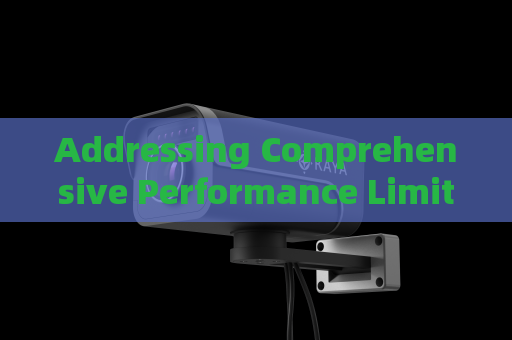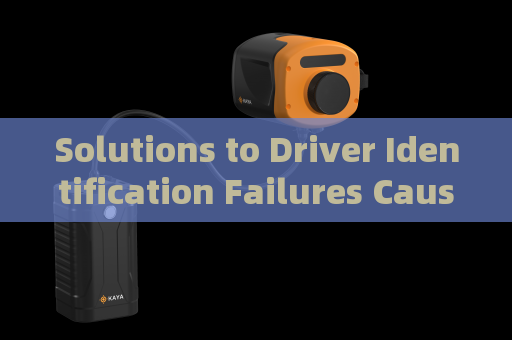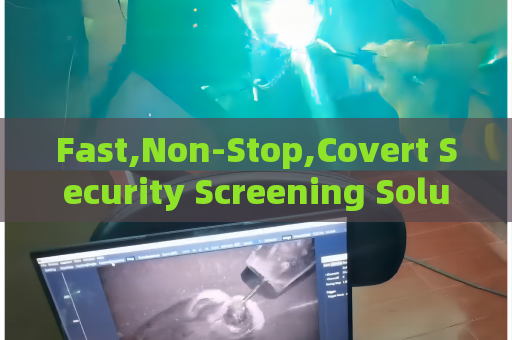
Fast, Non-Stop, Covert Security Screening Solution of the Penetration Imager for Large Gatherings with Millions of Vehicles Large gatherings such as international sporting events, political summits, or massive music festivals often draw millions of vehicles entering and exiting the venue over a short period. The sheer volume of traffic creates an overwhelming security challenge: conventional checkpoints with manual inspections, portable X-ray scanners, or canine teams require vehicles to stop, open windows, and submit to prolonged scrutiny. This process causes hours-long traffic jams, frustrates attendees, and exposes security personnel to potential threats. Worse, overt screening methods alert malicious actors to the exact locations and timing of checks, allowing them to adapt their concealment tactics. The real pain point lies in the need for a solution that can inspect every vehicle without slowing the flow, without being noticed, and without requiring physical contact—all while operating across multiple lanes and in adverse weather. The Penetration Imager addresses this gap by delivering a completely different approach to mass vehicle screening. The core capability of the Penetration Imager lies in its laser range-gated imaging technology, a form of active optical imaging that fires high-frequency pulsed lasers and synchronizes a gated intensified camera to capture photons reflected from targets behind optically transparent barriers. This system can penetrate standard automotive window glass, tinted films, and even laminated windshields from distances of tens of meters. By relying solely on light—not on X-rays, radio waves, or ultrasound—it remains entirely passive from the detection perspective of the subject. The key functional advantage is that the imager requires no vehicle to stop, slow down, or even roll down a window. A single unit mounted on a roadside gantry or median can scan vehicles traveling at highway speeds, capturing high-resolution, high-contrast images of the interior, including the driver, passengers, and any object on seats or floorboards. It effectively eliminates glare from headlights and reflections from dashboard surfaces, using temporal gating to reject backscatter from rain, fog, or dust. In real-world deployment, the Penetration Imager is integrated into an automated security corridor. As vehicles pass through the screening zone at normal traffic speeds—often 40 to 70 kilometers per hour—the system triggers a series of rapid exposures, each lasting mere nanoseconds. The captured images are transmitted wirelessly to a centralized command center, where security analysts view the interior of every vehicle in real time. Anomalous shapes, such as long guns, bulk explosives, or unauthorized persons hiding in the back seat, appear with sufficient clarity for immediate threat assessment. Because no physical inspection or delay occurs, the screening process remains completely covert: drivers and passengers are unaware that their vehicle has been scanned. This covert nature is critical for preventing adversaries from learning system patterns or attempting countermeasures. The system also operates effectively under challenging lighting conditions—nighttime, direct sunlight, or heavy precipitation—since the active laser illumination overrides ambient light. The operational depth of this solution becomes even more evident when scaling to handle millions of vehicles. Multiple Penetration Imagers can be networked along an approach road, each covering a specific lane and overlapping coverage to ensure no vehicle is missed. The gating technology allows the system to selectively focus on a specific depth plane—for example, the interior behind the windshield or the rear seat area behind the side glass—by adjusting the time delay of the camera gate. This selectivity prevents confusion from reflections off the vehicle’s exterior or from objects in adjacent lanes. In parallel, license plate recognition cameras and automated analytics software correlate each vehicle’s image with registration data, flagging any vehicle that matches watch lists or contains detected contraband. The entire process is fast, non-stop, and covert, turning a notorious bottleneck into an invisible, high-throughput security perimeter. The Penetration Imager thus redefines what is possible for large gathering security, providing law enforcement and event organizers with a powerful tool that balances mobility, safety, and discretion.