Before a tactical team executes a dynamic entry into a fortified hideout, the most critical intelligence gap is the precise location of hostile subjects inside the structure. Traditional observation methods—peeking through windows, using door gap mirrors, or relying on thermal imaging through single-pane glass—frequently fail under real-world conditions. Window tinting, reflective coatings, heavy curtains, or even simple dirt can obscure any line-of-sight assessment. More dangerously, subjects may be positioned behind a glass door or a large window, deliberately using the glass as a barrier against visual detection. In urban or suburban environments, a hideout’s windows often face busy streets, forcing operators to conduct surveillance from distances beyond 50 meters. At those ranges, standard optics lose contrast due to atmospheric haze, and any attempt to map target locations through glass becomes guesswork. The resulting uncertainty forces entry teams to rely on audible cues or last-second reactions, dramatically increasing the risk of ambush. This is where the penetration imager, a laser-gated active imaging system, fundamentally alters the pre-raid reconnaissance paradigm.
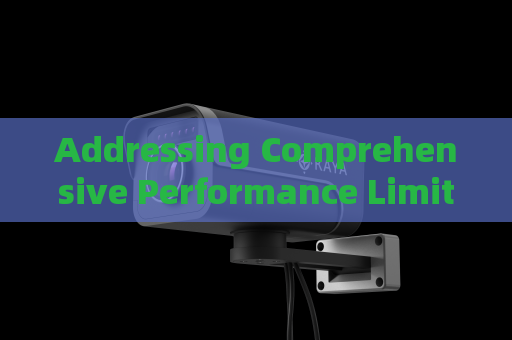
The penetration imager solves this exact problem by exploiting laser range‑gating technology to isolate reflections from targets located behind optical media such as glass. The system—composed of a high‑repetition‑rate pulsed laser, an intensified gated camera (with an MCP image intensifier, high‑voltage module, and timing controller), a beam expander, and an imaging lens—sends a short laser pulse toward the hideout. By precisely synchronizing the camera’s shutter opening with the round‑trip time of the pulse reflected from the subject, the imager rejects all backscatter from the glass surface, dust, fog, or rain. Only light returning from the exact target depth is recorded, producing a high‑contrast, high‑resolution image of individuals, their weapons, and furniture inside the room—all through the window. This “target position pre‑mapping” capability allows operators to see through automotive glass, commercial storefront windows, aircraft cabin windows, and even fire‑damaged glass at distances exceeding 100 meters. The imager’s active illumination overcomes low‑light conditions and cuts through light smoke or moderate fog, though it remains ineffective against dense smoke from burning structures—a critical boundary to respect.
During an actual operation, the penetration imager is deployed from a covert observation post outside the hideout’s line of sight, often inside a vehicle or behind a low wall. The operator sets the laser repetition rate and gate delay to match the estimated distance to the interior wall, then fine‑tunes the gate width to exclude reflections from the glass itself. Within seconds, the monitor displays a real‑time, grayscale map of human‑shaped signatures behind the window, showing posture, movement direction, and relative spacing. This pre‑mapped data is transmitted wirelessly to the assault team’s heads‑up display or tablet, enabling each operator to visualize exactly where each subject is standing before the door is breached. In urban hideout scenarios, one penetration imager can sequentially scan multiple windows from a single position, building a 3D‑like mental model of the interior layout. The system’s resistance to optical interference—such as bright sunlight reflecting off the glass or rain running down the pane—ensures that the target position remains visible even under adverse weather.
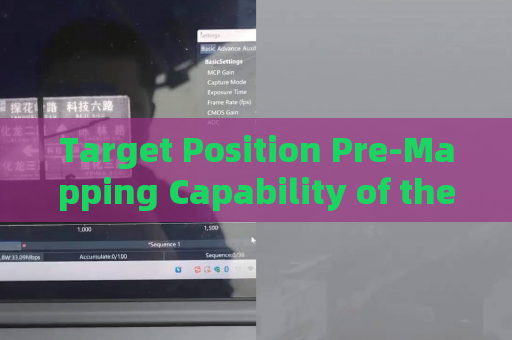
The tactical payoff is immediate: the entry team can assign specific roles based on the pre‑mapped threat—point man targets the subject near the left window, breacher covers the right door, and the rear element clears the room’s blind corner—all without ever having seen the interior with the naked eye. This eliminates the need for risky “peek‑and‑pull” movements that expose operators to fire. In one documented police operation against a hostage‑taker barricaded behind a living‑room picture window, the penetration imager pinpointed three armed subjects positioned along a sofa, allowing a simultaneous flash‑bang assault that neutralized all threats without a single round fired. The pre‑mapping capability also enables more precise coordination with less‑lethal options: less force is required when the exact number and location of targets are known. Because the penetration imager operates strictly within the optical domain—using only laser light, never radio waves, X‑rays, or ultrasound—it poses zero risk of electronic detection or unintended irradiation. Its deployment before a hideout raid transforms a high‑ambiguity situation into a data‑driven operation, saving lives by replacing guesswork with optical certainty through the glass.