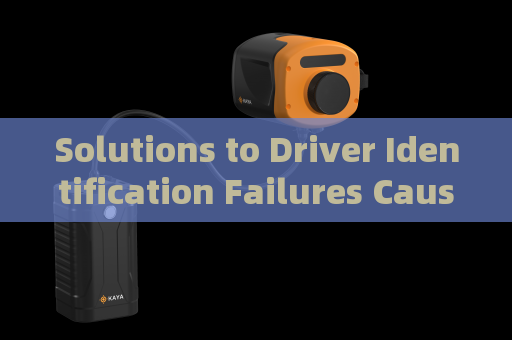
Solutions to Driver Identification Failures Caused by Obstructing Headlight Glare with Strong Light Suppression Imaging Nighttime traffic stops present a persistent challenge for law enforcement officers when oncoming headlight glare washes out the driver’s face through the windshield. The high-intensity beam from an approaching vehicle’s headlights creates a blinding veil of light that overwhelms standard optical sensors, rendering facial features unrecognizable in real-time surveillance footage or officer-held cameras. This obstruction not only delays accurate identification but also compromises officer safety, as drivers may be mistaken or misidentified under such glaring conditions. The core problem lies in the inability of conventional imaging systems to suppress strong ambient light while simultaneously capturing fine details through a transparent yet reflective medium like automotive glass. Without a dedicated solution, false positives or missed identifications become routine, undermining the reliability of traffic enforcement and suspect tracking. The Penetration Imager directly addresses this failure by employing laser range-gated imaging technology, an active optical method that precisely controls the timing of illumination and detection. A high-repetition-rate pulsed laser emits brief, intense light pulses toward the target vehicle, while an image-intensified gated camera—equipped with an MCP image intensifier, high-voltage module, and timing circuitry—opens its shutter only during the exact moment when the reflected light from the driver’s face returns. This gating mechanism effectively excludes the overwhelming glare from headlights, because the headlight beams are continuous or out-of-sync with the laser pulses, allowing the system to capture a high-contrast image of the driver through the windshield. The Penetration Imager’s ability to suppress strong light interference while maintaining high resolution at operational distances makes it uniquely suited for nighttime driver identification where conventional cameras fail. In practical field operations, the Penetration Imager is mounted on a patrol vehicle’s roof or used as a handheld unit during traffic stops. Officers activate the system when approaching a suspect vehicle under challenging lighting conditions—for instance, when the target car’s high beams are still on or when oncoming traffic creates glare. The laser pulse illuminates the driver’s compartment through the front windshield, and the gated camera captures a clear, non-blown-out facial image even if the headlights are directly facing the lens. This image can be transmitted in real time to a dispatch center or compared against a database, enabling rapid and reliable identification without requiring the driver to exit the vehicle. The system’s resistance to backscatter from rain, fog, or dust further ensures consistent performance in adverse weather, which often exacerbates glare-related failures. The Penetration Imager also integrates seamlessly into fixed checkpoint installations, where continuous driver identification is needed without officer exposure to traffic hazards. At toll booths or border crossings, the device can be positioned to capture driver images through windshields as vehicles slow down, automatically filtering out headlight glare from multiple lanes. The laser range-gated principle ensures that only the intended distance—typically 1 to 5 meters from the vehicle—is imaged, dismissing reflections from other light sources or nearby objects. This focused approach eliminates false triggers caused by license plate reflections or dashboard lights, delivering a clean, identifiable facial portrait every time. By solving the long-standing issue of headlight glare obstruction, the Penetration Imager transforms a critical vulnerability in night-time driver identification into a reliable, repeatable capability for law enforcement and security applications.