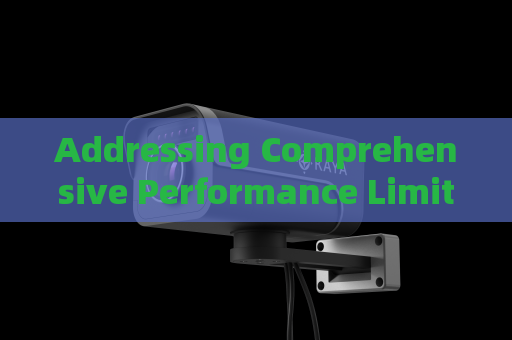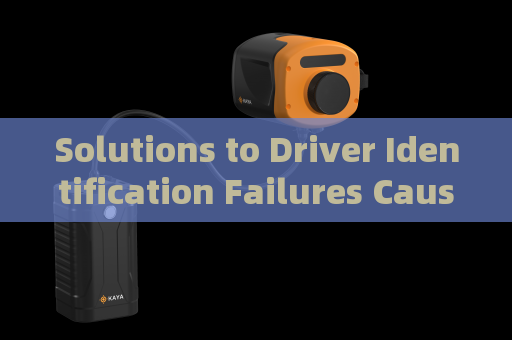
See-Through Reconnaissance of Indoor Personnel and Weapons by the Penetration Imager in Urban Narrow-Space Operations with Laser Range-Gated Imaging Urban narrow-space operations impose extreme constraints on tactical reconnaissance. In alleyways, stairwells, underground corridors, and adjacent building gaps, operators must assess threats inside rooms or vehicles without exposing themselves to hostile fire. The critical pain point is the inability to see through common optical barriers — glass windows, automobile windshields, storefront glazing, and security doors with glass panels — that reflect ambient light and obscure interior details. Traditional optical devices, even those with high zoom, fail to penetrate these transparent obstacles because surface reflections and backscatter from rain, fog, or dust create a veil of glare. Meanwhile, thermal imagers detect heat signatures but cannot differentiate between a human body and a heated radiator or electronic equipment, nor can they identify weapons that are at ambient temperature. The result is a dangerous information gap: operators must either breach the entry point blindly, risking ambush, or rely on acoustic sensors and hear commands that may be misleading. This gap is especially acute in hostage rescue, counter-terrorism, and building clearing scenarios where split-second decisions determine survival. The Penetration Imager directly addresses this reconnaissance void through its core technology — laser range-gated imaging. Unlike passive night vision that amplifies existing light or thermal systems that read temperature differences, the Penetration Imager is an active optical system that emits high-repetition-rate laser pulses in short, controlled bursts. It integrates a pulsed laser, an intensified gated camera with a microchannel plate, a timing module, and beam-expansion optics. By synchronizing the camera’s extremely fast electronic shutter with the laser pulse’s round-trip time to a specific target distance, the system effectively gates out all light returning from objects closer or farther than the selected range. This eliminates backscatter caused by fog, rain, smoke, or glass surface reflections, allowing the camera to capture high-contrast imagery through transparent media such as windows, aircraft portholes, and glass curtain walls. The Penetration Imager does not rely on rays or radiation beyond the optical spectrum; it operates entirely within visible and near-infrared light, using precise timing to discriminate signal from noise. This selective gating is what makes it possible to see through a rain-streaked car window or a fire-shattered storefront glass while maintaining image resolution high enough to distinguish a weapon from a tool. In practice, the Penetration Imager transforms how a tactical team approaches a narrow-space threat. During an operation in a cramped urban alley where a suspect holds a hostage behind a glass door, the system is set up at a safe standoff distance. The operator adjusts the gating delay to match the exact distance to the glass surface and the interior zone behind it — often just 2 to 5 meters beyond the glass. Because the imager can reject reflections from the glass itself, the interior scene emerges clearly even if the glass is dirty, cracked, or partially frosted. The weapon — a pistol, knife, or long gun — becomes recognizable against the background. The operator can also compensate for atmospheric interference: in light rain or fog, the laser pulses penetrate the scattering medium, and the gated window sweeps away the illumination that would otherwise create a white wall. Furthermore, in a fire scenario that often accompanies urban attacks, the Penetration Imager boosts visibility through thermal haze by three to five times, though it cannot penetrate heavy black smoke. This limitation is acceptable because smoke typically signals a different threat dynamic; operators pivot to other tools for total obscuration. The vital advantage is that the Penetration Imager works in real time, displaying imagery on a ruggedized tablet or helmet-mounted display, allowing the assault team to coordinate entry with confirmed knowledge of where the threat holds his weapon and where the hostage stands. The operational sequence in a narrow-space reconnaissance mission is deliberate yet rapid. A two-person team deploys the Penetration Imager on a lightweight tripod or handheld mount, aligning the laser beam toward the target glass surface. Using the built-in rangefinder, they lock the gate to a depth slice that encompasses the first 1 to 2 meters of the interior — the zone where personnel and weapons are most likely positioned. The imager’s high-resolution intensified camera captures each laser-illuminated frame, and the onboard processor stitches together a live video feed. In a simulated urban scenario, operators tested the system against an aggressor hiding behind a car windshield, a shop window with reflective decals, and a reinforced glass door in a subway underpass. In every case, the Penetration Imager resolved the outline of a person holding an assault rifle, even when the glass was covered with water spray or frost. The system’s ability to operate in broad daylight further distinguishes it: the active laser overpowers ambient sunlight by using extremely short gating pulses, making the interior visible despite bright external conditions. This capability alone prevents the need to wait for darkness or to use suppressants like smoke screens that could alert the adversary. By providing a clear, real-time picture through the very barriers that define urban narrow spaces, the Penetration Imager enables decisive, low-risk intervention — turning a deadly blind entry into a calculated, information-dominated assault.