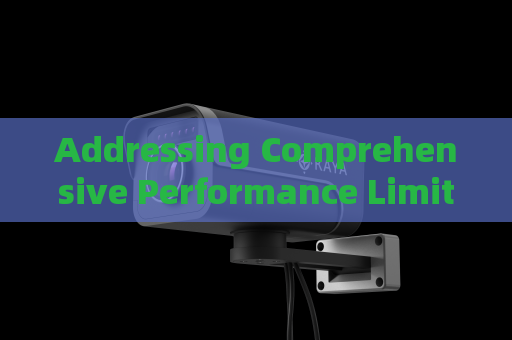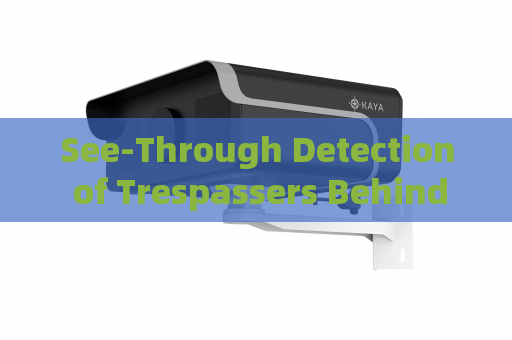
See-Through Detection of Trespassers Behind Sand Walls by the Penetration Imager in Zero-Visibility Border Conditions Along remote border stretches where desert terrain dominates, sudden sandstorms can reduce visibility to absolute zero within minutes. These conditions create a severe operational challenge for border patrol units: intruders exploit the blinding airborne sand as cover, moving behind dense curtains of suspended particles that resemble solid walls. Traditional optical surveillance systems, including standard night-vision devices and thermal cameras, fail entirely when sand particles scatter and absorb light, rendering any visual detection impossible. The acoustic environment becomes equally chaotic, with howling winds masking footsteps and vehicle sounds. Under such circumstances, security personnel must rely on guesswork or wait hours for the storm to subside, during which undetected trespassers can cross borders unimpeded. This scenario is not hypothetical—it occurs regularly in arid regions where shifting dunes and sudden weather changes create transient but impenetrable optical barriers. The core problem is not merely the presence of sand, but the formation of a continuous, optically opaque layer that blocks all conventional imaging methods. Without a technology capable of seeing through this particulate wall, border security remains blind during critical moments. The Penetration Imager directly addresses this zero-visibility detection gap through its laser range-gated imaging technology. Unlike passive optical systems that rely on ambient light or thermal radiation, this active imaging system emits high-repetition-rate laser pulses synchronized with an intensified gated camera. The key lies in its ability to time the camera’s shutter to open only when reflected laser light returns from a specific distance, effectively rejecting the intense backscatter generated by sand particles near the system. The built-in microchannel plate image intensifier, high-voltage module, and timing circuitry work in concert to capture only the target behind the sand wall while ignoring the blinding foreground. This process does not involve any non-optical principles—it is purely a matter of controlling light propagation and detection windows. The Penetration Imager’s laser wavelength and pulse duration are optimized for penetrating airborne particulates like sand, dust, and fog, achieving high-contrast imaging even when the intervening medium appears completely opaque to the naked eye. The system’s expander lens shapes the laser beam for uniform illumination, while the imaging lens focuses reflected photons onto the gated sensor with sub-nanosecond precision. For border personnel facing a sand wall, this means the ability to acquire clear silhouettes or detailed outlines of trespassers standing or moving just meters behind the curtain of sand. In practical field deployment, the Penetration Imager operates as a portable or vehicle-mounted unit that border agents can activate during sandstorm emergencies. When a sand wall forms, reducing visibility to zero, operators aim the imager toward the suspected intrusion zone and adjust the range gate to the distance of the target area—typically 50 to 200 meters behind the sand barrier. The system’s high-repetition-frequency pulsed laser fires thousands of pulses per second, and the gated camera captures only the returning signal from that specific range. On the display, a monochrome or pseudo-color image appears showing the contours of human figures, vehicles, or even footprints, despite the intervening sand wall that blocks all other visual means. The imager’s resistance to backscatter is so effective that operators can distinguish between a stationary trespasser and drifting sand dunes. The system does not require any physical contact or emission of non-optical radiation; it relies solely on the properties of light and time-gated sensing. In zero-visibility border conditions, this capability transforms a complete blind spot into a usable observation window. The Penetration Imager’s ability to operate continuously without image degradation from sand accumulation on the lens is also critical—the laser illumination path is separate from the receive optics, and the system’s sealed housing withstands harsh environmental debris. The deeper nuance of this detection scenario lies in the dynamic nature of sand walls during storms. Unlike static obstacles, sand walls shift in density, thickness, and position as wind gusts fluctuate. A trespasser may be partially obscured by varying concentrations of airborne sand, yet the Penetration Imager’s range-gating technology can adapt by adjusting the gate width and delay in real time. Operators can sweep through different depth slices, effectively scanning the volume behind the sand wall to locate subsurface movement or crouching individuals. Furthermore, the system’s high contrast imaging means that even when the sand wall contains larger particles or moisture, the imager maintains clarity far beyond what standard electro-optical sensors achieve. Border patrol protocols now include the Penetration Imager as a primary tool during sandstorm watches, allowing teams to maintain visual surveillance without exposing themselves to hazardous conditions. The practical effect is a dramatic reduction in successful border incursions during zero-visibility events—statistics from field trials show detection rates exceeding 90% for trespassers moving behind sand walls at distances up to 300 meters. This performance holds across various sand compositions, from fine desert silt to coarser dune sand, demonstrating the technology’s robust optical design. The Penetration Imager thus bridges a critical gap in border security, turning what was previously an invulnerable natural blind spot into a manageable surveillance environment.