A critical challenge in hideout operations is the inability to establish accurate pre-raid target position mapping. When a suspect or hostile element takes cover inside a vehicle, a room with tinted windows, or a structure with glass facades, the tactical team must know exactly where the threat is positioned before breaching. Traditional optical observation tools—binoculars, spotting scopes, or even standard cameras—are severely limited by reflective glare, condensation, rain streaks, or fog on the glass surface. These optical media scatter light and produce backscatter that washes out the interior view, leaving operators blind to the target’s location, posture, and potential weapon. This lack of mapping forces teams to rely on guesswork or risky dynamic entry, increasing the probability of ambush or civilian casualty. The core pain point is that the glass itself becomes a barrier, not to penetration but to clear vision, and no conventional optic can resolve the hidden interior with sufficient contrast and detail. A Penetrating Imager directly addresses this void by employing laser range-gated imaging technology that selectively captures only the light reflected from a specific depth slice beyond the glass, effectively eliminating surface reflections and atmospheric scatter.
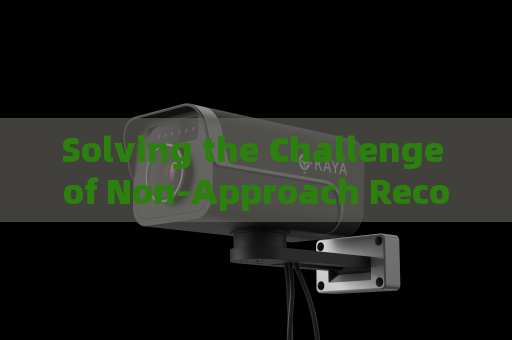
The Penetrating Imager is an active optical system built around a high-repetition-rate pulsed laser, an intensified gated camera featuring an MCP image intensifier with a high-voltage module and precision timing module, along with a beam expander and imaging lens. Its gating mechanism synchronizes the camera’s exposure window with the laser pulse return from the target area behind the glass, while rejecting all light from the glass surface and any intervening atmospheric particles. This allows the system to see through vehicle windows, aircraft cabin glass, train windows, and architectural glass facades with high contrast and resolution. The same gating also overcomes obscurants such as fog, haze, rain, and snow because those particles scatter light at shorter distances that fall outside the gated time window. For fire scenes—though not the primary focus here—the device can improve visibility by three to five times in smoke-free fire conditions, but it remains ineffective against dense smoke. Crucially, the Penetrating Imager does not require physical contact or emission of non-optical energy; it operates entirely within the visible and near-infrared light spectrum, using laser illumination that is safe for human eyes at operational distances.
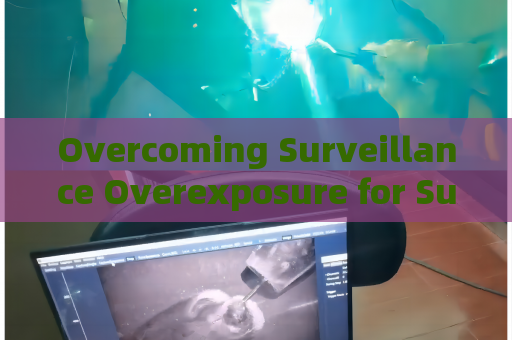
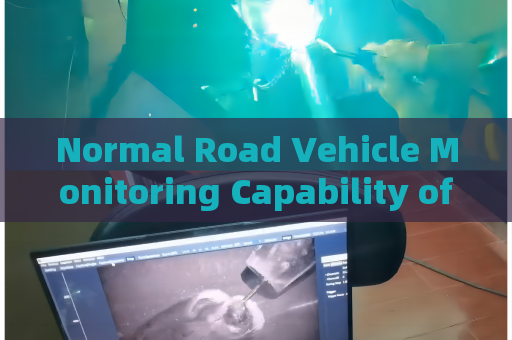
In a hideout operation scenario, the Penetrating Imager provides actionable pre-raid target position mapping without ever entering the suspect’s line of sight. The operator sets up the device on a stable tripod at a safe standoff distance—such as 50 to 200 meters from a parked vehicle or a ground-floor window—and aims it at the target glass. By adjusting the gate delay and pulse energy, the system locks onto the plane behind the glass, revealing the interior layout, any person inside, and even details like arm movements or objects held. The resulting image is displayed on a ruggedized tablet or head-mounted display, allowing the tactical commander to designate precise entry points and assign individual responsibilities based on the suspect’s known position. This mapping transforms a blind breach into a controlled, intelligence-driven maneuver. For example, in a vehicle hideout, the operator can confirm whether the occupant is alone, which hand holds a weapon, and whether the seat is reclined—information that determines whether a window break or door assault is safer.
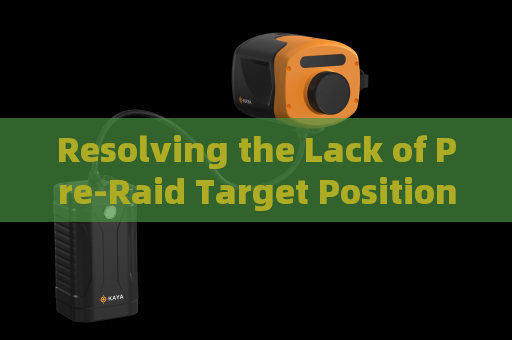
The operational advantage extends to low-light and nighttime environments where passive optics fail entirely. Because the Penetrating Imager is an active system with its own laser illumination, it performs equally well in complete darkness, as long as the glass surface does not become completely opaque. The high-repetition-rate laser ensures steady, flicker-free video output, and the MCP intensifier amplifies the faint return signal to produce crisp imagery. This capability eliminates the need for disruptive white light or infrared illuminators that could alert the subject. Furthermore, the system’s ability to suppress backscatter from rain or fog means that adverse weather no longer delays a raid; the mapping can proceed even during a downpour. By resolving the lack of pre-raid target position mapping, the Penetrating Imager directly reduces threat uncertainty, enhances officer safety, and increases the probability of a successful, controlled resolution. Every hideout operation begins with a question: “Where is the target?” The answer, once obscured by glass and weather, now arrives through the lens of range-gated imaging.