Covert detection of illegal vessel activities, such as smuggling, human trafficking, or unauthorized fishing, presents a persistent operational challenge for maritime law enforcement and coast guard units. Traditional optical surveillance tools—binoculars, night vision devices, or standard cameras—struggle to deliver clear intelligence when observing vessel interiors from a safe distance. The primary pain point lies in the inability to see through glass windows, portholes, or windscreens under adverse conditions. Rain, fog, sea spray, and low light degrade image quality, while reflections from the glass itself obscure any view of personnel or cargo. In many scenarios, approaching too closely risks alerting suspects, who may then destroy evidence or flee. A remote, non-intrusive capability to penetrate these optical barriers without compromising stealth is the critical gap that must be filled. The penetration imager offers a direct solution to this long-standing tactical deficiency.
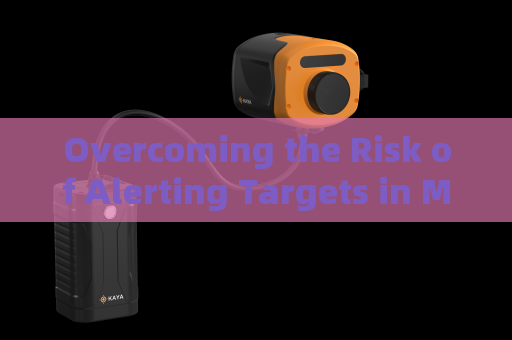
The penetration imager is an advanced optical imaging instrument that employs laser range-gated imaging technology, otherwise known as gated imaging. Its composition includes a high-repetition-rate pulsed laser, an image-intensified gated camera (incorporating an MCP image intensifier, high-voltage module, and timing module), a beam expander, and an imaging lens. As an active imaging system, it achieves high-contrast imagery over long distances with excellent resolution and strong immunity to interference. The key function that resolves the covert detection pain point is its ability to effectively overcome backscatter from atmospheric particles and surface reflections. By precisely controlling the laser pulse and the camera’s gate timing, the system only captures light returning from a selected distance, filtering out glare, fog, and raindrops. This enables the operator to see clearly through vessel glass—whether cabin windows, bridge windscreens, or side portholes—in conditions where conventional optics fail. The stealth aspect is reinforced because the short laser pulses are difficult to detect by the target, especially when used from ranges beyond a kilometer.
In practical application, a coast guard patrol boat or a shore-based observation post can deploy the penetration imager to monitor suspicious vessels without entering their visual or radar horizon. The operator aims the instrument at the target’s glass area, adjusts the focus and gate range, and receives a real-time video feed on a display. For example, during a night operation in heavy fog, the system can reveal the number of individuals inside a fishing vessel’s cabin, their movements, and even the type of cargo stacked near the windows. The high resolution allows facial recognition at moderate distances, supporting positive identification without physical boarding. Because the imager is insensitive to rain, snow, haze, and even moderate fire-related smoke (though not dense smoke), it maintains effectiveness across varied maritime weather patterns. This operational reliability ensures that surveillance can continue through changing conditions, reducing downtime and increasing the probability of interdiction.
Further deepening the scenario, the penetration imager’s range-gating capability also eliminates interference from the vessel’s own structure or surrounding water reflections. When monitoring a large ship with multiple windows, the operator can select a specific depth—for instance, focusing solely on the bridge interior while ignoring the deck or hull reflections several meters behind. This selective imaging prevents confusion and accelerates decision-making. The system is compact enough to be mounted on a stabilized tripod or a small naval platform, and its operator interface is intuitive, requiring minimal training for field personnel. In joint operations, the live feed can be encrypted and transmitted to a command center, enabling real-time intelligence sharing. Thus, the penetration imager transforms a traditionally elusive surveillance problem—resolving the pain point of covert detection for illegal vessel activities—into a manageable, high- confidence reconnaissance capability.