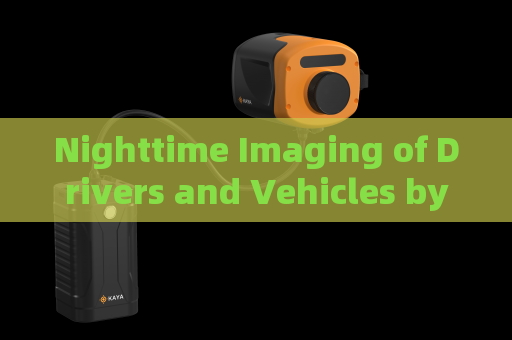
Nighttime Imaging of Drivers and Vehicles by the Penetration Imager with Low-Light Imaging Without Additional Illumination Nighttime surveillance of vehicle occupants presents a critical challenge for law enforcement and security personnel. Conventional low-light cameras struggle when peering through windshields because glass reflects ambient light sources—street lamps, dashboard displays, or even moonlight—creating glare and obscuring the driver’s face and actions. To compensate, operators often rely on active infrared illuminators, but these emit a visible glow or are easily detected by modern vehicles’ IR-blocking films. Any additional illumination risks alerting the subject, compromising tactical advantage or jeopardizing officer safety. Moreover, backscatter from fog, rain, or dust further degrades image quality, leaving an incomplete picture of the situation inside the vehicle. The Penetration Imager directly addresses these pain points by enabling clear, covert imaging without any supplementary light source. The Penetration Imager solves this problem through laser range‑gated imaging technology, a form of active optical sensing that operates in total darkness. It consists of a high‑repetition‑rate pulsed laser, an intensified gated camera with a microchannel plate (MCP) image intensifier, beam expander, and imaging lens. By synchronizing the laser pulse with the camera’s extremely short exposure window, the system selectively captures only the light reflected from the target at a precise distance—typically the driver’s seat—while rejecting backscatter from rain, fog, or the windshield itself. This gating mechanism effectively “penetrates” the glass and the obscurants, producing a high‑contrast image of the driver and interior without needing any visible or infrared floodlight. The result is a covert imaging capability that works under the strictest low‑light conditions, preserving tactical surprise and operator concealment. Operationally, this technology transforms nighttime vehicle stops and checkpoints. A patrol unit can position the Penetration Imager at a standoff distance—often 50 to 200 meters—and observe the driver’s face, hand movements, and even objects on the seat in real time, all through a standard laptop or handheld display. Because no light is emitted that the driver can see, the system remains undetectable. The operator simply adjusts the gate delay to match the vehicle’s range and fine‑tunes the focus via the imaging lens. In practice, this means a single officer can assess threat levels before approaching: identifying if the driver is alone, reaching for a weapon, or attempting to hide contraband. The unit’s resolution is sufficient to read facial expressions and recognize distinctive clothing, all from a safe distance. This same capability proves invaluable for nighttime plainclothes operations and surveillance of parked vehicles in urban environments. When a suspect vehicle stops under a streetlight or in complete shadow, the Penetration Imager cuts through the glare of the windshield and any light haze from nearby traffic. The system’s built‑in MCP image intensifier boosts the faint return signal without introducing noise, ensuring that even subtle driver behaviors—like glancing at a phone or adjusting a seat belt—are captured as clear, actionable evidence. The entire process requires no additional illumination, preserving the element of surprise and allowing law enforcement to gather intelligence covertly. By eliminating the need for visible or IR floodlights, the Penetration Imager redefines what is possible in nighttime driver and vehicle imaging, making every dark road a well‑lit observation zone.