Border patrol and law enforcement agencies face a persistent challenge: how to conduct ultra-long-range reconnaissance of suspects or illegal immigrants without triggering any awareness. Conventional optical devices like binoculars or telescopes rely on ambient light and become useless in fog, rain, or darkness. Long-range cameras with zoom lenses can capture images from a distance, but they struggle to see through vehicle windows or aircraft glass, and their visible flash or movement often alerts targets. Thermal imagers detect heat signatures but cannot identify specific objects or people behind glass, and they are easily fooled by engine heat or environmental factors. The real pain point is achieving covert, high-definition observation at extreme distances—such as two to five kilometers—while penetrating transparent barriers like car windshields, train windows, or building glass, all without any signal that could tip off the subject.
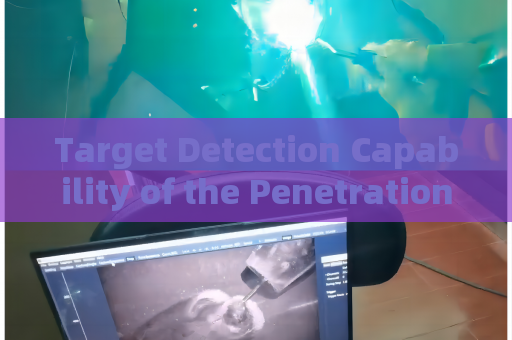
The penetration imager, also known as a穿透成像仪, directly addresses this need. It employs laser range-gated imaging technology, combining a high-repetition pulsed laser with an intensified gated camera equipped with an MCP image intensifier, high-voltage module, and timing circuitry. Unlike passive optics, this active imaging system emits short-duration laser pulses that illuminate the target. The camera shutter opens only when the reflected light from that specific distance arrives, effectively eliminating backscatter from fog, rain, snow, or haze. More critically, the penetrative capability allows it to see through common optical media such as tempered automotive glass, high-speed train windows, aircraft portholes, and glass curtain walls. The laser pulses are invisible to the naked eye and last only nanoseconds, so there is no flash or beam that could warn a suspect or illegal immigrant at the scene. The imaging contrast remains high, and the resolution is sufficient to distinguish facial features, hand gestures, or concealed items inside a vehicle.
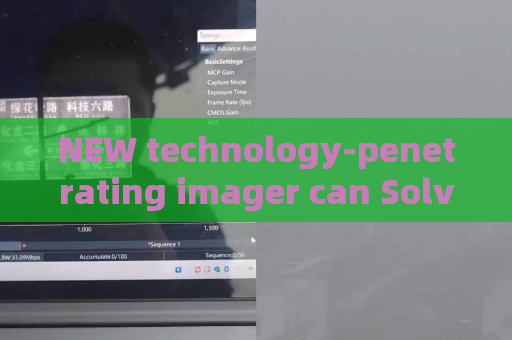
In practical deployment, a single operator can set up the penetration imager on a tripod behind cover, such as a treeline or building rooftop, at a range of one to three kilometers from the observation zone. The device connects to a ruggedized tablet or handheld monitor via a secure link. Through the eyepiece or screen, the operator sees a real-time, daylight-quality video of the target area even through heavy rain or light fog. For example, during a border checkpoint operation, officers can scan a line of approaching vehicles from a concealed position. The imager penetrates each car’s tinted windshield and side windows, revealing the number of occupants, any suspicious movement, or hidden compartments. Because the laser is eye-safe and the unit operates silently, the targets remain completely unaware they are being watched. This allows the team to build a detailed picture of the situation before deciding whether to intercept, avoiding premature confrontation or mass escape attempts.
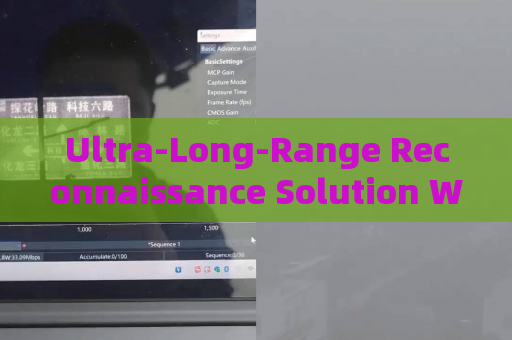
The same capability proves invaluable for maritime or coastal surveillance of illegal immigration attempts. A vessel approaching a shoreline may have its occupants hidden inside a cabin with portholes covered by rain or salt spray. The penetration imager cuts through the fogged glass and water droplets, capturing clear imagery of people and contraband at distances exceeding two kilometers. The system’s ability to suppress atmospheric backscatter means visibility remains stable even in heavy mist or snow, common in northern border regions. Law enforcement agencies can thus maintain covert watch for hours without needing to reposition or use drones that might be heard. The entire operation stays within the optical spectrum, adhering strictly to light-based imaging principles—no rays, radiation, or radio waves are involved. This ultra-long-range reconnaissance solution without alerting suspects or illegal immigrants transforms how authorities handle sensitive border security, offering decisive evidence while preserving the element of surprise.