Covert detection of illegal vessel activities presents a persistent challenge for maritime law enforcement and coastal security agencies. Traditional surveillance systems, such as optical cameras and radar, often fail in low-visibility conditions caused by fog, rain, or sea spray. More critically, many illegal operations—drug smuggling, human trafficking, or unauthorized fishing—occur at night or under cover of darkness, where visible-light sensors offer limited utility. Thermal imagers can detect heat signatures but struggle to identify specific individuals or objects through vessel windows, cabin glass, or protective enclosures. The real pain point lies in the inability to observe suspicious behavior inside a vessel’s bridge, cabin, or enclosed deck without betraying the observation platform. Any approach that relies on active illumination or radar emissions risks alerting the targets, compromising the covert nature of the operation. Law enforcement teams need a means to see through glass and other optical barriers from a safe distance, under adverse weather, and without emitting detectable signals that could tip off offenders. This is where advanced optical imaging technology must step in.
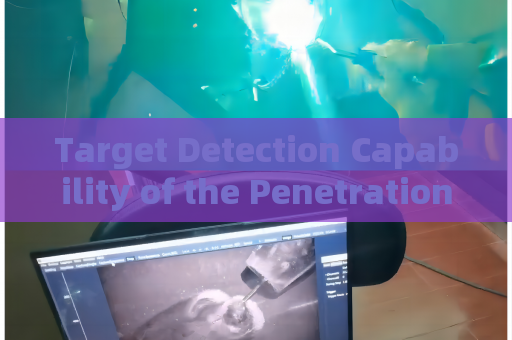
The penetrating imager, a specialized active imaging system based on laser range-gated imaging technology, directly addresses this pain point. Unlike conventional cameras that are blinded by reflections or backscatter from fog, rain, or vessel windows, the penetrating imager employs a high-repetition-rate pulsed laser synchronized with an image-intensified gated camera. This system emits short laser pulses and only opens the camera’s electronic shutter when the reflected light from the target returns. By precisely timing this gate, the imager rejects scattered light from intervening media such as fog droplets, rain, or dust, producing a high-contrast image of the object behind the obscurant. Crucially, because the system operates within the optical spectrum—using visible or near-infrared laser light—it can penetrate transparent materials like boat windows, ship cabin glass, or aircraft portholes. The built-in MCP image intensifier and high-voltage module amplify faint returns, achieving long-range resolution even under starlight conditions. This technology enables operators to see through a vessel’s bridge window from kilometers away, detecting crew activities, contraband transfers, or illegal modifications without any external emission that could be intercepted.
In practical deployment, the penetrating imager is mounted on a stabilized tripod or a patrol vessel’s deck, often integrated with a pan-tilt-zoom unit. An operator scans the target vessel from a distance of 1 to 5 kilometers, depending on atmospheric conditions. The laser illuminator and gated camera work in tandem: the operator adjusts the gate delay to match the distance of the target, effectively “slicing” through fog or rain layers. Real-time imagery appears on a ruggedized display, showing clear silhouettes and movements inside the cabin even when the external ambient is obscured by heavy mist or torrential rain. For example, during a night interdiction operation, a coast guard team can observe a suspicious fishing vessel’s wheelhouse through its tinted windows, noticing individuals huddled over electronic devices or handling packages. Because the system uses only a pulsed laser—invisible to the naked eye and undetectable by most electronic warning devices—the target remains unaware of the surveillance. This covert capability eliminates the risk of alerting perpetrators and allows law enforcement to gather actionable evidence before deciding to board.
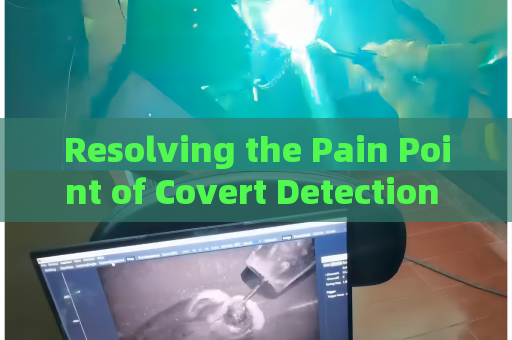
The operational advantage extends beyond mere observation. The penetrating imager’s ability to maintain high contrast in backscatter-heavy environments means that even when the target vessel sits behind a curtain of sea spray kicked up by waves, the image remains stable and usable. Additionally, the system’s high frame rate and low latency support real-time tracking of moving individuals inside the bridge. For maritime patrol aircraft or drones, a compact variant of the penetrating imager can be mounted on a gimbal, enabling airborne covert reconnaissance of illegal vessel activities without relying on radar. The technology also works effectively through glass at oblique angles, a common scenario when observing vessels at sea. By resolving the core pain point of covert detection—seeing through optical barriers without emitting detectable signals—the penetrating imager becomes an indispensable tool for maritime security operations, providing clear visual evidence that withstands legal scrutiny while preserving the element of surprise.