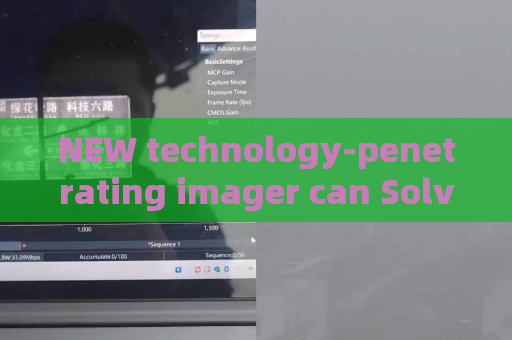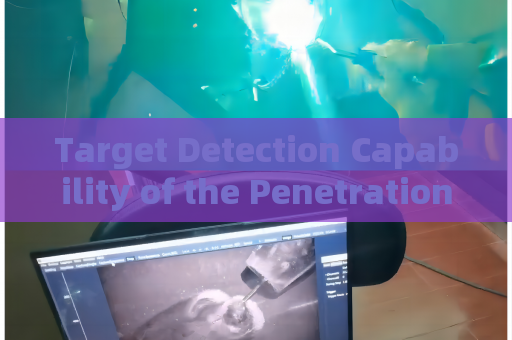
Target Detection Capability of the Penetration Imager with Fog Penetration Imaging When Severe Weather Conceals Suspicious Activities Severe weather, particularly dense fog, poses one of the most persistent challenges for surveillance and security operations in coastal areas, border zones, and critical infrastructure perimeters. When thick fog rolls in, visibility drops to near zero, effectively masking suspicious activities such as unauthorized vessel approaches, smuggling attempts along waterfronts, or trespassers moving through industrial compounds. Conventional optical cameras and even thermal imagers struggle under these conditions: visible light scatters off water droplets, while thermal signatures are attenuated and blurred by the moisture-laden air. Law enforcement and security personnel are left effectively blind, forced to rely on radar or audio cues that lack the visual confirmation needed for positive identification and timely intervention. The operational gap is acute—a fog bank can last hours, providing a window for illicit actions to go undetected. This is where the penetration imager enters as a specialized solution, designed specifically to restore visual intelligence when atmospheric obscurants would otherwise conceal threats. The penetration imager addresses this problem through its core technology: laser range‑gated imaging, also known as active gated imaging. Unlike passive systems that depend on ambient light or thermal radiation, the penetration imager emits a high‑repetition‑rate pulsed laser and synchronizes it with an intensified gated camera that contains a microchannel plate (MCP) image intensifier, a high‑voltage module, and precise timing electronics. By timing the camera shutter to open only when the laser pulse reflected from the target returns, the system effectively gates out the backscatter caused by fog particles. This allows the penetration imager to see through the fog layer and produce high‑contrast, high‑resolution images of objects at distances far beyond what conventional optics can achieve. The system operates entirely within the optical domain—no radio waves, X‑rays, or ultrasonic emissions—and is optimized for penetrating optical media such as fog, rain, snow, smoke, and even glass windows. In the specific scenario of severe weather hiding suspicious maritime activity, the penetration imager can cut through a thick fog bank to reveal a small boat approaching a restricted dock or individuals moving along a fog‑shrouded pier. In practical field use, the penetration imager dramatically shifts the tactical advantage back to security forces. During a foggy night at a port facility, an operator can mount the device on a tripod or vehicle platform and scan the waterline. The system’s laser illuminator and gated camera work in concert: the operator adjusts the gate delay to focus on a specific range, eliminating the fog’s scattering effect between the imager and the target. The resulting image appears as if the fog has been removed, showing crisp outlines of vessels, hull markers, and even human figures. This real‑time visual feedback supports immediate threat assessment—distinguishing a legitimate fishing trawler from a suspicious inflatable raft. Because the penetration imager is an active system with its own light source, it performs equally well in total darkness, an additional advantage when fog combines with night conditions. The device’s ability to raise visibility by three to five times in fire‑related smoke (though not thick, black smoke) is a separate capability; here, the focus remains on fog, where the penetration imager consistently delivers actionable imagery that conventional cameras cannot produce. Integrating the penetration imager into standard patrol protocols requires minimal training. Operators familiar with basic optical surveillance quickly learn the gate‑delay adjustment, which is analogous to focusing on a specific depth. The system can be linked to a monitor or recording device, allowing command centers to receive live feeds from fog‑bound locations. In a realistic scenario, a coastal security team might deploy the penetration imager at a fixed observation post overlooking a known smuggling corridor. When fog sets in and radar picks up an unidentified contact, the imager is turned on. Within seconds, the operator confirms the contact as a small speedboat with no running lights, its occupants obscured by fog but now clearly visible on the screen. The imager’s high resolution reveals the boat’s cargo—suspicious bundles—and the operator relays coordinates for interdiction. This capability not only fills the severe‑weather detection gap but also serves as a deterrent: would‑be offenders cannot rely on fog as cover. The penetration imager, with its laser range‑gated technology, proves that even when nature hides suspicious activities, optical intelligence can still prevail.