The pursuit of fugitives often hinges on continuous visual surveillance, yet severe weather conditions such as heavy fog, torrential rain, snowstorms, and dense haze introduce critical tracking interruptions. When officers attempt to maintain a line of sight on a fleeing suspect through a vehicle’s tinted windows or across open terrain, atmospheric scattering and precipitation degrade optical clarity to near-zero. Standard binoculars, spotter scopes, or even daylight cameras fail to distinguish the fugitive’s silhouette against a blurred, washed-out background. This loss of visual lock forces tactical teams to break engagement, risking escape or requiring dangerous physical closing of distance. The core problem lies in the inability of conventional optics to separate the target’s reflected light from the overwhelming backscatter caused by water droplets or suspended particles in the air. Such environmental obstacles transform a routine pursuit into a high-stakes game of guesswork, where every second of interrupted tracking increases the fugitive’s advantage.
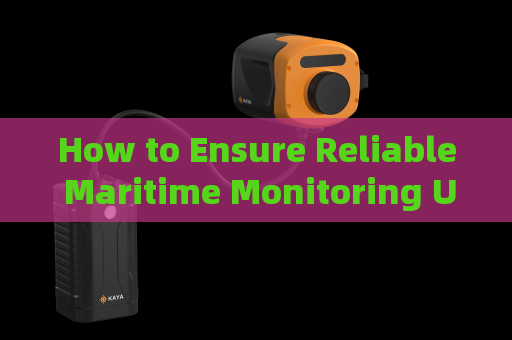
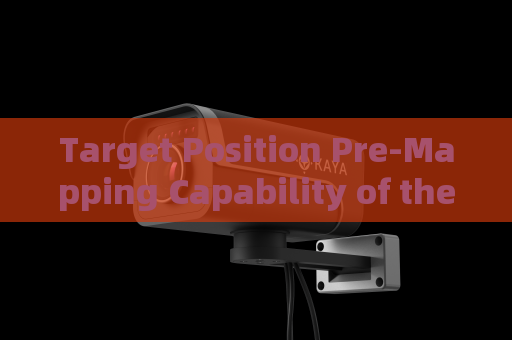
The penetrating imager directly resolves this tracking interruption through its laser range-gated imaging technology. Unlike passive optical systems, this active imaging instrument emits high-repetition-rate pulsed laser light synchronized with an intensified gated camera. The gate timing is precisely adjusted to accept only light reflected from a specific distance band, effectively slicing through the fog, rain, or snow layer that causes backscatter. The image intensifier within the camera amplifies the weak target return while the temporal gating mechanism suppresses the unwanted scattered light from closer atmospheric particles. This allows the penetrating imager to see through glass surfaces such as car windows, train windows, or aircraft portholes with minimal degradation, even when those surfaces are rain-streaked or fogged. The device’s ability to maintain high contrast and resolution at extended ranges means that a fugitive’s movements behind a vehicle windshield or through a veil of drizzle remain visually accessible.
In actual field deployment, the penetrating imager transforms the tactical response during severe weather. An officer positioned at a standoff distance can acquire and track a fugitive’s vehicle in conditions where standard optics show only a white wall of fog. The image on the display reveals the suspect’s posture, head movements, and even attempts to disguise or change vehicles. Because the penetrating imager operates actively with its own laser illumination, it is immune to ambient light fluctuations caused by cloud cover or shifting weather bands. Operators can continuously follow the fugitive as the storm intensifies, maintaining the visual chain necessary for coordinated containment. The system’s robustness against rain and snow ensures that even when precipitation reduces visibility to less than fifty meters for the naked eye, the penetrating imager still delivers actionable imagery at ranges exceeding several hundred meters. This capability directly addresses the tracking interruption by converting an environmental obstacle into a manageable optical regime.
The operational simplicity further supports sustained tracking. The penetrating imager mounts on a standard tripod or vehicle platform, with controls limited to laser power output and gate delay adjustment. Once the distance to the fugitive’s vehicle is estimated—either through laser ranging or known position data—the gate is set accordingly. As the target moves, the operator fine-tunes the gate to follow the changing range, a process that becomes second nature after minimal training. In practice, the penetrating imager does not require the officer to expose themselves to danger by closing distance; the long-range capacity keeps the team safe while preserving the visual lock. The elimination of tracking interruptions means that command centers can receive continuous real-time video feeds, allowing for precise coordination of roadblocks, air support, or ground intercepts. The penetrating imager thus becomes the linchpin in severe weather fugitive operations, bridging the gap between environmental adversity and operational certainty.