Sea fog presents a persistent and dangerous challenge to maritime monitoring operations. When dense fog rolls in over harbors, shipping lanes, or coastal security zones, visibility can drop to near zero in seconds. Standard optical surveillance systems—including conventional cameras, thermal imagers, and radar—struggle under these conditions. Thermal imagers rely on temperature contrast, but sea fog homogenizes thermal signatures, rendering them useless for identifying small vessels or floating debris. Radar suffers from sea clutter and cannot distinguish between a low-profile boat and a wave. The result is a critical blind spot: patrol vessels cannot detect unauthorized entries, search-and-rescue teams miss drifting survivors, and port security loses situational awareness precisely when threats or emergencies unfold. A conventional camera simply sees a white wall of fog. This operational gap forces maritime authorities to suspend patrols or rely on slower, less effective methods like sound signals, which are unreliable over distance. The core pain point is that fog scatters light randomly, creating backscatter that overwhelms the camera sensor, while also absorbing and diffusing the subject’s reflected light. Until recently, no practical optical solution existed to see through this dynamic, water-laden veil.
The penetration imager directly addresses this limitation through a single, targeted function: time-gated active imaging. Unlike floodlight-based illuminators that bathe the entire scene in continuous light—causing severe backscatter—the penetration imager uses a pulsed laser synchronized with a high-speed gated camera. The system emits ultra-short laser pulses toward the target area. The camera’s shutter remains closed until the exact moment when the reflected light from the target returns, opening only for a few nanoseconds. This gate timing rejects virtually all backscatter from fog droplets between the imager and the target, because those scattered photons arrive earlier or later than the intended signal. The result is a clear, high-contrast image of vessels, buoys, or personnel even through thick sea fog. The imager operates in the near-infrared spectrum, which penetrates fog better than visible light, and its active illumination ensures consistent performance regardless of ambient daylight or darkness. This technology does not rely on temperature differences or radio waves—it works purely on pulsed light and precise timing, making it immune to radar jamming and thermal masking.
In practical maritime monitoring scenarios, the penetration imager is mounted on a pan-tilt unit atop a patrol boat or a coastal watchtower. An operator selects a zone of interest—such as a fog-shrouded harbor entrance—and activates the laser illuminator. The imaging system automatically adjusts the gate delay based on distance measurements from an integrated rangefinder. At a range of 500 meters through dense sea fog, the operator sees a crisp silhouette of a small fishing boat that would be invisible to the naked eye. The image displays clearly on a daylight-viewable monitor, with enough resolution to identify the boat’s hull number, detect an outboard motor, or spot a person on deck. This capability transforms fog from an operational stopper into a manageable condition. Search-and-rescue crews can scan a fog bank methodically, covering overlapping sectors, and locate a drifting life raft in minutes rather than hours. Port security officers can verify the identity of approaching vessels before they enter restricted waters, reducing the risk of smugglers exploiting low-visibility windows. The system’s laser operates at eye-safe power levels, and the gated camera eliminates the need for fixed illumination that would alert targets.
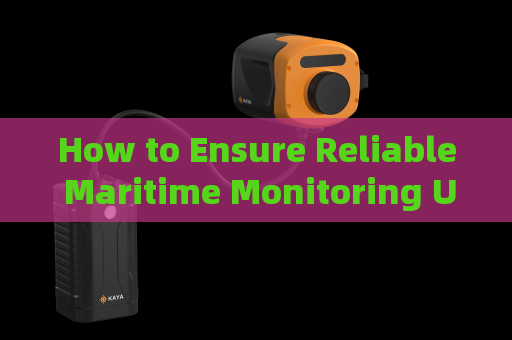
Deeper into the same scenario, the penetration imager’s advantage extends to adverse weather beyond pure fog. Sea fog often mixes with light drizzle or mist, and the system handles these combined conditions equally well because the gating principle rejects all scattering media within the optical path. The imager maintains its performance in darkness, fog, and rain simultaneously—a common real-world combination during cold-season maritime patrols. Operators can train the imager on a specific bearing and use the real-time video feed to guide a boat’s navigation, avoiding collisions with anchored vessels or floating obstacles that radar might miss. The penetration imager also integrates with existing command-and-control systems, overlaying its video onto digital charts. In a typical deployment, a coast guard cutter uses two penetration imagers: one forward-facing for navigation and one on a mast for wide-area surveillance. This dual setup ensures that even if fog reduces horizontal visibility to 50 meters, the vessel can maintain a watch radius of 800 meters or more. The system’s ruggedization—sealed optics, shock mounts, and corrosion-resistant housing—makes it suitable for salt-spray environments. By restoring reliable optical monitoring under sea fog, the penetration imager closes the gap that has historically forced maritime forces to operate blind during the most hazardous conditions.