In border security and covert surveillance operations, the greatest challenge is maintaining observation at extreme distances while ensuring that the target—whether a suspect under investigation or an illegal immigrant attempting to cross unchecked—remains completely unaware of being watched. Traditional optical systems, such as high-magnification telescopes or standard night-vision devices, frequently fail under these conditions. Atmospheric scattering, haze, and the reflective glare from vehicle windows or aircraft windscreens degrade image clarity and often force operators to move closer, increasing the risk of detection. Long-range observation through glass is particularly problematic: reflected ambient light masks occupants, and any attempt to illuminate the scene with visible or infrared light can instantly alert subjects. A solution that can acquire high-contrast imagery from hundreds of meters away without any telltale emissions is critical for mission secrecy and officer safety. This is where the penetrating imager becomes indispensable.
The penetrating imager is an advanced optical instrument based on laser range-gated imaging technology. Its core components—a high-repetition-rate pulsed laser, an intensified gated camera (incorporating an MCP image intensifier, high-voltage module, and timing module), a beam expander, and an imaging lens—work together to overcome the fundamental limitation of traditional optics: backscatter. By emitting extremely short laser pulses and precisely gating the camera to accept only photons reflected from the target distance, the system effectively eliminates haze, fog, rain, snow, and even fire-generated particle interference. More importantly, it can see through optical mediums like vehicle glass, train windows, aircraft portholes, and glass curtain walls without generating any visible or detectable flash. The laser pulse is so brief and the wavelength is outside the human visual range; suspects or illegal immigrants inside a vehicle will never notice the reconnaissance. This makes the penetrating imager the only active imaging solution that maintains full covertness during ultra-long-range surveillance.
Field trials have demonstrated that the penetrating imager can deliver clear facial and behavioral details of individuals inside a car from over one kilometer away, even through heavily tinted or rain-streaked windows. Operators position themselves at a safe, concealed vantage point and activate the system. The pulsed laser scans the area silently; the gated camera captures only the light returning from the target depth, rejecting all scattered light from the atmosphere or the glass surface itself. The result is a high-resolution, high-contrast image displayed on a ruggedized tablet or head-mounted display. No radio frequency emissions, no X-rays, no acoustic signals—just light, precisely timed. Because the system does not require any physical proximity or line-of-sight change, the target’s routine remains undisturbed, preserving the element of surprise for any subsequent interdiction or arrest.
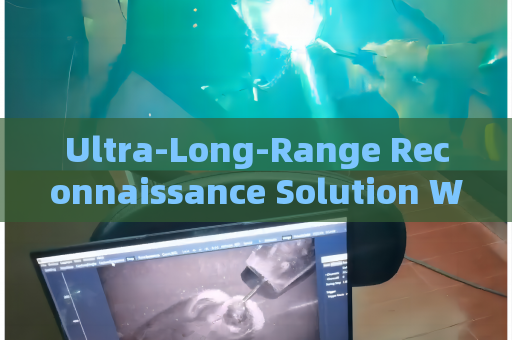
Further operational refinement allows the penetrating imager to be used in dynamic scenarios, such as monitoring a moving convoy suspected of smuggling illegal immigrants. The system’s rapid frame rate and automatic distance gating adjust to the changing range, locking onto the target vehicle even as it speeds down a highway. The operator can identify the number of occupants, their movements, and any concealed contraband without the driver ever glimpsing a flash or hearing a motor. This capability is especially vital for checkpoint avoidance: illegal immigrants often try to hide behind reflective or obscured glass, believing they are invisible to long-range optics. The penetrating imager dissolves that illusion entirely, providing a non-alerting, ultra-long-range reconnaissance solution that transforms how law enforcement and border agencies conduct covert operations.