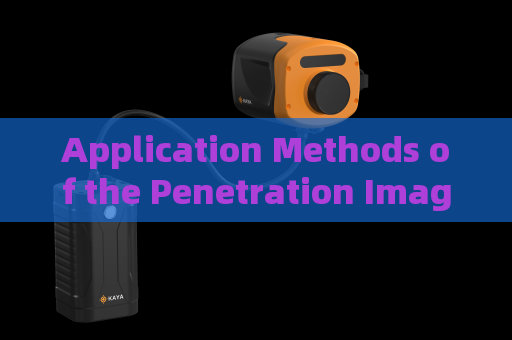
Application Methods of the Penetration Imager for Helping Law Enforcement Covertly Gather Evidence Before Taking Action In a high-stakes surveillance scenario, law enforcement officers often face the challenge of observing suspects inside a vehicle without revealing their presence. Standard optical devices struggle with heavily tinted, reflective, or rain‑beaded windows, which distort or block the view entirely. Even when using binoculars or telescopic lenses from a distance, glare from ambient light or the vehicle’s interior can render critical evidence—such as a weapon on the seat, a hand gesture, or a hidden object—completely invisible. This blind spot forces investigators to either move closer and risk exposure or rely on incomplete intelligence, potentially jeopardizing safety and the success of the operation. The need for a reliable, non‑intrusive method to see through glass under any lighting condition is a persistent operational gap. The Penetration Imager directly addresses this gap using laser range‑gated imaging technology. Unlike conventional cameras that capture all light simultaneously, the device emits high‑repetition‑rate pulsed laser light and synchronizes a gated intensified camera to receive only the light reflected from a specific distance. This gating mechanism effectively eliminates backscatter from window surfaces, fog, rain, or dust, producing clear, high‑contrast images through automotive glass, train windows, or aircraft portholes. Because the Penetration Imager is an active imaging system with its own illumination, it operates covertly in daylight or total darkness without giving away the observer’s position. The system’s ability to overcome rear‑scatter and glare means that even heavily tinted or curved windows become transparent to the operator. In practice, a tactical team can deploy the Penetration Imager from a parked van or a concealed observation point up to several hundred meters away. The operator aims the device at the target vehicle and adjusts the range gate to match the distance to the interior compartment. Within seconds, the display reveals the suspect’s movements, any visible contraband, and the number of occupants—all without a single sound or flash that might alert the subjects. This capability allows law enforcement to gather admissible photographic evidence before making entry, confirming probable cause and reducing the risk of a no‑knock raid based on guesswork. During a narcotics surveillance operation, for example, the Penetration Imager can capture images of a suspect packaging drugs on the console, providing the visual proof needed for a search warrant. Even in adverse conditions like heavy rain or fog, the Penetration Imager maintains its advantage because laser pulses penetrate water droplets and mist while the gated shutter rejects the scattered light that would otherwise wash out the image. On a misty night, an officer can still see a suspect reaching under the seat for a firearm through a rain‑streaked car window. The system’s design also supports rapid deployment: it is lightweight and can be tripod‑mounted or handheld for short‑duration observations. By delivering this level of situational clarity without compromising covert posture, the Penetration Imager fundamentally changes how law enforcement plans and executes pre‑action evidence collection. Every tactical decision—whether to wait, reposition, or move in—can be based on real‑time visual intelligence rather than inference, ultimately saving lives and strengthening the legal chain of custody.