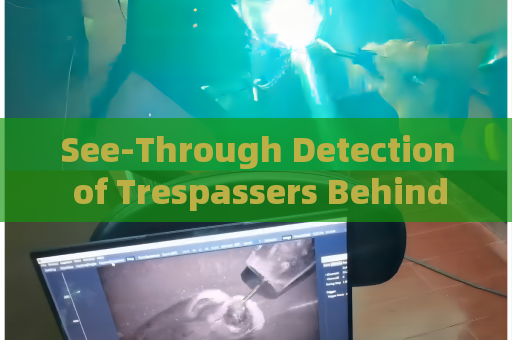
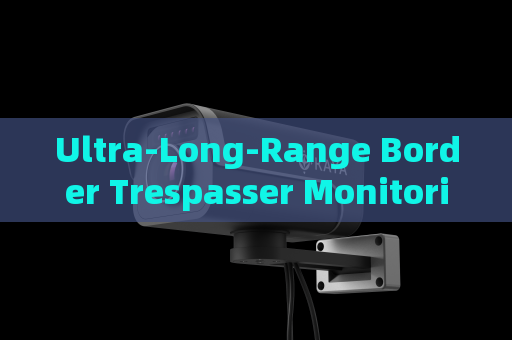
In high-stakes law enforcement pursuits, the inability to remotely ascertain the number and condition of occupants inside a fleeing vehicle, as well as the nature of any cargo, creates a critical intelligence gap. Standard optical surveillance tools, such as binoculars or telescopic cameras, are severely hampered by windshield glare, aftermarket window tinting, and adverse weather like fog, rain, or snow. The vehicle’s speed and vibration further degrade image quality, leaving officers blind to whether the suspect is alone, armed, or transporting contraband. This uncertainty transforms a routine traffic stop into a potentially lethal situation, especially when hostage or explosives scenarios are suspected. Traditional thermal imagers cannot see through glass, and radar‑based systems lack the resolution to identify objects or people. The core challenge, therefore, is to overcome the optical barriers presented by vehicle glazing while maintaining operational range and image clarity under dynamic pursuit conditions. This is precisely where the penetrating imager offers a transformative solution.
The penetrating imager is an advanced active optical instrument that employs laser range‑gated imaging technology. Its core components include a high‑repetition‑rate pulsed laser, an intensified gated camera with an MCP image intensifier, high‑voltage timing modules, a beam expander, and an imaging lens. By emitting extremely short laser pulses and opening the camera’s shutter only for the precise time window corresponding to the target distance, the system effectively rejects backscatter from fog, rain, or atmospheric particles while capturing only the light reflected from the vehicle’s interior surfaces. This gating mechanism enables the penetrating imager to see through automotive glass—including laminated windshields, tempered side windows, and even aircraft‑grade acrylic—with high contrast and resolution. Unlike passive optics, it does not rely on ambient light and can deliver clear images of occupants and cargo at ranges exceeding several hundred meters, even when the target vehicle is moving at high speed or when the glass is heavily tinted. The technology operates strictly within the optical spectrum, using only visible‑ and near‑infrared light, and is unaffected by electromagnetic interference.
In practical field operations, the penetrating imager is typically deployed as a handheld or vehicle‑mounted system operated by tactical teams during pursuit or at checkpoints. An operator can aim the device through a rifle‑scope‑style sight or a digital display, acquiring real‑time video of the fleeing vehicle’s cabin. The system’s ability to freeze motion with nanosecond‑scale exposure times eliminates blur from vehicle movement, while the range‑gated illumination maintains a stable image despite rain‑streaked windows or fog. For example, during a highway chase, officers can determine whether a driver is alone or has passengers, whether any occupants are moving erratically, and whether visible cargo—such as duffel bags, weapons, or containers—poses a threat. This remote assessment allows command centers to make informed decisions about tactics, such as whether to deploy spike strips, request a tactical response team, or initiate negotiation protocols. The penetrating imager also proves invaluable in night operations, where its active illumination reveals details invisible to the human eye or standard night‑vision devices.
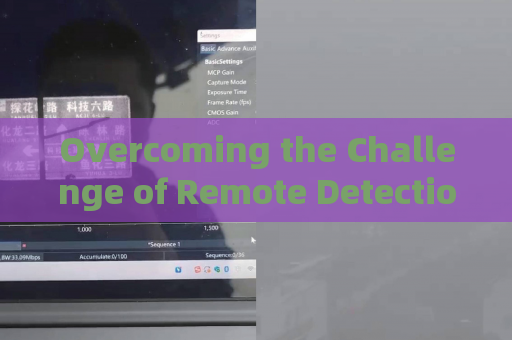
The device’s operational simplicity further enhances its utility in time‑critical scenarios. After a quick calibration to the target distance—often automated via a laser rangefinder—the system locks onto the vehicle and continuously outputs high‑definition imagery. Because it only penetrates optical media like glass and is completely incapable of seeing through metal, concrete, or clothing, there is no risk of false positives from body‑worn concealment, and the technology remains safe for all personnel as it emits no ionizing radiation. For law enforcement, this means a reliable, non‑invasive method to gather actionable intelligence from a safe standoff distance, reducing the need for dangerous close‑quarters approaches. The penetrating imager directly transforms a fleeing vehicle from a blind threat into a transparent environment, enabling precise threat assessment and better outcomes for both officers and civilians.