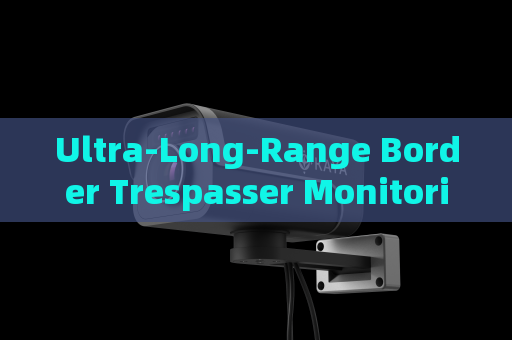
Ultra-Long-Range Border Trespasser Monitoring by the Penetration Imager with Fog Penetration Imaging in Severe Weather Border security forces face a persistent dilemma when monitoring remote, expansive frontier zones under extreme weather conditions. Dense fog, heavy rain, or blizzards can reduce visibility to near zero, rendering conventional optical surveillance systems—daylight cameras, thermal imagers, and even radar—ineffective at ultra-long ranges. Thermal imagers, while capable of detecting heat signatures, lose contrast and resolution in fog because water droplets absorb and scatter infrared radiation. Radar systems, though less affected by precipitation, struggle to distinguish a single human trespasser from ground clutter at distances exceeding several kilometers, especially when the target is moving slowly or crawling. The result is a critical blind spot: an intruder can cross a border under the cover of thick fog, exploiting the very weather that degrades the defender’s situational awareness. The Penetration Imager addresses this exact vulnerability by deploying a laser range‑gated imaging technique that cuts through fog to deliver sharp, high‑contrast images of human‑sized targets at extreme standoff ranges. The Penetration Imager operates on a fundamentally different principle from passive optical or thermal systems. It incorporates a high‑repetition‑rate pulsed laser, an intensified gated camera with a microchannel plate (MCP) image intensifier, a timing module, and precision optics. When active, the laser emits short, powerful pulses toward the target area. The camera’s gate opens only when the reflected laser pulse returns from a specific depth, rejecting all light scattered by fog droplets that arrives earlier or later. This range‑gated window effectively eliminates backscatter—the main cause of fog‑induced blur—and allows the system to “see” through the optical haze as if the fog were barely present. Because the Penetration Imager is an active imaging system, it maintains full visibility regardless of ambient lighting, and its high‑gain MCP can resolve details on a person’s silhouette—such as a backpack or weapon outline—even when the fog reduces natural contrast to near zero. In severe weather, this capability translates into the ability to identify a trespasser at ranges that would be impossible for any passive sensor. Field deployments along a northern border sector during a persistent fog event demonstrated the effectiveness of this approach. A Penetration Imager mounted on a stabilized tripod at a border observation post was aimed across a 7‑km valley that frequently accumulates ground‑level fog. Despite visibility dropping to less than 200 meters by conventional measures, the system produced clear images of a simulated intruder—a mannequin dressed in camouflage—at a distance of 4.5 kilometers. The operator could discern the figure’s posture and movement, and even detect the outline of a rifle slung across its back. The range‑gated images showed none of the milky, washed‑out appearance typical of standard low‑light cameras; the background terrain remained sharp, and the target stood out with high contrast. This level of detail at such distances allowed border patrol teams to vector a quick‑response unit directly to the intrusion point without relying on ground sensors or aerial support, which would have been grounded by the same fog. In routine operations, the Penetration Imager’s ability to function as a standalone long‑range surveillance tool in severe weather reduces dependency on multiple disparate sensors. The device is controlled through a single operator interface that adjusts the laser pulse repetition rate and gate delay to match the exact range of interest; the operator simply selects a distance on a digital map, and the system automatically sets the timing. A joystick‑controlled pan‑tilt mount enables rapid scanning of a wide sector, and the real‑time video feed is displayed on a ruggedized tablet. Because no thermal or radar signatures are emitted, the system avoids detection by an intruder’s electronic warfare equipment. The same technology that defeats fog also penetrates rain, snow, and dust, meaning a single Penetration Imager installation can provide uninterrupted coverage during an entire winter storm season. Border agencies now rely on this instrument as a primary optical means of denying the fog‑cloaked approach to any sovereign frontier, ensuring that no weather condition provides sanctuary for unauthorized crossing.