During covert surveillance operations at night, law enforcement and tactical teams frequently encounter a critical challenge: observing subjects inside a vehicle through its glass windows without revealing their own position. Conventional night vision devices or thermal imagers struggle with reflections, glare from streetlights, or the vehicle’s interior darkness. Even high‑definition daylight cameras fail to capture usable imagery when the glass is dirty, tinted, or wet. The most frustrating issue is the “window reflection effect” — the glass acts as a mirror under low‑light conditions, bouncing back ambient light and obscuring the occupants inside. This creates a dangerous blind spot: officers cannot confirm whether a suspect is armed, whether hostages are present, or whether the vehicle is empty before making an approach. The need for a reliable, non‑destructive tool that sees through glass at night is urgent, and this is exactly where the penetration imager provides a breakthrough.
The penetration imager solves this problem by employing laser range‑gated imaging, an active optical technique that synchronizes a high‑repetition‑rate pulsed laser with an intensified gated camera. The system emits a short, powerful laser pulse toward the target—typically a vehicle window. Meanwhile, the camera’s gate (a fast‑shuttering image intensifier) opens only for a precisely timed window, allowing it to capture light reflected from the target beyond the glass while rejecting all light scattered from the glass surface itself. Because the laser pulse travels at the speed of light, the time delay between emission and return is used to “slice” through the optical medium. For example, when aiming at a car window, the pulse passes through the glass, illuminates the interior (seats, occupants, objects), and returns. The camera opens its electronic shutter only when the light from the interior arrives, effectively filtering out the unwanted reflection and backscatter from the glass. This principle—gating out the foreground reflection and gating in the target scene—allows the penetration imager to produce clear, high‑contrast images of what lies behind the glass, even in complete darkness.
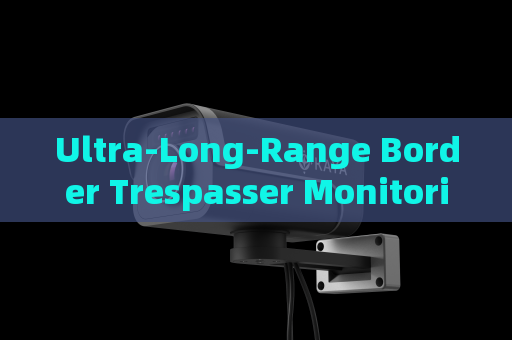
In practice, operators use the penetration imager from a stand‑off distance of tens to hundreds of meters. The system consists of a pulsed laser source, a beam expander to shape the illumination, a telephoto imaging lens, and the core component—the intensified camera with built‑in microchannel plate (MCP) and high‑voltage timing module. During a typical vehicle surveillance scenario, the operator first selects a safe position, then aims the device at the target window. By adjusting the gate delay, the operator can “focus” the imaging slice onto the plane of interest—for instance, the back seat or the driver’s area. The resulting image is displayed on a monochrome or color screen, revealing detailed information such as the number of people, their hand positions, and even small objects like a phone or a weapon. Unlike passive night vision, the penetration imager overcomes glare from headlights and streetlamps because the laser pulse is much brighter than ambient light and the narrow‑gate time rejects stray photons. It also works effectively through tinted windows, rain streaks, or light fog, significantly improving operational safety.
One critical detail is that the penetration imager cannot penetrate solid opaque barriers—it is strictly a glass‑penetration tool. Its performance relies on the optical clarity of the medium; heavy fog or thick dust reduces effectiveness, and dense smoke renders it ineffective (though it can improve visibility through fire‑generated haze by 3–5 times). In a night glass penetration scenario, the operator must also account for the “water‑drop” effect on wet glass—rain droplets can cause small‑scale reflections, but the range‑gating technique minimizes their impact by only capturing the delayed return from behind the glass. The pulsed laser operates at a wavelength in the near‑infrared range (typically 808 nm or 1064 nm), which is invisible to the human eye, ensuring covert observation. By combining precision timing with active illumination, the penetration imager transforms a vehicle’s glass barrier from an obstacle into a transparent visual portal, giving tactical teams the critical advantage of seeing inside before making contact.