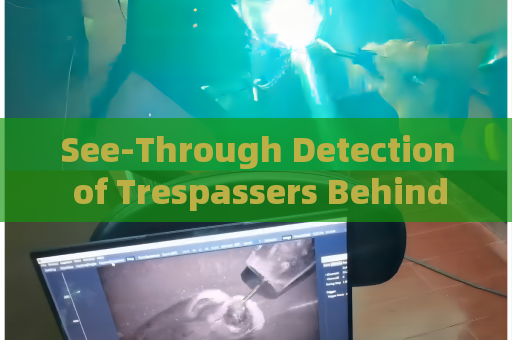
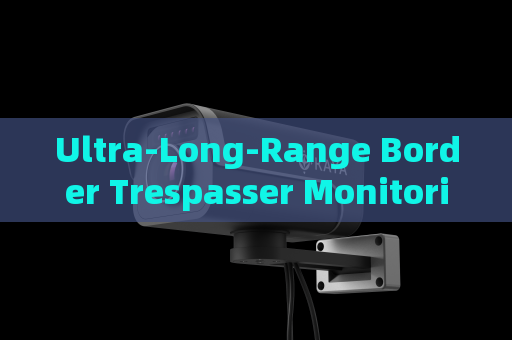
In zero-light or high-glare tactical environments, law enforcement and military operators face critical reconnaissance blind spots. Traditional night vision devices struggle when ambient illumination is completely absent, and conventional optical systems are rendered useless by intense glare from headlights, searchlights, or reflected sunlight off vehicle windows and building facades. The real pain point lies in the inability to see through optical barriers such as car windshields, aircraft windows, or glass curtain walls under these extreme lighting conditions. An officer attempting to assess a suspect inside a vehicle at night is often blinded by the vehicle’s own headlights or by nearby streetlights reflecting off the glass. Similarly, during a hostage situation in a brightly lit room with large windows, glare from outside makes it impossible to verify the number of subjects or their positions. These scenarios demand an imaging solution that can overcome both total darkness and blinding glare while penetrating optically transparent media. The Penetrating Imager, built on laser range-gated imaging technology, directly addresses these comprehensive performance limits by providing clear, high-contrast vision through glass and other optical obstacles regardless of ambient light levels.
The core functionality that solves this problem is laser range-gated imaging, an active optical technique that synchronizes a high-repetition-rate pulsed laser with a gated intensified camera. The Penetrating Imager emits extremely short laser pulses toward the target and opens the camera’s shutter only when the reflected light from the desired distance arrives. This temporal filtering eliminates backscatter from fog, rain, smoke, or the glare source itself, allowing only the target signal to reach the sensor. In a zero-light environment, the laser provides its own illumination, making the system independent of starlight or moonlight. In a high-glare tactical scenario, such as when aiming through a vehicle windshield with headlights on, the gate is set to exclude the bright reflections from the glass surface and the glare source, capturing only the scene behind the window. The Penetrating Imager’s ability to deliver high-resolution, high-contrast images through automotive glass, aircraft canopies, and architectural glass façades gives tactical teams a decisive advantage—they can see exactly what is inside a vehicle or room without being detected or dazzled by the environment.
In actual field operations, the Penetrating Imager is typically mounted on a tripod or vehicle platform and operated from a safe standoff distance. Operators select the desired range gate via the system’s control interface, adjusting the delay to match the distance to the target glass surface. The laser and camera work in concert to produce real-time video output displayed on a ruggedized monitor. During a nighttime vehicle interdiction, for example, an entry team can stage from behind cover while the Penetrating Imager scans the target car from 50 meters away, revealing whether occupants are armed or holding hostages, all while the car’s headlights remain on. In high-glare urban environments, the system can focus on a glass storefront with intense interior lighting, cutting through the glare to identify individuals behind the window. Because the technology only senses light within the laser pulse’s time window, it is immune to blinding by flashlights, laser dazzlers, or sudden changes in ambient brightness. The result is a persistent, reliable imaging capability that operates under conditions where standard optics and even thermal imagers may fail—thermal systems cannot see through glass and are affected by solar heating, while the Penetrating Imager remains effective in both pitch dark and harsh lit conditions.
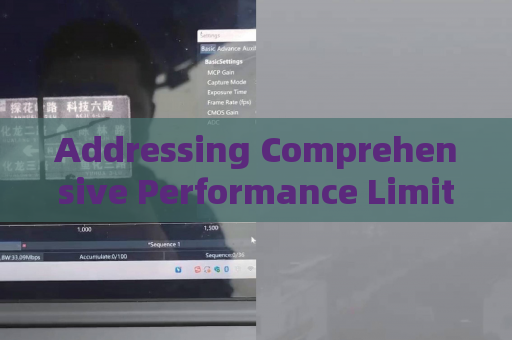
Operators also benefit from the system’s ability to penetrate wildfire smoke and light fog, increasing visibility by three to five times in fire-affected zones, though dense smoke remains a limitation. The Penetrating Imager’s laser range-gating principle ensures that only the optical medium—such as glass or atmospheric particulates like mist and rain—is actively penetrated. It does not rely on radio waves, X-rays, or any non-optical mechanism, making it safe for use around civilians and compatible with existing tactical protocols. By integrating this capability into standard reconnaissance procedures, units can conduct assessments in previously impossible conditions, from a zero-light parking garage to a sun-glare-drenched airport tarmac. The Penetrating Imager thus becomes an indispensable tool for addressing comprehensive performance limits in the most demanding visual environments.