Covert surveillance of smuggling activities conducted via illegal vehicles presents a persistent and critical challenge for law enforcement and border security agencies. The primary difficulty lies in the need to observe suspicious cargo or individuals inside a vehicle without alerting the driver or compromising the operation. Traditional optical surveillance tools, such as binoculars or standard cameras, are severely hampered by vehicle windows—especially when those windows are tinted, coated with reflective films, or covered with dirt and condensation. Under low-light conditions, rain, fog, or snow, the glare and backscatter from external light sources further degrade image clarity, making it nearly impossible to confirm the presence of contraband, hidden compartments, or illicit passengers from a safe distance. Moreover, any attempt to approach the vehicle for closer inspection risks detection and escalation, potentially leading to evasive maneuvers, destruction of evidence, or violent confrontation. This operational gap demands a non-contact, long-range imaging solution that can see through optical obstructions while maintaining concealment.
The Penetrating Imager, built on laser range-gated imaging technology, directly addresses these surveillance limitations. Unlike conventional cameras that rely on ambient light, the Penetrating Imager actively emits high-repetition-rate pulsed laser light and synchronizes it with an intensified gated camera containing an MCP image intensifier, a high-voltage module, and a timing module. The key capability is its ability to reject backscatter from fog, rain, snow, and even fire-generated haze by opening the camera gate only when the reflected laser pulse returns from the target. This gating mechanism effectively "sees through" optical media such as vehicle window glass—whether clear, tinted, or laminated—while eliminating the blinding effect of reflections. The system delivers high-contrast, long-range images with excellent resolution, enabling operators to discern objects, people, and structural modifications inside a vehicle from a standoff distance of hundreds of meters. Critically, the Penetrating Imager does not rely on any form of penetrating radiation or radio waves; it operates strictly within the optical spectrum, making it a passive-compatible and non-detectable tool for covert missions.
In practical deployment, the Penetrating Imager can be mounted on tripods, observation posts, or vehicle platforms without drawing attention. During a typical operation against a known smuggling route, an operator positions the device at a concealed location overlooking a road or checkpoint. The laser illuminates the target vehicle from a distance, and the gated camera captures a clear image of the interior through the windshield or side windows, even if the windows are heavily tinted or covered with grime. The resulting image reveals the number of occupants, their movements, and the presence of packages, hidden compartments, or modified seat structures. Because the system overcomes fog, rain, and low-light conditions, surveillance can continue through adverse weather that would otherwise force a mission abort. The operator can record evidence in real time, transmit it to a command center, and decide whether to intercept the vehicle based on verifiable visual intelligence—significantly reducing false alarms and unnecessary stops that could tip off smuggling networks.
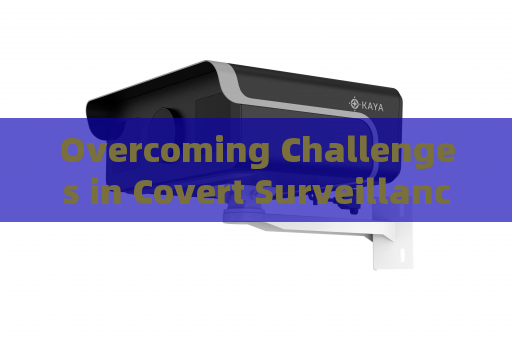
A further refinement of this application involves integrating the Penetrating Imager with pan-tilt-zoom tracking systems for dynamic surveillance. When a suspect vehicle accelerates or attempts evasive driving, the imager can follow it while maintaining focus through the vehicle's glass surfaces. The high-repetition-rate laser and fast gating ensure that motion blur is minimized, and the image remains sharp even as the vehicle changes distance or angle. This capability is especially valuable for intercepting smuggling convoys that use multiple vehicles to confuse surveillance. By providing unambiguous visual proof of illicit activities without any physical contact, the Penetrating Imager transforms covert surveillance from a guesswork exercise into a precise, evidence-based operation. Law enforcement agencies can now monitor high-risk smuggling corridors with greater confidence, knowing that the critical barrier—the vehicle's window—no longer shields criminal activity from the watchful eye of the law.