Maritime law enforcement agencies face a persistent challenge when attempting to covertly monitor suspicious vessels engaged in illegal activities such as drug smuggling, human trafficking, or unauthorized fishing. Traditional optical surveillance from helicopters, drones, or coastal observation posts is often compromised by the reflective glare of vessel windows, dense sea fog, rain squalls, or the low-light conditions of dawn and dusk. Officers cannot see through the tinted or reflective glass of cabin windows, wheelhouses, or portholes to identify crew members, confirm cargo, or document illicit transactions. The need for a non-contact, real-time imaging solution that can penetrate these optical barriers while remaining undetected is critical—and this is precisely where the Penetration Imager offers a breakthrough.
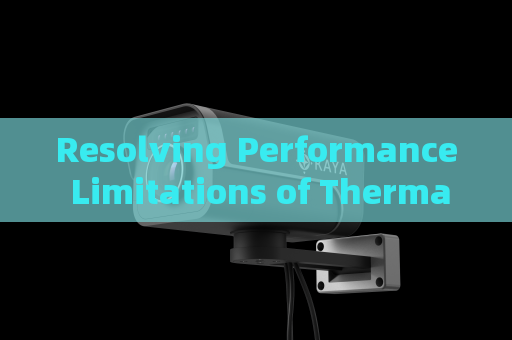
The Penetration Imager is an advanced active optical imaging system built on laser range-gated imaging technology. Its core components—a high-repetition-rate pulsed laser, an intensified gated camera incorporating a microchannel plate intensifier, a high-voltage module, and a timing module—work together to selectively capture light reflected from a target at a precise distance while rejecting backscatter from fog, rain, or atmospheric particles. Unlike passive cameras that struggle with glare and poor contrast, the Penetration Imager can clearly see through optical media such as vessel windows, including heavily tinted or laminated marine glass. Its long operational range and high resolution allow operators to maintain a safe standoff distance while still obtaining crisp images of activities inside a ship’s cabin or bridge.
In practice, a covert monitoring mission begins with a helicopter or fixed-wing drone orbiting at a distance of several kilometers. The operator aims the Penetration Imager’s imaging lens—coupled with a beam expander for the pulsed laser—at the target vessel’s wheelhouse window. By precisely timing the laser pulse and camera gate to match the round-trip travel of light to the window and back, the system eliminates the blinding reflection off the glass surface and reveals the interior. The image appears on the operator’s screen with high contrast, even in heavy sea mist or during nighttime. The lack of any detectable emission other than a narrow, eye-safe laser beam ensures the surveillance remains covert—the crew inside the vessel has no awareness that they are being watched.
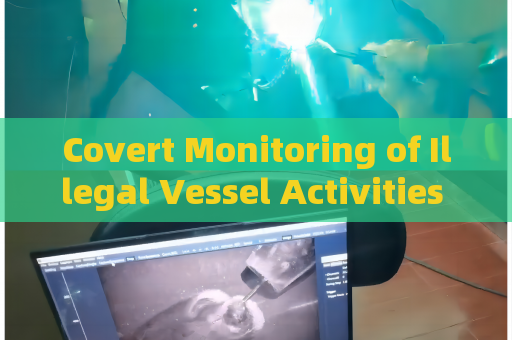
Further operational details underscore the versatility of this tool in maritime law enforcement. When fog reduces visibility to under 100 meters, conventional optics become useless, but the Penetration Imager’s ability to overcome forward and backward scattering maintains a clear view through the window. In heavy rain, the same gating principle rejects water droplets between the sensor and the glass. The system can also be mounted on a gyro-stabilized platform aboard a patrol vessel, allowing intercept teams to gather real-time evidence of illegal transfers or weapons handling before boarding. By providing a non-intrusive, optical-only method to see through vessel windows under adverse conditions, the Penetration Imager transforms the way authorities conduct covert monitoring of illegal vessel activities.