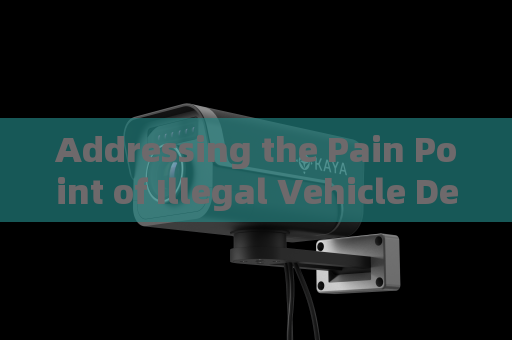
During night-time tactical operations, law enforcement and security personnel often face the critical challenge of observing subjects inside vehicles through windows. Standard night vision devices struggle with severe backscatter from headlights, street lamps, or the vehicle’s interior lighting, which creates glare and obscures detailed features. Additionally, glass surfaces produce strong specular reflections that wash out the target, making it impossible to identify weapons, hostages, or suspicious movements. This real-world pain point—the inability to achieve clear, high-contrast imaging through glass at night—calls for a specialized solution that can reject unwanted light from the window itself while capturing only the reflected signal from objects behind it. The core difficulty lies in separating the weak target return from the overwhelming background noise, especially under low-light conditions where conventional optics fail entirely.
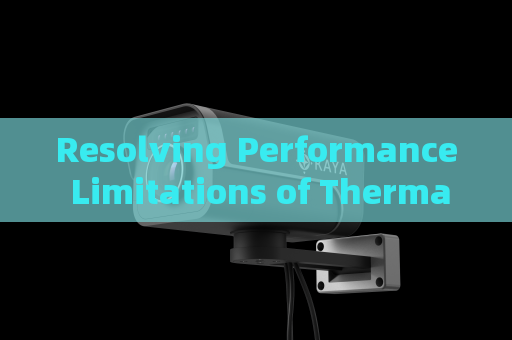
The penetration imager, built on the principle of laser range-gated imaging, directly addresses this issue through precise temporal gating. Unlike passive night vision that amplifies all ambient light including reflections from the glass, this active system emits short, high-repetition-rate laser pulses and synchronizes the camera’s intensifier shutter to open only when the pulse reflected from the target returns. By setting the gate delay to match the round-trip time for the distance to the target behind the glass, any reflection from the glass surface—which arrives earlier due to its closer proximity—is completely excluded. The system’s key components, including a pulsed laser diode, an intensified gated camera with a microchannel plate, and a timing module, work together to create a narrow time window that rejects backscatter from fog, rain, or even the glass itself. This gating mechanism, often adjustable in steps as fine as nanoseconds, ensures that only light returning from the precise depth of interest is recorded.
In practical field use, an operator aims the penetration imager at a vehicle window from a stand-off distance of tens of meters. After a quick calibration to the distance of the interior seat or cargo area, the system generates a crisp image showing the silhouette and details of occupants or objects behind the glass, free from the typical glare and reflection. For example, during a vehicle checkpoint stop, a law enforcement officer can detect a suspect reaching for a weapon under the seat or observe a child restrained in the back seat—all without needing to approach dangerously close. The system’s ability to operate in total darkness using its own laser illuminator means it remains covert, emitting no visible light that would alert the subject. Additionally, because the gating window can be narrowed, the penetration imager can suppress atmospheric haze or light rain that might otherwise degrade image contrast.
The operational workflow for night glass penetration requires minimal training. After setting the gate delay, the user observes a real-time feed on a monocular or handheld display, with the option to fine-tune the gate width to balance depth of field and contrast. In scenarios with multiple panes—such as a double-glazed bus window—the system can be adjusted to reject reflections from both surfaces by setting the gate to only accept returns from a depth beyond the second pane. The penetration imager’s inherent immunity to strong ambient light sources, such as oncoming headlights, makes it particularly effective for highway patrols or surveillance near busy intersections. This capability, rooted in the precise control of laser pulse timing, transforms a previously impossible observation task into a reliable, repeatable tactical advantage.