The persistent challenge of maintaining vigilant oversight across vast and remote border territories is significantly exacerbated by severe weather conditions. Frequent storms, dense fog, persistent haze, and heavy precipitation dramatically reduce optical visibility, creating critical gaps in security coverage. Conventional surveillance cameras and even standard thermal imaging systems often fail under such duress, their signals attenuated or scattered by the atmospheric medium, rendering monitors filled with noise and obscuring potential threats. This vulnerability directly compromises the principle of stable and continuous protective border surveillance, leaving periods of operational blindness that can be exploited. To bridge this gap, a technological solution capable of rejecting these optical interferences is paramount, with the penetrating imager presenting a targeted answer to this specific environmental dilemma.
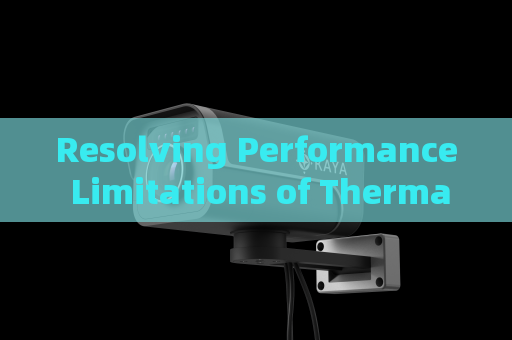
The core functionality that addresses this impairment is the penetrating imager's mastery over backscatter suppression, achieved through its Laser Range-Gated Imaging (LRG) technology. This active imaging system operates by emitting precisely timed, high-repetition-frequency pulsed laser light. The key lies in the synchronized gating of the image-intensified camera. Its internal high-voltage and timing modules ensure the camera's shutter opens only for a brief, controlled window after the laser pulse has traveled to the intended target and back. This temporal gating effectively rejects the overwhelming backscattered light from suspended particles like raindrops, snowflakes, or fog close to the sensor, which would otherwise flood and wash out the image. Instead, the system selectively collects only the light reflected from the distant scene of interest, thereby recovering high-contrast, detailed imagery where passive systems see only a diffuse glow or murky shadows.
Deployed along perimeter watchtowers or on mobile patrol platforms, the penetrating imager transforms surveillance operations in adverse conditions. Operators monitor feeds where defined landscapes, infrastructure, and movement re-emerge from the meteorological clutter. During a thick maritime fog that reduces human visibility to near zero, the system can maintain observation over key coastal approaches, discerning vessel profiles and activity on the water's surface. The technology effectively boosts effective visibility by a factor of three to five in such optically dense media, translating to extended detection ranges and enhanced identification capabilities. The operational paradigm shifts from weather-dependent reaction to weather-resilient, proactive monitoring, ensuring the surveillance envelope remains intact.
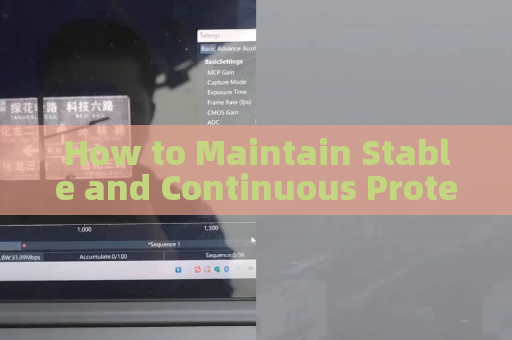
This resilience directly fortifies the continuity of the surveillance mission. Patrol schedules and response protocols no longer need to be solely dictated by weather forecasts. The penetrating imager provides a stable optical window, allowing for the consistent gathering of forensic-grade visual intelligence regardless of precipitation or airborne obscurants. This continuous stream of clear data feeds into wider command and control systems, enabling reliable tracking, pattern-of-life analysis, and timely threat assessment. The integration of such a system specifically mitigates the historical vulnerability of fair-weather surveillance, making the goal of stable and continuous protective border surveillance a tangible, all-weather reality.