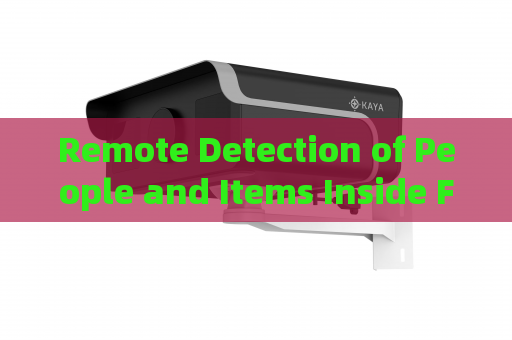
Remote Detection of People and Items Inside Fleeing Vehicles by the Penetration Imager with Through-Window Imaging addresses a critical and persistent challenge in law enforcement and emergency response operations. The primary obstacle is obtaining real-time, actionable intelligence from within a moving vehicle attempting to evade pursuit. Traditional visual surveillance is severely hampered by obstructions. Vehicle windows often reflect glare from sunlight, streetlights, or police lights, creating a blinding shield. Adverse weather conditions like heavy rain, fog, or haze further degrade visibility. At night, darkness compounds these issues, rendering occupants and potential weapons or contraband inside the cabin virtually invisible. This information gap forces responders to make high-stakes decisions based on external observations alone, escalating risks during interventions. The penetration imager is engineered specifically to overcome these optical barriers. As an advanced active imaging system, it utilizes laser range-gated imaging technology. The core of this penetration imager is a synchronized system comprising a high-repetition-rate pulsed laser and a gated intensified camera. The laser illuminates the target vehicle's window with precise, controlled pulses of light. The camera's shutter, or "gate," opens for an extremely brief moment timed to capture only the light reflected from the window and the interior cabin, while rejecting most of the backscattered light from atmospheric particles like rain, fog, or smoke. This process effectively sees through the optical medium of the glass and mitigates the veiling effects of poor weather, providing a high-contrast image of the scene behind the window. In a tactical engagement, the system can be deployed from a pursuing vehicle or a stationary checkpoint. The operator directs the laser and imaging lens assembly toward the fleeing car's rear or side windows. The penetration imager processes the returned signal, generating a clear, real-time video feed on a monitor. This feed reveals the number and rough posture of occupants, potentially identifying drivers or passengers. More critically, it can detect large items held by individuals, such as firearms or bulky packages, which may indicate an imminent threat or the presence of evidence. The ability to distinguish between a driver reaching for a weapon or merely adjusting the radio provides invaluable seconds for threat assessment and de-escalation protocol. This through-window imaging capability fundamentally transforms the dynamics of a vehicle pursuit. Commanders gain a previously unavailable layer of situational awareness, moving from reactive to proactive decision-making. The knowledge of interior conditions allows for tailored tactical responses, potentially preventing the escalation of force. By penetrating the visual shield of the vehicle's windows and prevailing environmental conditions, this technology delivers critical intelligence, enhancing both operational effectiveness and public safety. The deployment of the penetration imager marks a significant advancement in remote vehicular assessment.