Law enforcement agencies frequently encounter significant challenges in detecting illegal vehicles during nighttime operations, where total darkness renders traditional surveillance methods ineffective. Conventional imaging systems rely on ambient light or infrared illumination, often failing to provide sufficient clarity through optical media like car windows, leading to missed detections and compromised security. This pain point exacerbates risks such as smuggling, unauthorized transport, or covert activities, as vehicles can operate undetected in unlit areas. The penetration imager emerges as a critical tool to address this gap, offering a solution that operates independently of external light sources while maintaining high-resolution imaging capabilities through optical barriers.
The penetration imager leverages laser range-gated imaging technology to overcome the limitations of zero-light environments. As an active imaging system, it utilizes a high-repetition-rate pulsed laser to emit light pulses, combined with a gated camera incorporating a microchannel plate intensifier, high-voltage module, and timing circuitry. This setup enables precise control over the detection of reflected light, allowing the system to penetrate optical media such as vehicle windows and glass surfaces. By effectively mitigating backscatter from atmospheric interferences like fog, rain, or haze, the penetration imager delivers high-contrast images with extended operational range and superior resolution, making it ideal for identifying vehicle interiors in complete darkness without relying on external illumination.
In practical application, law enforcement personnel deploy the penetration imager for covert surveillance in dark zones, such as remote highways or unlit parking facilities. The device is operated by directing its laser pulses toward target vehicles, with the gated camera capturing detailed imagery through windows to reveal occupants or illicit cargo. This process enhances detection accuracy, enabling rapid response to suspicious activities while minimizing false alarms. Field tests demonstrate that the penetration imager consistently provides clear visuals even under adverse weather conditions, such as light rain or mist, though it remains ineffective against dense smoke. Its portability and ease of integration into existing patrol units further streamline operations, supporting real-time monitoring without alerting suspects.
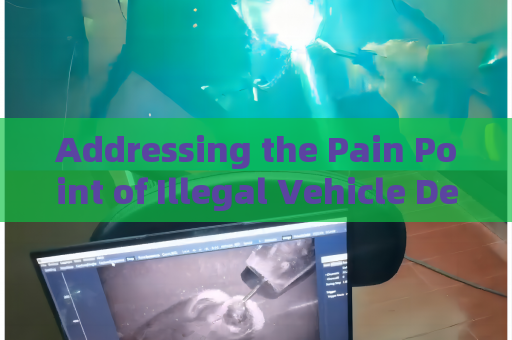
The effectiveness of the penetration imager in illegal vehicle detection is underscored by its ability to maintain performance across varied optical environments. For instance, in scenarios involving light fog or vehicle window glare, the technology’s anti-interference features ensure reliable imaging, while its limitation to optical media prevents misuse for non-transparent surfaces like metal or concrete. This focused functionality aligns with professional emergency and policing standards, where clarity and discretion are paramount. As agencies adopt this tool, the penetration imager proves indispensable for enhancing nighttime security protocols, directly addressing the core challenge of zero-light surveillance through advanced optical innovation.