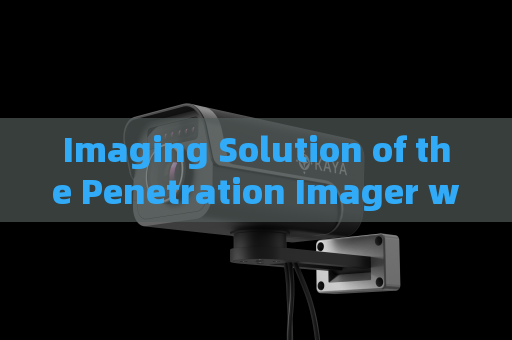
In high-glare port environments, operational visibility is severely compromised by intense light reflections from water surfaces, metal containers, and glass structures. Traditional imaging systems often fail under such conditions, producing washed-out images with minimal detail due to overpowering glare and scattered light. This poses significant risks for security surveillance, navigation safety, and emergency response, where clear visual data is critical. The penetration imager emerges as a dedicated solution to address these challenges, leveraging advanced optical technologies to overcome the limitations of conventional cameras in harsh lighting scenarios. The penetration imager incorporates strong light suppression imaging through laser range-gated imaging technology, which selectively captures light from specific distances while rejecting unwanted glare. This system utilizes a high-repetition-rate pulsed laser and a gated intensified camera with components like a microchannel plate intensifier and timing modules. By synchronizing laser pulses with camera gating, it minimizes backscatter from atmospheric particles and suppresses intense ambient light, allowing high-contrast imaging even in direct sunlight or artificial lighting. This function specifically targets optical media interferences, ensuring that details behind glass windows or through fog, rain, or haze remain discernible without distortion from overpowering glare. In practical port applications, the penetration imager enhances situational awareness during daytime operations or nighttime patrols. Operators deploy it for monitoring ship movements, inspecting cargo through container windows, or assessing emergencies like fires where flames and smoke reduce visibility. The strong light suppression capability enables clear imaging of objects behind aircraft windows or glass幕墙, even when surrounded by reflective water or bright industrial lights. By integrating into port security networks, this imaging solution provides real-time visual data that supports decision-making without requiring manual adjustments for changing light conditions, thereby improving response times and safety protocols. Further enhancing port safety, the penetration imager demonstrates robustness in diverse weather conditions, from heavy rain to light fog, maintaining image clarity where traditional systems falter. Its active imaging approach, based solely on light manipulation, avoids interference from non-optical sources and adheres strictly to optical介质 penetration. In high-glare scenarios, the penetration imager proves indispensable for long-range observation and detail retrieval, contributing to a more resilient port infrastructure. This technology underscores a focused advancement in optical imaging, tailored to overcome the unique visual obstructions found in bustling port environments.