Operational safety in visually degraded environments presents a critical challenge. During emergency responses such as structural fires or in adverse weather conditions like dense fog and heavy rain, personnel are compelled to approach hazards for assessment, significantly increasing risk. The core dilemma lies in the necessity for close proximity to gather vital visual information through obscurants, directly conflicting with the imperative to maintain a secure standoff distance for operator safety. Traditional imaging methods fail in these scenarios, leaving a dangerous gap in situational awareness. This gap underscores the urgent need for a technological solution that allows detailed observation from a protected position, fundamentally altering the risk calculus for frontline operators.
The penetration imager addresses this exact problem through its advanced laser range-gated imaging technology. This system actively illuminates the scene with precisely timed, high-repetition-rate pulsed laser light. Its core capability is selective detection: a synchronized, gated camera intensifier opens its shutter only for the brief moment when light reflected from the target at a specific distance returns, while rejecting scattered light from intervening particles like smoke, fog, or rain. This method of the penetration imager for ensuring operator safety by maintaining a secure distance is achieved by electronically filtering out backscatter, enabling high-contrast imaging through the optical medium. The operator can thus visually penetrate the obscurant and see the target area clearly from a position of safety, without needing to physically advance into the hazardous zone.
In practical application, a responder deploys the penetration imager from a sheltered location. By adjusting the range gate delay, the operator can virtually "slice" through layers of interference, such as a curtain of rain or a bank of fog, to bring a distant object or scene into sharp focus on the monitor. For instance, at a vehicle incident involving fire with shattered glass and rising steam, the device can see through the combined optical clutter to assess occupant status or structural integrity from behind a safety perimeter. The operational method is intuitive—point the system, set the desired imaging range, and observe. This capability transforms decision-making, allowing for accurate assessment while the operator remains at a secure distance, aligning perfectly with the principle of the penetration imager for ensuring operator safety by maintaining a secure distance.
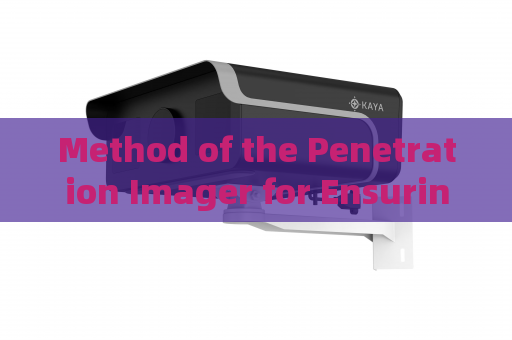
The effectiveness is particularly pronounced in firefighting scenarios, where the instrument can enhance visibility through flames and light smoke by three to five times, although it does not penetrate thick, opaque smoke. This specific enhancement allows incident commanders to identify flashover conditions or locate the seat of a fire through a window from a much safer standoff. The penetration imager provides a critical visual buffer, turning what was once a blind and high-risk approach into a managed, information-rich observation post. Ultimately, the integration of this penetration imager into response protocols redefines safety paradigms, proving that maintaining a secure distance does not necessitate a loss of critical visual intelligence.