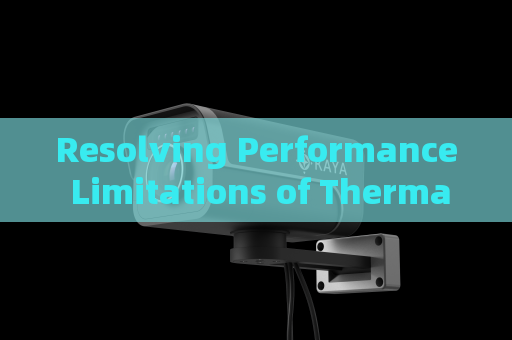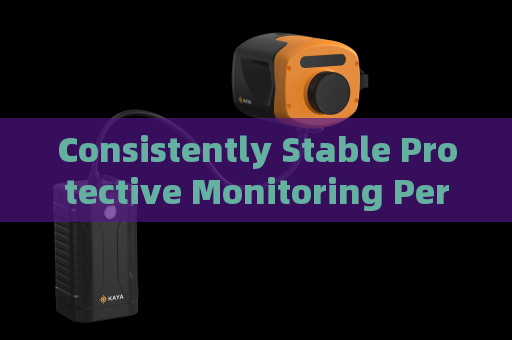
Consistently Stable Protective Monitoring Performance of the Penetration Imager in Severe Weather. This statement addresses a critical operational deficit in surveillance and emergency response: the near-total failure of conventional optical systems during heavy precipitation, dense fog, or blizzard conditions. These severe weather events scatter and absorb visible light, drastically reducing contrast and effective range, rendering standard cameras blind. For critical infrastructure security, perimeter monitoring, and search-and-rescue operations, this vulnerability creates dangerous gaps in situational awareness. The inability to maintain visual oversight during storms compromises both proactive threat detection and reactive incident management, leaving assets and personnel unprotected at precisely the moments when risks are heightened. The penetration imager resolves this fundamental limitation through its core technological principle: laser range-gated imaging. This active imaging system operates by emitting precisely timed, high-frequency pulses of laser light. A synchronized, gated camera intensifier opens its shutter only for the miniscule moment when the reflected light from the target returns, while rejecting scattered light from the intervening precipitation or fog. This temporal filtering, governed by its internal high-voltage and timing modules, effectively "sees through" the optical interference caused by rain, snow, and mist. The system does not rely on ambient illumination, generating its own high-contrast image by distinguishing target-reflected photons from backscatter noise. This specific capability ensures the penetration imager's performance remains decoupled from the debilitating effects of severe weather. In practical deployment, this translates to operational continuity where it was previously impossible. Mounted on a fixed observation post or a mobile response vehicle, the penetration imager maintains a clear, real-time video feed of a secured perimeter or a critical transport corridor during a torrential downpour. Operators monitor scenes with clarity, identifying objects or individuals at distances far exceeding the visual range of human observers or passive systems. The operational procedure involves aligning the laser illuminator and imaging lens with the area of interest; the system's integrated components then autonomously manage pulse timing and gain control to optimize image quality against the dynamically changing density of the weather medium. The output is a stable surveillance picture, enabling command centers to make informed decisions without weather-induced blackouts. The value of this consistently stable protective monitoring performance is most acutely realized in time-sensitive, high-stakes scenarios. For instance, during a storm-impacted maritime incident or a flood, the penetration imager can peer through sheets of rain to monitor evacuation progress or spot survivors in water, its laser cutting through the glare and spray that confounds standard optics. In a fire scenario compounded by rain, it can enhance visibility through the precipitation and the optical distortion caused by heat haze, though its capability is bounded by the presence of thick, opaque smoke. This unwavering reliability transforms the penetration imager from a fair-weather tool into a foundational all-weather sensor, ensuring that the protective monitoring umbrella remains intact precisely when environmental conditions are at their worst.