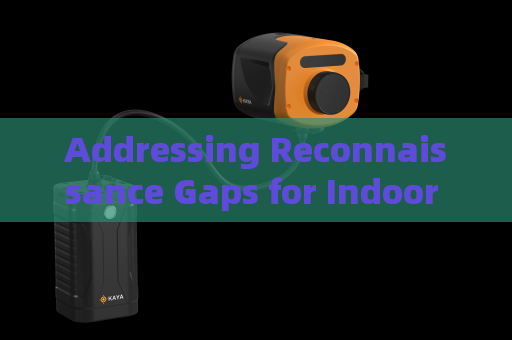
Addressing Reconnaissance Gaps for Indoor Personnel and Weapons in Urban Narrow-Space Operations with Laser Range-Gated Imaging Urban narrow-space operations, such as clearing a cluttered corridor inside an office building or securing a narrow alleyway during a counterterrorism raid, expose a critical reconnaissance blind spot. Standard optical tools—binoculars, rifle scopes, or handheld cameras—fail when faced with glare from reflective surfaces, dense smoke from a nearby explosion, or rainwater streaming down a vehicle’s windshield. In these confined environments, the operator cannot simply maneuver for a better angle; the geometry forces line-of-sight through windows, glass doors, or through layers of airborne particulates. Even a single pane of tinted car glass can obscure whether a suspect inside holds a weapon or a child. The consequence is lethal uncertainty: the team must either rush in blind or waste precious minutes attempting to reposition, all while the adversary retains the advantage of concealment. This reconnaissance gap turns every doorway and every vehicle into a potential ambush point. The penetration imager, built on laser range‑gated imaging technology, directly addresses this limitation by using time‑controlled illumination and gated detection. Unlike passive cameras that rely on ambient light or flash illuminators that scatter back from intervening media, the penetration imager fires a high‑repetition‑rate pulsed laser and synchronizes a gated intensified camera to open only when the reflected pulse from the target arrives. This precise temporal gating rejects the overwhelming backscatter from fog, rain, dust, or glass surfaces—the very causes of failed conventional imaging. In the context of narrow‑space urban reconnaissance, the most transformative feature is the ability to see through standard automotive and architectural glass: a suspect crouched behind a car’s side window becomes visible, and the outline of a rifle barrel pressed against the inside of a storefront glass door is rendered with enough contrast to distinguish it from a cell phone. The system’s active illumination also overcomes the low‑light conditions typical of indoor stairwells and underground parking garages, delivering high‑resolution imagery at distances that far exceed those of flashlights or thermal imagers in these cluttered settings. In practice, an entry team equipped with a handheld penetration imager can scan a suspected hideout from a street corner without exposing any member to direct fire. The operator aims the device at the target window or vehicle, and within seconds the display reveals the occupants and any visible weapons, all while the surrounding smoke or rain remains invisible in the image. Because the imager uses only laser light—no radar, X‑rays, or sound—it is fully passive in the electromagnetic sense and cannot be detected by electronic warfare sensors. The operation is straightforward: adjust the gate delay based on the estimated target distance, let the built‑in rangefinder auto‑calibrate, and read the image. This allows a single officer to confirm whether the threat is real before calling for a breach, cutting the decision‑making cycle from minutes to moments. Further refinement of the technique comes from understanding the specific behaviors of glass and particulates. When a window is heavily soiled or covered by a thin layer of frost, the penetration imager’s high‑contrast imaging still resolves objects behind it because the timing gate excludes reflections from the glass surface itself. Similarly, in a fire‑damaged narrow passage where smoke and steam reduce visibility to near zero, the imager improves effective sight range by three to five times—though it cannot cut through dense soot clouds. Operators must therefore combine the penetration imager with tactical judgment: use it to clear vehicles at checkpoints, to observe through the windshield of a suspect’s car during a traffic stop, or to peek through a lobby’s glass wall before stacking up. Each successful identification of an indoor weapon or a hidden person closes a reconnaissance gap that could otherwise cost lives.