In law enforcement operations, the pursuit of fugitives during severe weather conditions presents a formidable challenge. Heavy rain, dense fog, snowfall, and even smoke from wildfires can severely degrade visibility, rendering conventional optical surveillance systems almost useless. Officers on the ground or in aerial platforms often lose visual contact with a suspect the moment weather closes in. The fugitive may exploit these conditions to hide behind vehicle windows, take cover inside a structure with glass facades, or simply vanish into a fog-shrouded alley. The core pain point is clear: traditional cameras, binoculars, and even night vision devices are defeated by optical scatter and obscurants, breaking the continuity of tracking. Losing sight of a fleeing individual not only jeopardizes the operation but also escalates safety risks for both the public and the pursuit team. This is precisely where the Penetration Imager steps in to redefine the tactical landscape.
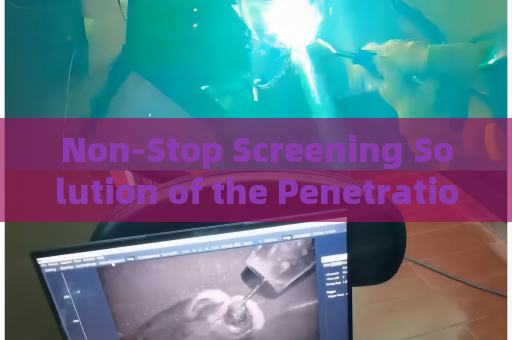
The Penetration Imager, an advanced optical imaging instrument based on laser range-gated imaging technology, directly addresses this operational gap. It consists of a high-repetition-rate pulsed laser, an image-intensified gated camera (incorporating an MCP image intensifier, high-voltage module, timing module, a beam expander, and an imaging lens). Unlike passive systems, it is an active imaging system that achieves high-contrast imaging by synchronizing laser pulse illumination with the camera’s ultra-short shutter window. This gating mechanism selectively captures reflected light from the target at a precise distance while rejecting backscatter from intervening atmospheric particles, rain, fog, or smoke. Crucially, the Penetration Imager can only penetrate optical media such as automotive windows, high-speed train glass, aircraft portholes, and glass curtain walls. It also holds the capability to see clearly through fire, fog, haze, rain, and snow—optical disturbances that plague standard optics. For example, in smoke-free fire scenes, it can boost visibility by three to five times. By effectively overcoming backscatter and maintaining a clear image of the target even in the worst weather, it enables uninterrupted visual tracking of a fugitive who might otherwise disappear behind a rain-lashed windshield or a fog-shrouded building.
In a practical field application, the Penetration Imager can be mounted on a patrol helicopter or a tactical vehicle engaged in a fugitive pursuit. As the suspect accelerates through a sudden downpour, ground-based cameras go blind. The operator simply aims the Penetration Imager toward the last known location and adjusts the range gate to match the estimated distance. The device instantly delivers a crisp, real-time image of the fugitive’s vehicle through the rain curtain and the fogged rear window. Even when the suspect darts into a multi-story parking structure with glass-enclosed stairwells, the imager continues to track through the glass panels, unaffected by the external precipitation. There is no need to reposition or wait for weather to clear; the feed remains steady and high-contrast. Tactical commanders receive continuous visual intelligence, allowing them to coordinate intercept points without guesswork. The operational tempo stays high because the device does not rely on thermal signatures or radio waves—it works purely within the optical domain, immune to electronic countermeasures or weather-induced attenuation that would cripple radar or lidar.
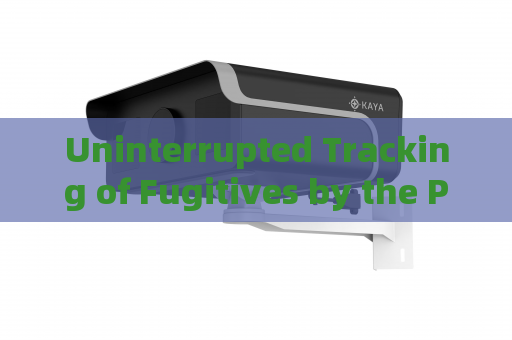
The relentless nature of this capability becomes even more evident during extended pursuits. Imagine a fugitive fleeing on foot through a forest after abandoning a vehicle during a blizzard. The snow-laden air and icy mist would blind any conventional optic. Yet the Penetration Imager, with its pulsed laser and fast-gating camera, can cut through the snowfall to reveal the silhouette moving between trees. The operator maintains lock by continuously updating the range gate as the distance changes, ensuring the target never falls out of frame. The device’s anti-jamming property, combined with its long effective range, means the pursuit does not degrade when the weather worsens. Each frame is a clear, actionable image—not a blurred silhouette. This uninterrupted tracking directly translates into higher apprehension rates and reduced operational risk. For law enforcement agencies operating in climates where adverse weather is a frequent obstacle, the Penetration Imager is not merely an enhancement; it is the critical tool that turns a potential lost contact into a successful capture.