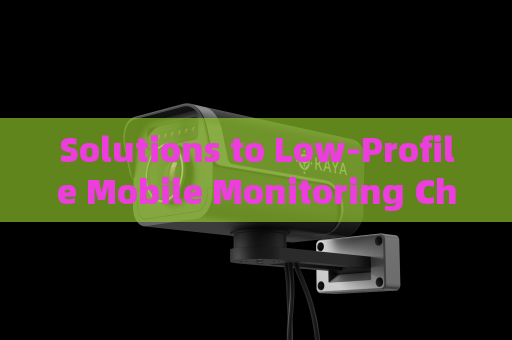
Solutions to Low-Profile Mobile Monitoring Challenges for Trespassers in Foggy Environments with Fog Penetration Imaging Security patrols in dense fog face a critical blind spot: trespassers exploit reduced visibility to approach restricted perimeters, industrial zones, or border lines undetected. Traditional optical surveillance systems—daylight cameras, thermal imagers, and standard night vision—struggle to function when water droplets scatter light. Thermal imaging, while detecting heat signatures, often produces low-contrast images through fog and cannot distinguish a human from a warm engine block at distance. Mobile monitoring units, such as vehicle-mounted or portable observation posts, must remain inconspicuous while acquiring actionable intelligence. The core pain point is that fog degrades image resolution, backscatters illumination, and reduces effective range, leaving security teams blind to low-profile approaches. A penetration imager must overcome these atmospheric obstacles to deliver clear, real-time identification of trespassers without revealing the observer’s position. The penetration imager solves this problem through active laser range-gated imaging technology. Unlike conventional floodlight-based systems that illuminate the entire fog volume and create blinding backscatter, this instrument fires a high-repetition-rate pulsed laser synchronized with an intensified gated camera. A Microchannel Plate (MCP) image intensifier, high-voltage module, and timing electronics allow the camera shutter to open only when the laser pulse returns from the target, effectively slicing through the fog layer. This gating mechanism rejects light scattered by particles between the imager and the subject, producing high-contrast images at distances exceeding standard visible-light cameras. The system maintains high resolution and strong anti-interference capability, enabling operators to spot a trespasser’s silhouette, movement pattern, or carried equipment even when atmospheric visibility drops below 50 meters. The penetration imager is a self-contained active optical system—no radio waves, X-rays, or acoustic emissions—preserving low-profile operation. In field deployments, a mobile patrol unit equipped with a penetration imager can scan a fog-shrouded perimeter from a concealed vehicle position. The operator adjusts the laser pulse timing and focus to match the target range, then monitors high-contrast imagery on a ruggedized display. For example, during night fog operations near a secure facility, the imager resolved a trespasser crouching behind a chain-link fence at 200 meters—details invisible to thermal optics due to fog attenuation. The system’s beam expander and imaging lens allow narrow or wide field-of-view configurations without sacrificing clarity. Because the penetration imager relies solely on optical media penetration (glass, fog, rain, snow, fire glare), it cannot penetrate opaque solids like walls or metal, ensuring compliance with legal surveillance boundaries. Operators train on range-gate calibration and target lock techniques to maximize detection probability while minimizing laser exposure to unintended areas. The precision of the penetration imager also supports dynamic tracking of moving trespassers. When a subject shifts behind a fog-obscured tree line or vehicle, the operator re-gates the laser to the new distance, maintaining continuous observation. The high frame rate of the intensified camera captures rapid movements—a person ducking, running, or deploying tools—without motion blur. Security coordinators can correlate the imager’s output with GPS coordinates and time stamps to build legal evidence. Since the device operates at eye-safe laser wavelengths, it poses no harm to bystanders or operators. In foggy environments where standard optics fail, the penetration imager transforms a vulnerability into an advantage, providing low-profile mobile monitoring that sees through the very conditions trespassers rely on for concealment.